


Needlepoint Upholstered Stool
A needlepoint upholstered stool brings hand-worked textiles and solid timber together, offering practical seating with enduring decorative appeal.
Needlepoint Upholstered Stool
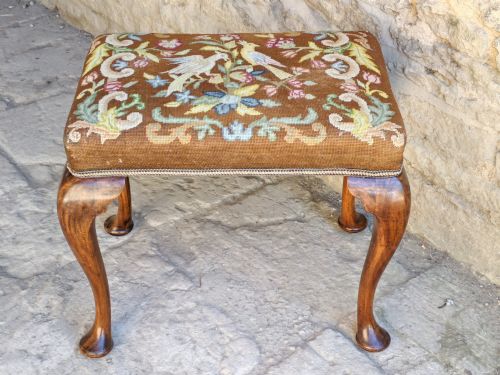
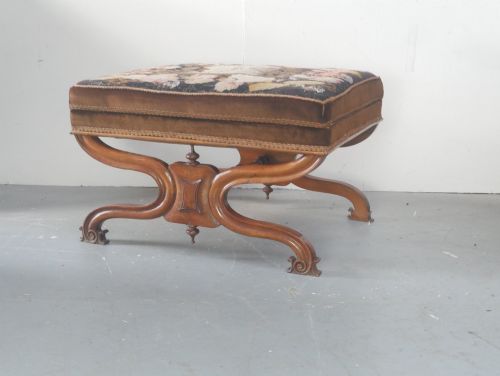
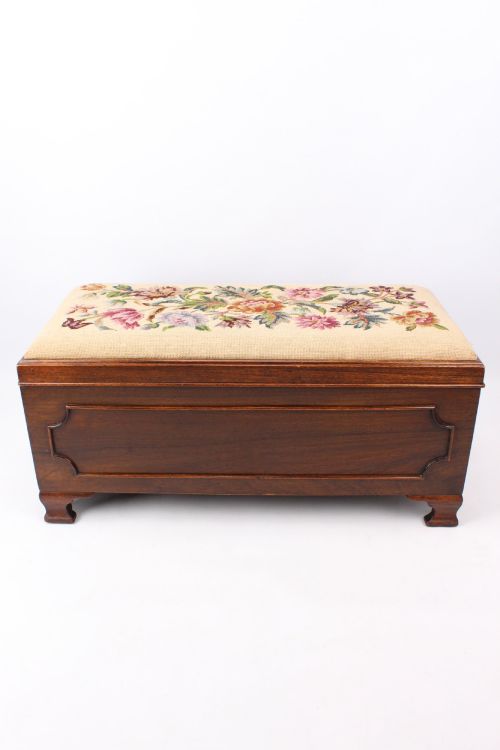
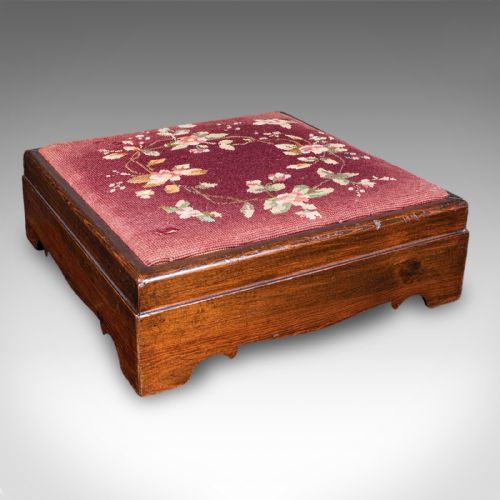
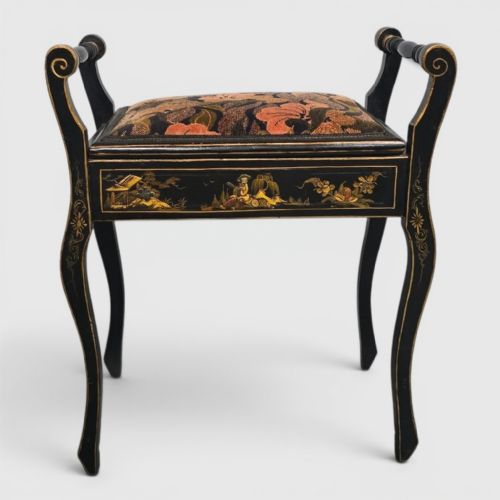
A needlepoint upholstered stool spans compact fireside footstools, long ottomans, dressing table seats and piano stools, originating primarily from the Victorian period alongside earlier Georgian influences and later Edwardian examples.
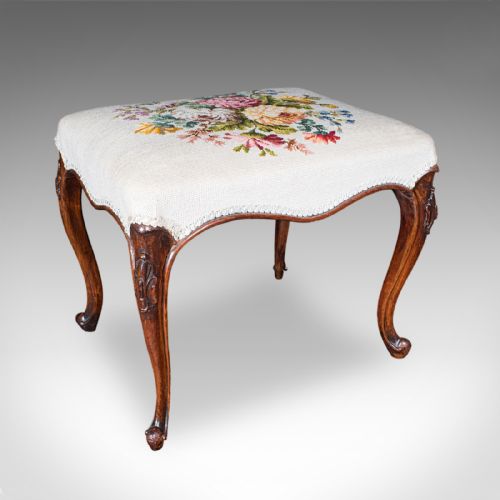
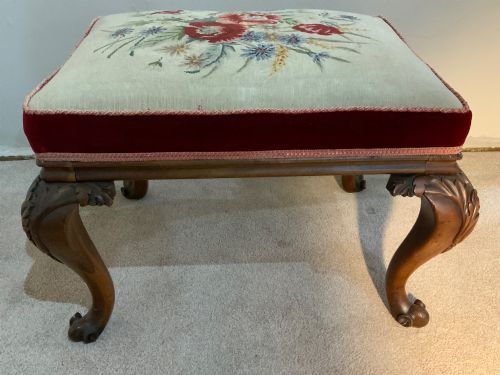
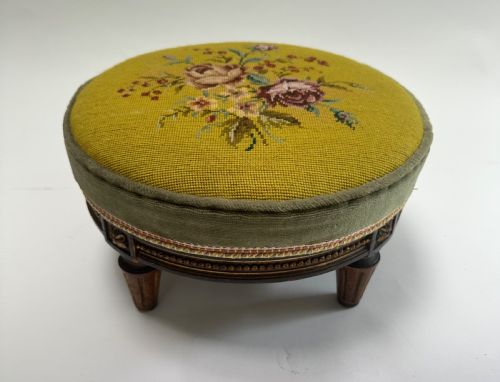
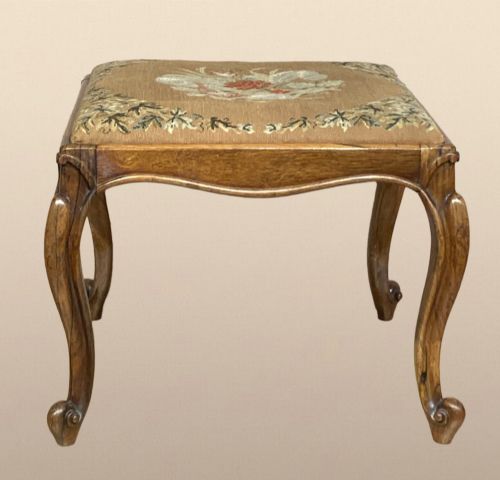
The version most commonly met on this page is the walnut or mahogany framed Victorian footstool, featuring carved wooden legs and a top worked in wool tapestry.
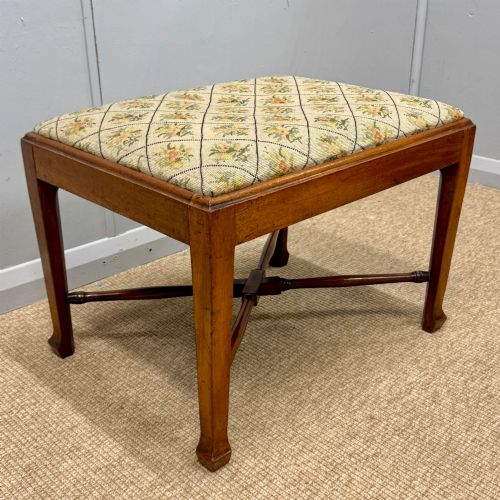
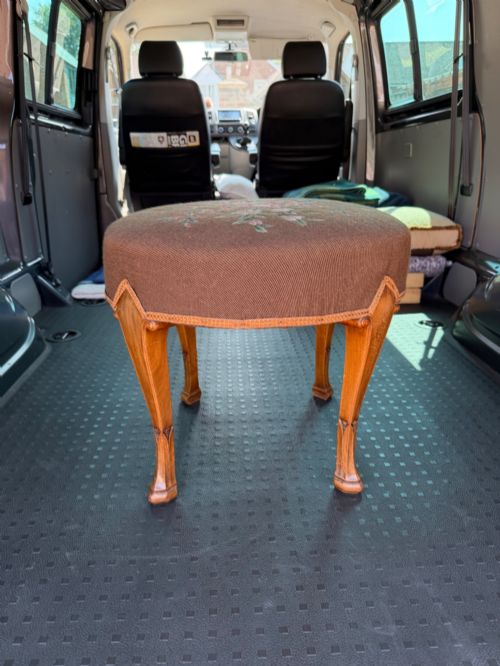
Makers utilised various timber species including rosewood, pitch pine and birch, shaping supports from simple cabriole legs to elaborate cross stretchers and revival styles.
Materials and construction
Framing relies on dense hardwoods like mahogany, walnut and rosewood, joined with traditional carpentry to support daily weight.
Upholstery combines woven wool tapestry and needlepoint textile panels stretched over padded interiors, occasionally accented with brass details.
Listings feature woods such as walnut, mahogany, rosewood, pitch pine and birch, spanning the Victorian era, the nineteenth century and the nineteen-twenties.
Character and construction
The distinction between standard examples and superior pieces rests on the intricacy of the timber carving and the tightness of the needlepoint stitch work.
Proportion and wood selection define visual success, separating simply utilitarian frames from finely styled revival pieces.
The Needlepoint Upholstered Stool Glossary
- Needlepoint
- A type of canvas work embroidery executed with wool yarn, forming the textured decorative seats seen on these items.
- Cabriole leg
- A furniture support that curves outward at the knee and tapers inward at the ankle, common on Victorian and Queen Anne style frames.
- Ottoman
- A low upholstered seat or footstool without a back or arms, designed for resting feet or casual sitting.
- Cross stretcher
- Wooden bracing members connecting the lower legs of a stool for added structural stability.
- Gout stool
- A specialised low footrest with an adjustable angle, built to elevate feet for health reasons during the nineteenth century.
Needlepoint Upholstered Stool: Frequently Asked Questions
Where were these stools placed?
These pieces served multiple functions across the home, appearing by the fireside in reception rooms, beside dressing tables in bedrooms, or positioned near pianos for musicians.
Their compact scale allowed them to move easily between rooms as extra seating or foot rests when required.
How do I clean the tapestry?
Textile surfaces require gentle surface cleaning with a soft brush to remove dust from the wool fibres without damaging the ground canvas.
Moisture and harsh cleaning agents risk staining the threads or weakening old fabric foundations.
Are the needlework tops original?
Many items retain their period wool tapestry, while others have received replacement upholstery using antique or period-style textiles.
Close inspection of the canvas backing and yarn wear reveals whether the needlework matches the age of the timber frame.
How do I identify a Victorian piece?
Victorian examples often employ walnut or mahogany timbers, featuring carved cabriole legs, rosewood frames, or bold floral needlepoint patterns.
Construction details and timber patination help separate these mid-nineteenth-century items from later Edwardian or revival productions.