


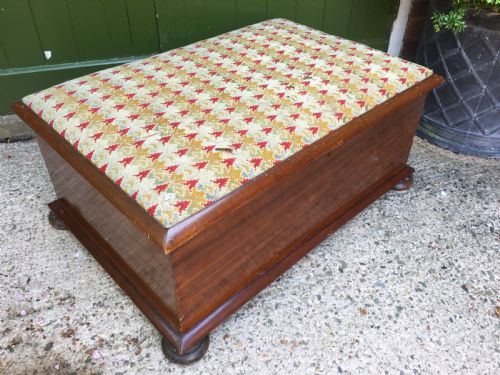
Tapestry Top Footstool
These tapestry top footstool pieces bring tactile warmth to a room, offering needlework texture and timber frames.
Tapestry Top Footstool
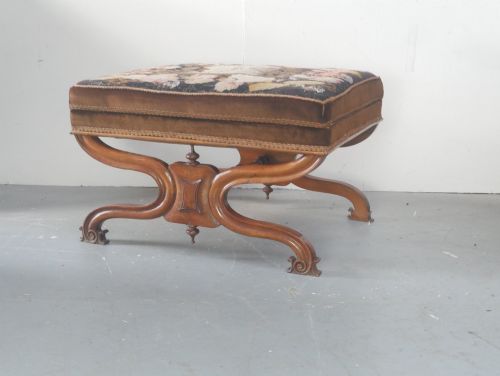
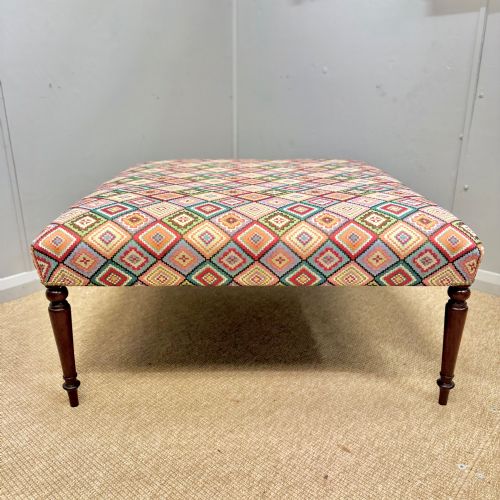
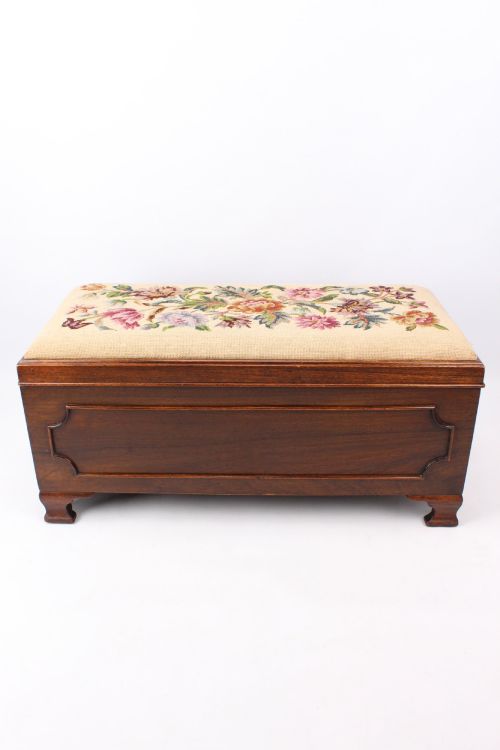
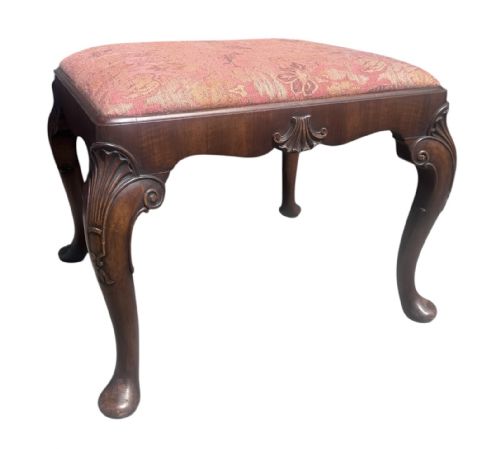
When you search for a tapestry top footstool, you encounter low seating designed to support the feet or serve as a low seat by a dressing table. The examples available here span the nineteenth century, including Victorian and Regency eras, alongside later pieces in historical revivals.
You meet various forms on this page, from large Scottish Baronial pieces to compact walnut dressing stools and carved rosewood frames. Most combine a textile or needlepoint upper section with a timber or gilt structure underneath.
The origins lean towards English country house aesthetics, Georgian style revivals, and French chateau influences. These low seats functioned across drawing rooms and dressing rooms alike, providing both utility and decorative needlework colour.
How they were made
Makers constructed the frames using dense timbers such as mahogany, walnut, rosewood, and ebonized wood, occasionally applying gilt or paint finishes. Joinery methods of the period ensured rigid support for the upholstered weight above.
The upper surfaces utilise tapestry, wool, fabric, velvet, and needlepoint work, frequently employing gros-point techniques. These textiles were stretched tightly over padded foundations fixed directly to the wooden rails.
Tapestry Top Footstool Retail Price Guide 2026
Typical asking prices for tapestry top footstool among the pieces listed under this phrase on Sellingantiques today, from the lower quarter to the upper quarter. They describe what is for sale here now, not the wider market.
Listings feature nineteenth-century and Victorian pieces constructed from mahogany, walnut, and rosewood.
What varies in quality
The distinction between ordinary and superior pieces rests in the execution of the timber carving and the density of the needlework. Hand-worked gros-point needlepoint and heavily carved rosewood or mahogany frames indicate higher workshop standards.
Proportion and structural timber selection also divide the range, as heavier hardwoods support intricate turning and gilding more effectively than softer woods.
The Tapestry Top Footstool Glossary
- Gros-point
- A type of needlepoint embroidery worked on a coarse canvas, creating a durable and textured surface for upholstery.
- Needlepoint
- Stitched textile work executed on canvas using wool or silk yarn, forming geometric or pictorial designs.
- Ottoman
- A low, upholstered seat or footstool lacking arms and a back, often designed on a larger scale.
- Scottish Baronial
- A nineteenth-century architectural and decorative style drawing on historic Scottish castle architecture, often featuring robust timbers.
Tapestry Top Footstool: Frequently Asked Questions
What is a tapestry top footstool used for?
These pieces served primarily as footrests before armchairs or as low dressing table seats in period homes. Their sturdy timber frames and padded textile tops provided functional comfort in sitting rooms and bedrooms.
Today they function flexibly in modern interiors as small occasional seats, low coffee table alternatives, or traditional footrests positioned by sofas.
How do I date a tapestry top footstool?
Dating relies on identifying timber choices, frame styles, and the specific characteristics of the needlework. Victorian and nineteenth-century pieces often display distinct revival influences such as Georgian or Scottish Baronial details.
Examining the construction methods underneath the upholstery and the wear patterns on the wooden frame helps confirm the period of manufacture.
Are the tapestry tops original?
Many listings retain their period needlework or original gros-point textile tops, while others feature later upholstery applied during conservation. The condition and tightness of the fabric indicate whether the textile has survived from the original period.
Reviewing the specific details in each listing helps determine if the needlepoint matches the age of the wooden frame.
How do I care for needlepoint upholstery?
Needlepoint and tapestry surfaces require gentle treatment, avoiding direct sunlight to prevent the wool and fabric colours from fading over time. Regular light vacuuming with a soft brush attachment removes dust without damaging the stitches.
Moisture and harsh cleaning agents should be kept away from both the textile top and the polished mahogany, walnut, or rosewood frame.