



Needlepoint Piano Stool
A needlepoint piano stool brings tactile warmth and period character to a room, offering a seat upholstered in stitched wool alongside adjustable or fixed wooden frames.
Needlepoint Piano Stool
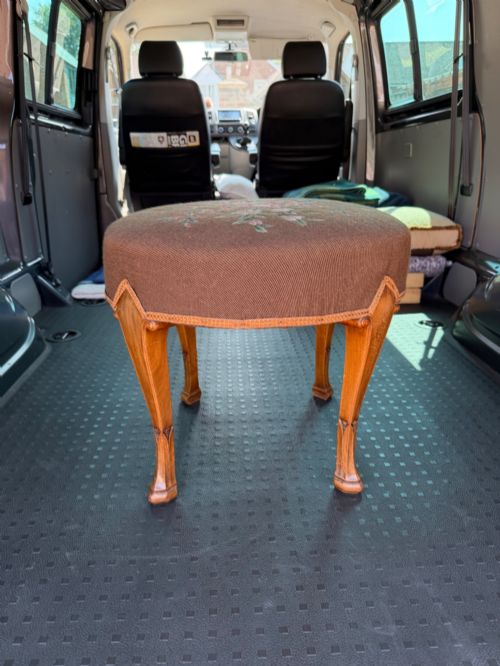
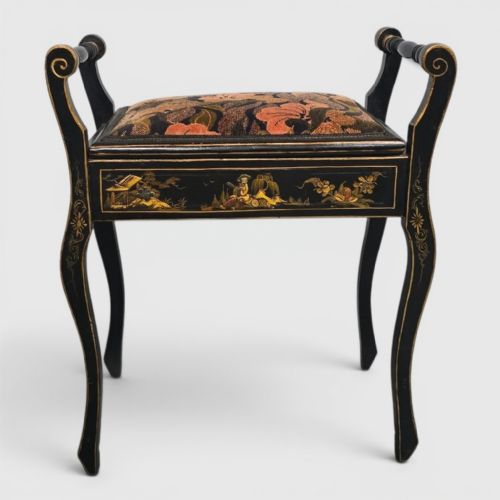
When searching for a needlepoint piano stool, buyers encounter seating designed for musicians and dressing tables, spanning the nineteenth century through to the Edwardian period and the nineteen-thirties. The selection includes revolving and adjustable mechanisms alongside fixed frames, reflecting styles from Regency and William IV to Victorian and Edwardian revivals.
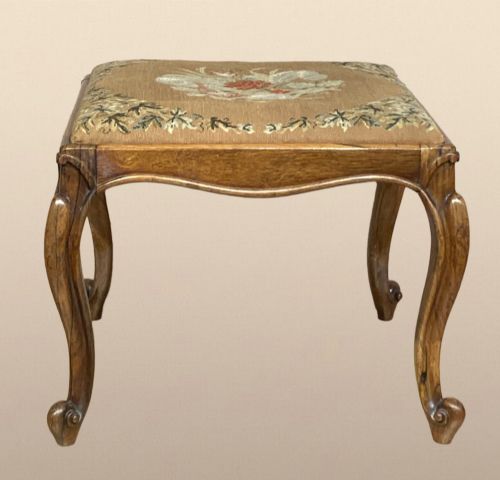
The forms range from circular tripod stools to rectangular window seats and long dressing stools supported on cabriole or straight legs. Mahogany and rosewood appear frequently among the earlier examples, while walnut and later mahogany feature across the nineteenth and twentieth-century pieces.
How they were made
Makers constructed the timber frames using dense hardwoods such as mahogany, walnut and rosewood, often shaping the supports with carved details or cross stretchers. Brass mechanisms frequently enabled the revolving or height-adjustable seats found on the musical variants.
The upholstered surfaces utilised wool tapestry and needlework textile applied directly to the seat frames. Original fabric seats survive alongside later replacements, preserving hand-stitched patterns executed in varied colour palettes.
Needlepoint Piano Stool Retail Price Guide 2026
Typical asking prices for needlepoint piano stool among the pieces listed under this phrase on Sellingantiques today, from the lower quarter to the upper quarter. They describe what is for sale here now, not the wider market.
Materials documented across the listings include mahogany, walnut, rosewood, brass, and wool tapestry.
What varies in quality
The refinement of the timber carving and the stability of the turning distinguish the finer frames from simpler production. Carved walnut and rosewood structures with sophisticated leg forms command attention for their sculptural presence.
The integrity of the needlepoint upholstery and the smoothness of any mechanical adjustment mechanism dictate the functional success of the piece. Intricate tapestry work paired with robust internal framing represents the high point of the range.
Jas Shoolbred
The Needlepoint Piano Stool Glossary
- Needlepoint
- A form of counted thread embroidery stitched onto an open canvas mesh to create durable decorative upholstery. It forms the defining textile surface on these musical and dressing seats.
- Cabriole leg
- A furniture leg that curves out and then in, resembling the leg of an animal. This decorative feature appears frequently on Victorian walnut and mahogany frames.
- Revolving mechanism
- A mechanical assembly allowing the seat top to rotate for height adjustment or ease of access. It is commonly integrated into nineteenth-century piano seating.
- Cross stretcher
- Horizontal wooden bracing connecting the legs beneath a stool for added stability. These stretchers often display turned or carved detailing.
- Window seat
- An elongated stool form designed to fit within a bay or recess. Edwardian and Georgian examples in mahogany appear within this group.
Needlepoint Piano Stool: Frequently Asked Questions
How do I adjust the height?
Many examples utilise a revolving screw mechanism hidden beneath the upholstered seat top, allowing you to twist the cushion upward or downward to reach the desired playing position.
Other variants rely on fixed wooden frames without moving parts, designed for standard piano or dressing table heights.
Can I use it as extra seating?
These sturdy timber frames and dense textile tops suit regular use in living spaces, halls or bedrooms. Their compact footprints make them versatile additions around a room.
Take care to check the mechanism and frame stability if the piece is intended for daily weight-bearing.
How do I care for needlepoint?
Protect the stitched wool surface from direct sunlight to prevent the coloured yarns from fading over time. Gentle surface cleaning with a soft brush helps remove dust from the canvas weave.
Avoid moisture and liquid cleaners that might penetrate the delicate wool fibres and underlying stuffing.
Are the needlepoint tops original?
Some pieces retain their historic fabric seats from the nineteenth or early twentieth century, showing authentic wear and period colour choices. Others have received later textile replacements to ensure structural durability for modern use.
Examining the underside and the tacking reveals whether the upholstery has been renewed.