





Antique Storage Stool
An antique storage stool combines everyday utility with period elegance, offering a concealed compartment beneath a hinged or lift-off seat.
Antique Storage Stool
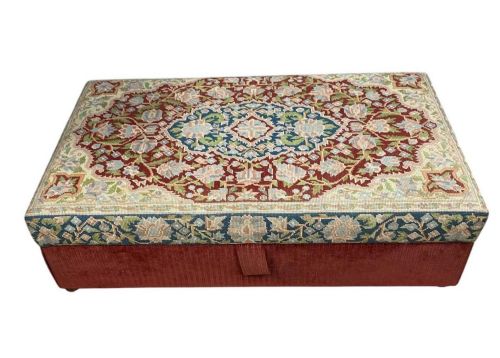
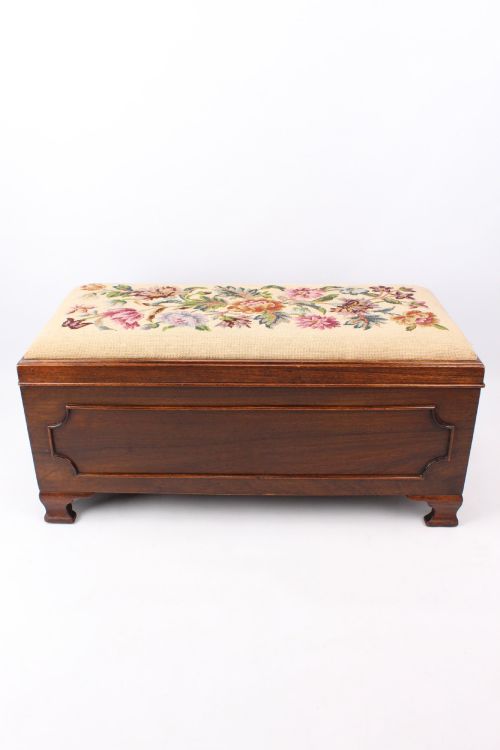
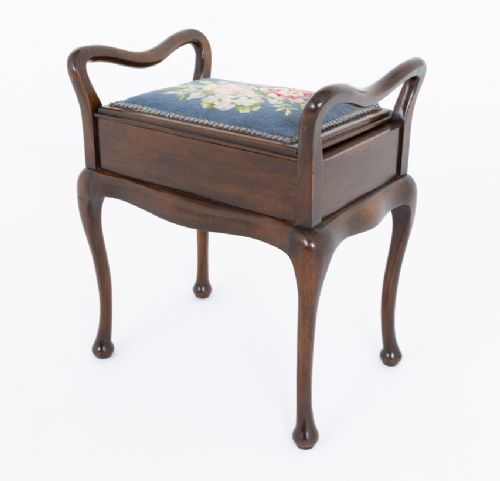
An antique storage stool provides a practical seat alongside a hidden interior compartment designed to hold sheet music, sewing implements, or household linens. The forms span versatile piano stools, larger ottomans, blanket boxes, and traditional close stools.
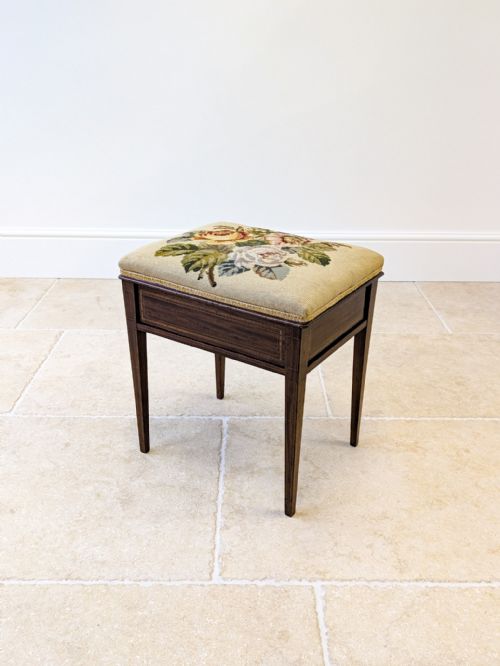
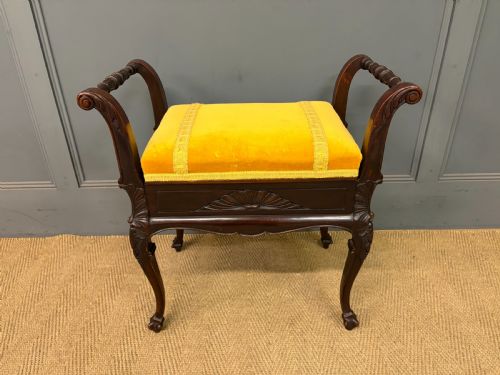
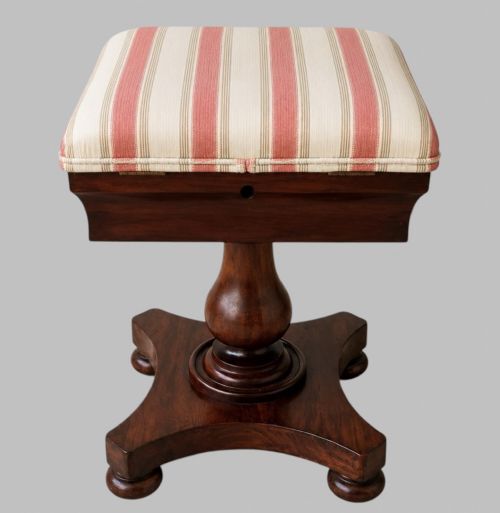
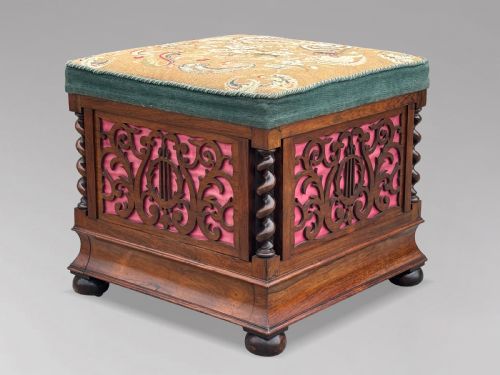
The pieces on this page appear in various regional and formal designs, ranging from heavy oak box stools to refined mahogany and rosewood ottomans. Edwardian and Victorian piano stools with hinged or fall-front seats represent the most common encounters in daily browsing.
Origins stretch across multiple eras, including Georgian, Regency, and William IV periods, alongside robust 17th-century oak examples. Makers utilised durable hardwoods to construct sturdy frames that remain functional for domestic interiors today.
How they were made
Cabinetmakers constructed the main carcase using timbers such as mahogany, oak, walnut, and rosewood, often pairing solid structural frames with veneered surfaces. Joinery techniques varied from traditional dovetailing in storage boxes to turned and carved legs reflecting contemporary styles.
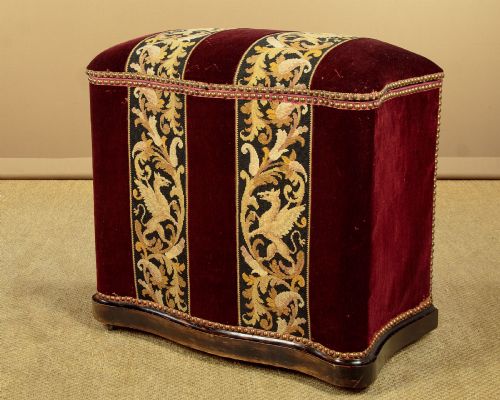
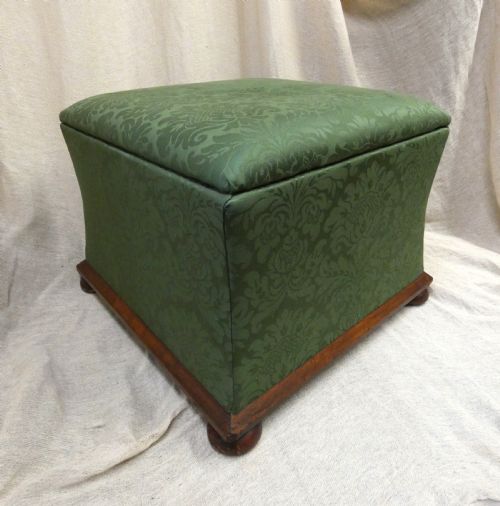
Upholstery formed a central part of the construction, utilising materials like needlework, tapestry, velvet, leather, and decorative fabric to cover padded seats. Brass hinges, handles, and occasional lion paw feet provided functional and decorative hardware accents.
Antique Storage Stool Retail Price Guide 2026
Typical asking prices for storage stool among the pieces listed under this phrase on Sellingantiques today, from the lower quarter to the upper quarter. They describe what is for sale here now, not the wider market.
Several Regency examples rest upon carved brass lion paw feet, enabling domestic predators to stalk permanently across your parlour floor.
What varies in quality
Quality reveals itself in the selection of timbers and the precision of the joinery, where finely figured mahogany or dense golden oak demonstrates superior craftsmanship. Carved details, inlay work, and the structural integrity of the internal storage box distinguish standard utility items from finer parlour pieces.
The retention of original mechanisms, such as smooth-operating hinges and fall-front panels, elevates a piece. Furthermore, the harmonious balance between the upholstery fabric and the wooden frame separates basic workshop output from master cabinet work.
Hallett & Sons·Gillows
The Antique Storage Stool Glossary
- Close stool
- A box stool enclosing a chamber pot, dating from periods before indoor plumbing became standard. These items often feature enclosed wooden cabinetry designed to resemble ordinary seating.
- Duet piano stool
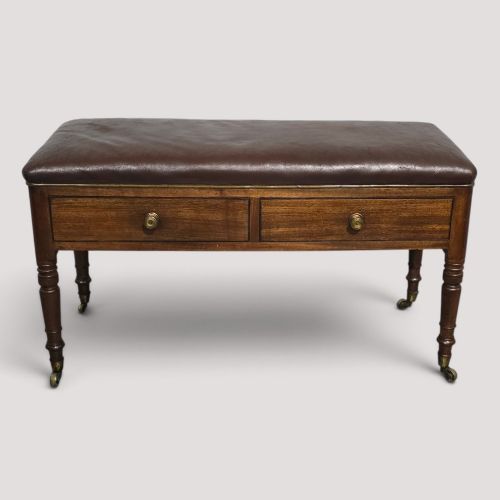
- An extended seat designed to accommodate two musicians side by side while they played. These pieces frequently incorporate hinged lids or under-seat compartments for storing sheet music collections.
- Box stool
- A rigid seat constructed with a hollow interior accessed via a removable or hinged top. This form served multiple functions across domestic rooms for seating and tidying away objects.
- Ottoman
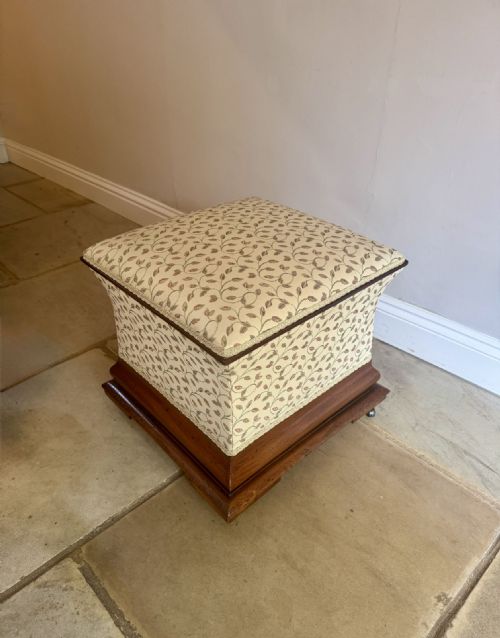
- A low, upholstered seat or footstool lacking arms or a back, frequently equipped with a hinged lid. The style gained popularity during the Regency and Victorian eras for placement at the foot of a bed or by a window.
Antique Storage Stool: Frequently Asked Questions
How do I use a storage stool at home?
These pieces serve effectively as extra seating in living rooms or hallways while concealing clutter inside the compartment.
They also function well at the foot of a bed or beside a dressing table for holding smaller personal items.
What is the difference between a piano stool and an ottoman?
Piano stools are typically taller and often accommodate one or two players with specific compartment sizes for music folios.
Ottomans tend to be broader and lower, designed as footrests or window seats with larger blanket storage capacities.
How do I identify the period of an oak box stool?
Earlier pieces from the 17th century display heavy plank construction, hand-carved panels, and pegged joints characteristic of vernacular joinery.
Later Victorian and Edwardian revivals adopt machine-cut timber, lighter proportions, and softer decorative turnings.
Are the fabrics on these stools original?
Many surviving pieces have undergone reupholstery over the decades to match changing domestic interiors and wear.
Original needlework or tapestry panels do occasionally survive on Victorian and Edwardian examples, though modern fabric updates are standard.