


Victorian Needlepoint Stool
These pieces bring tactile texture to any room, offering the classic comfort of a Victorian needlepoint stool for fireside rest or daily seating.
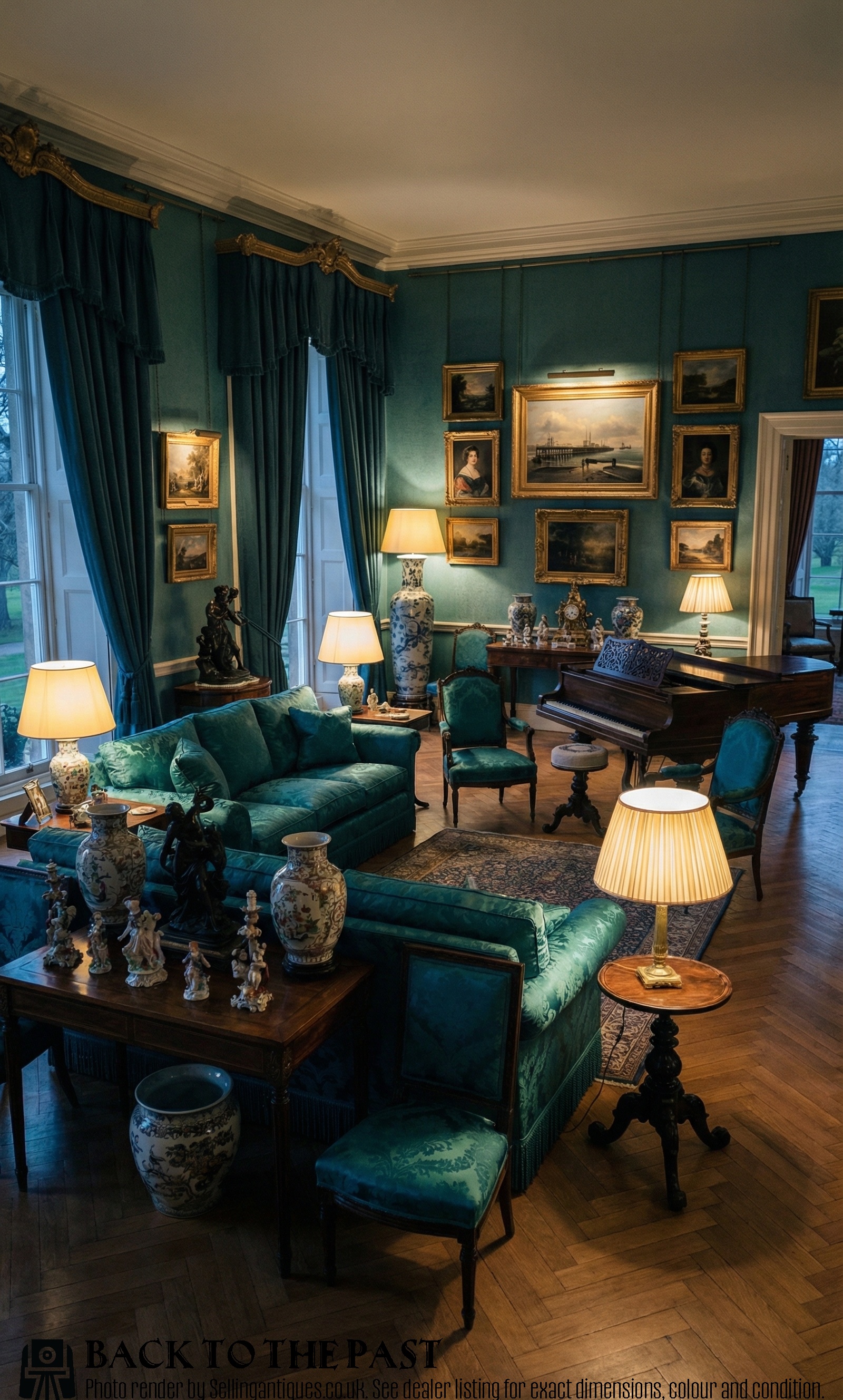
Victorian Needlepoint Stool
A victorian needlepoint stool combines a sturdy wooden frame with hand-worked textile upholstery designed for fireside rest or dressing room use. The surviving examples range from low footstools and carriage seats to larger ottomans, centre stools and revolving piano seats.
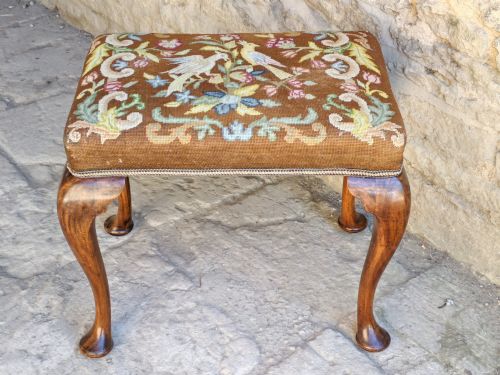
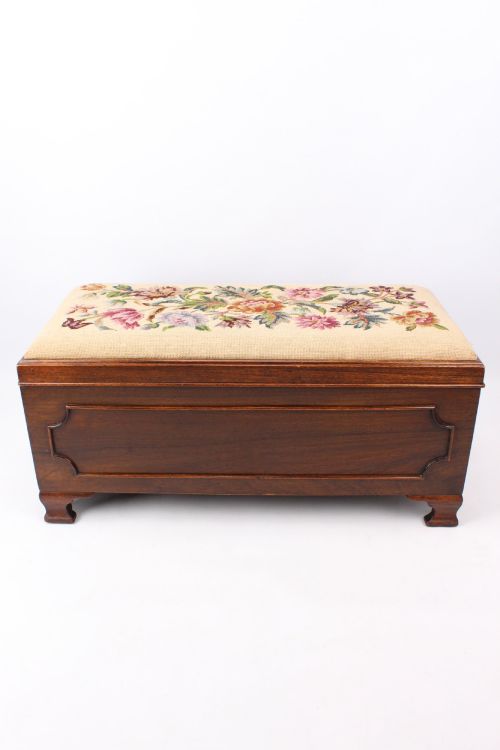
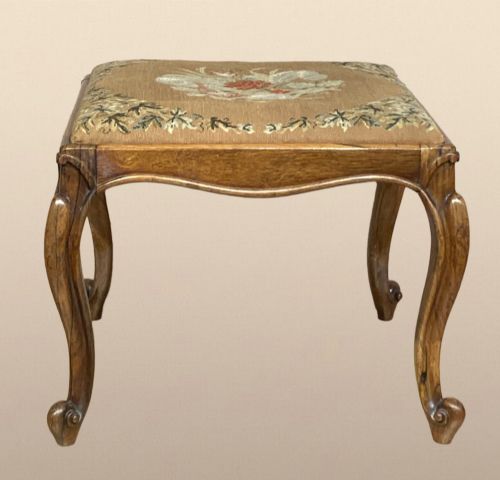
The version most commonly encountered on this page is the walnut or mahogany footstool featuring a needlepoint, tapestry or gros-point floral top. These domestic pieces serve as portable seats or footrests, reflecting the 19th-century appetite for upholstered furnishings.
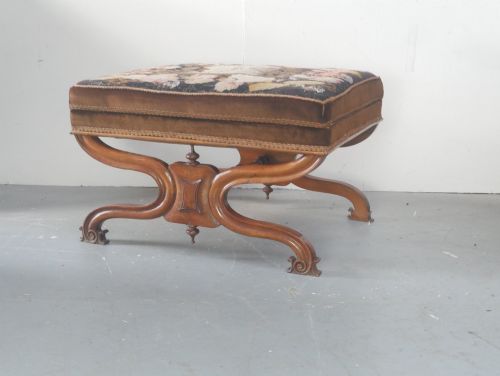
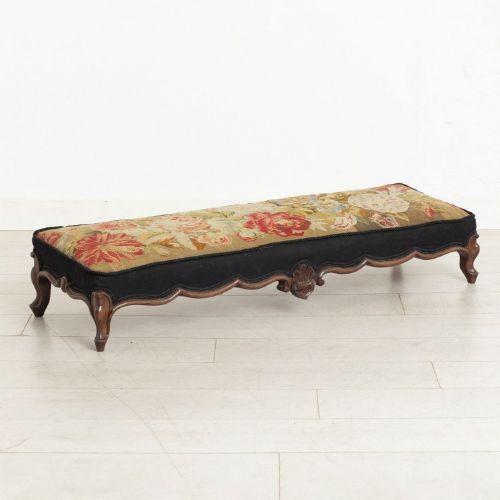
Alongside standard low stools, the inventory includes specialised forms such as dressing stools, long carriage footstools and tripod piano seats. These varied formats demonstrate the distinct domestic uses assigned to seating furniture across the Victorian period.
How they were made
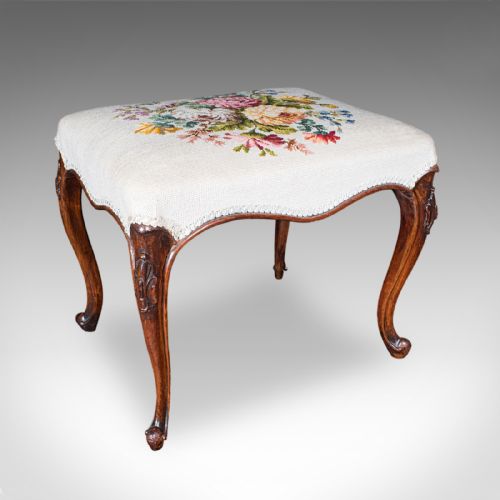
Makers constructed the timber frames primarily from walnut, mahogany and rosewood, often shaping the wood with cabriole legs, carved details or inlaid decoration. Some pieces utilise alternative timbers such as oak, ebony or ebonised wood to achieve darker finishes.
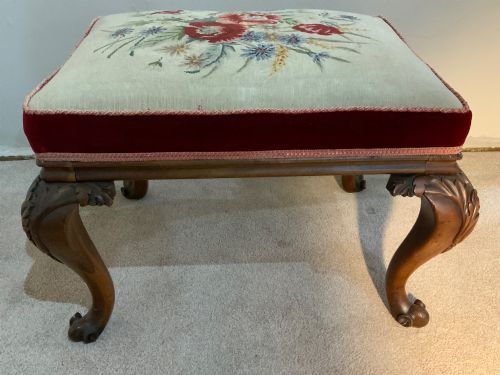
Upholstery relies on wool tapestry, needlepoint and gros-point textiles stretched over supportive foundations, sometimes paired with velvet or original fabric. These hand-stitched needlework surfaces introduce geometric patterns, floral motifs and kilim designs to the wooden frames.
Victorian Needlepoint Stool Retail Price Guide 2026
Typical asking prices for victorian needlepoint stool among the pieces listed under this phrase on Sellingantiques today, from the lower quarter to the upper quarter. They describe what is for sale here now, not the wider market.
One exceptional coal bin stool combines brass fire storage with a needlepoint lid.
What varies in quality
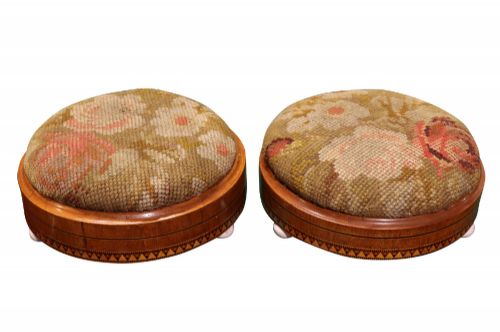
The standard of carving and timber selection dictates the baseline quality of the frame, with dense walnut and finely turned mahogany marking out superior output. Elaborate design elements such as cabriole legs, inlaid Tunbridge Ware or matched pairs elevate specific examples above plain utility items.
The needlepoint upholstery itself varies according to the density of the stitching and the complexity of the tapestries. Intricate gros-point work and well-preserved original textile seats retain greater integrity than replacement covers.
Jas Shoolbred
The Victorian Needlepoint Stool Glossary
- Needlepoint
- A form of counted thread embroidery stitched onto an open-weave canvas foundation. It creates durable, decorative patterns utilised for centuries on chair seats and footstools.
- Gros-point
- A coarse needlepoint stitch worked over a larger canvas mesh. This technique provides a heavier, hard-wearing texture suitable for heavy-use upholstery.
- Cabriole leg
- A furniture leg that curves outward and then tapers inward with a pad or scroll foot. This shape derives from ancient motifs and featured widely in revival styles.
- Tunbridge Ware
- A type of decorative woodwork characterised by tiny mosaic tiles formed from naturally coloured woods. It appears as geometric banding on select nineteenth-century pieces.
- Ottoman
- A low, upholstered seat or footstool typically lacking arms or a back. Larger iterations sometimes doubled as storage chests or fireside boxes.
Victorian Needlepoint Stool: Frequently Asked Questions
How were footstools used in Victorian homes?
Victorian households placed small stools beside firesides, dressing tables and pianos to provide comfortable footrests or secondary seating. Their portability allowed occupants to move them easily around the room for daily tasks.
Larger ottomans and centre stools functioned as static furnishings in drawing rooms and parlours, combining decorative upholstery with practical support for resting tired feet.
What is the difference between an ottoman and a footstool?
Footstools generally measure on a smaller scale, designed primarily to support the feet while seated in a fireside chair or at a dressing table. They typically feature four legs and an independent upholstered top.
Ottomans usually span a larger surface area and can function as low benches or central room seats. Some period examples incorporate internal compartments for storage beneath the hinged needlework lid.
How do you identify an early Victorian stool?
Early Victorian pieces often exhibit robust rosewood or mahogany construction paired with substantial hand-stitched needlepoint tops. The woodwork frequently displays characteristic mid-nineteenth-century proportions and traditional joinery.
Stylistic cues such as early revival motifs or heavy turned legs help distinguish pieces produced around the middle of the nineteenth century from later Edwardian reproductions.
Are piano stools adjustable?
Many Victorian piano stools feature revolving mechanisms that allowed musicians to adjust their seating height simply by spinning the upholstered top. These revolving variants often rest on tripod bases or centralized wooden pillars.
Stationary piano stools also appear, featuring fixed frames and needlework seats designed for stability during extended keyboard practice sessions.