
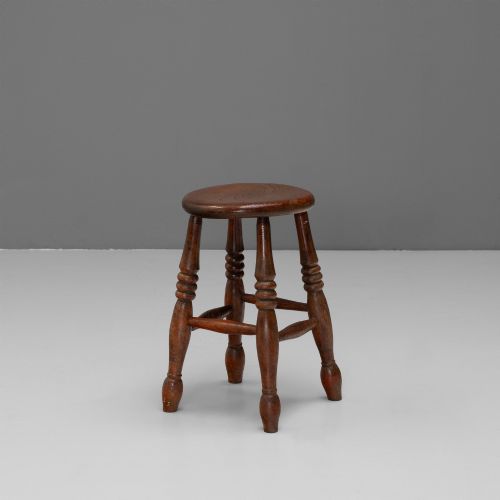
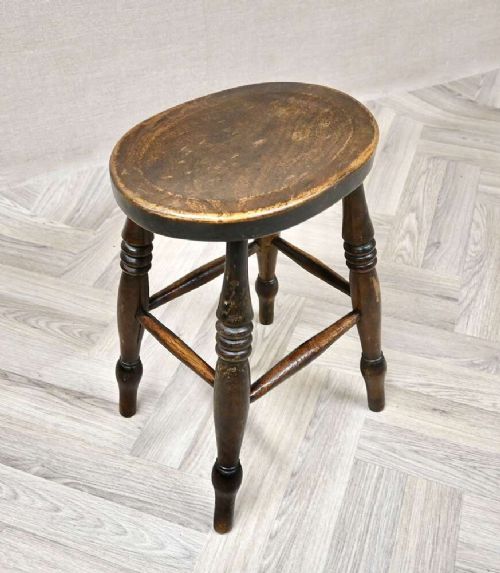
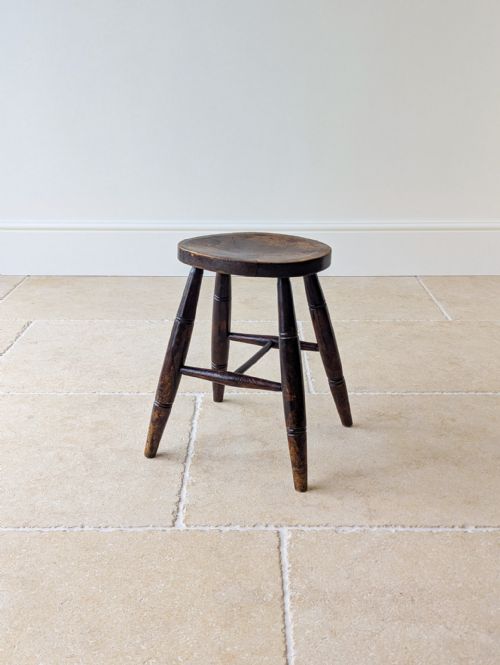
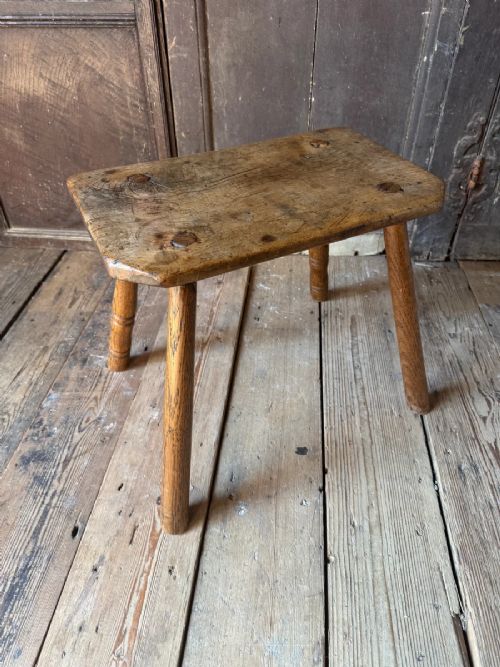
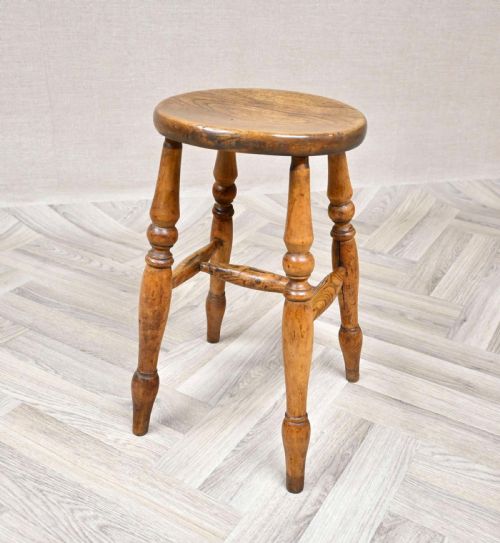

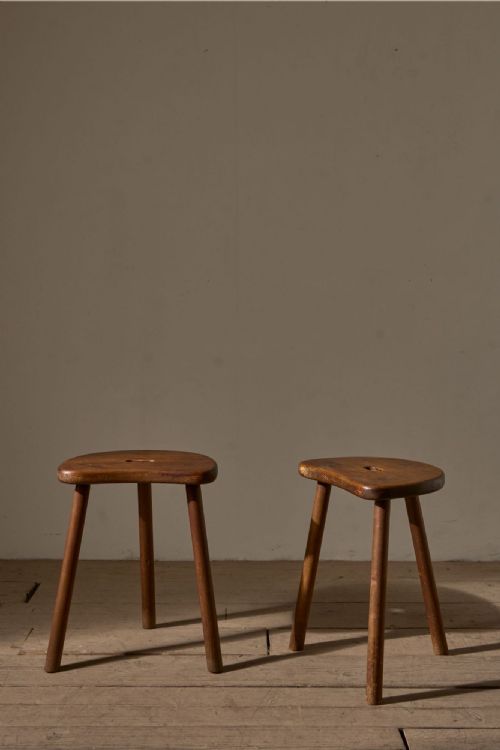

Rustic Country Footstool
A rustic country footstool brings honest utility and vernacular character into a room.
Rustic Country Footstool
When you search for a rustic country footstool, you encounter low seating forms designed for practical tasks and fireside comfort. The selection predominantly comprises nineteenth-century examples alongside earlier Georgian and Victorian pieces.
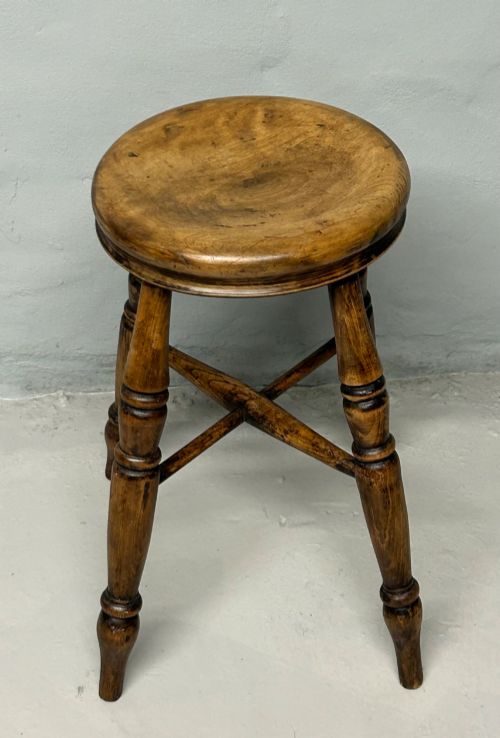
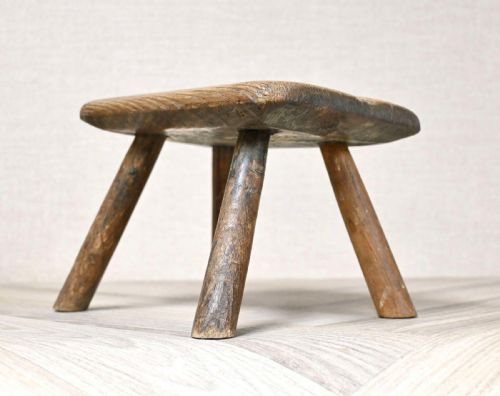
Forms vary from Windsor oval seats and milking stools to joint stools and hearth stools. Elm, oak, ash, and pine frequently appear in these low seating pieces.
Origin details span English vernacular workshops as well as Eastern European and French country traditions. Buyers often select them for their compact proportions and tactile timber surfaces.
How they were made
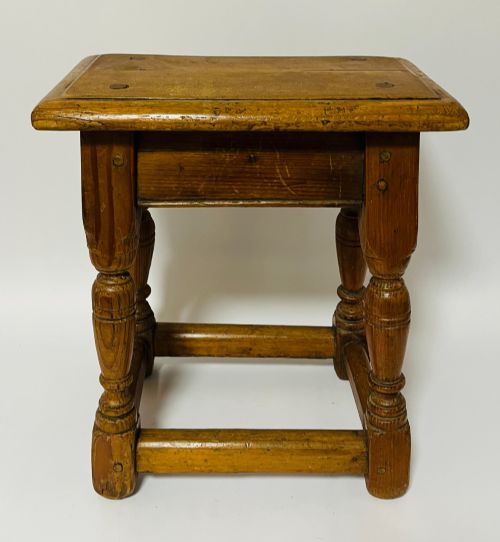
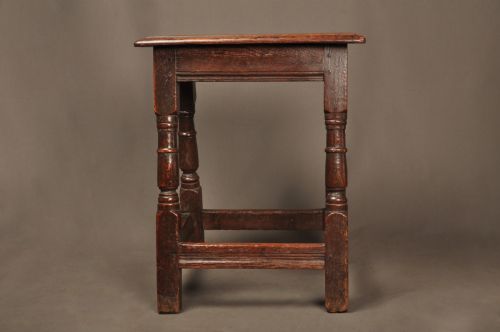
Makers utilised solid native timbers such as oak, elm, ash, and pine, often combining contrasting woods for seats and underframes. Pegged construction and turned wooden legs appear regularly across the vernacular pieces.
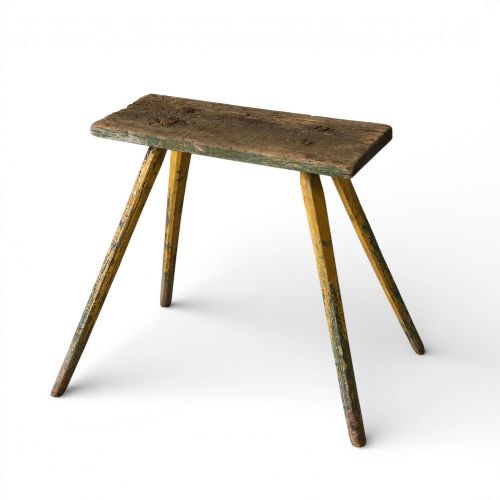
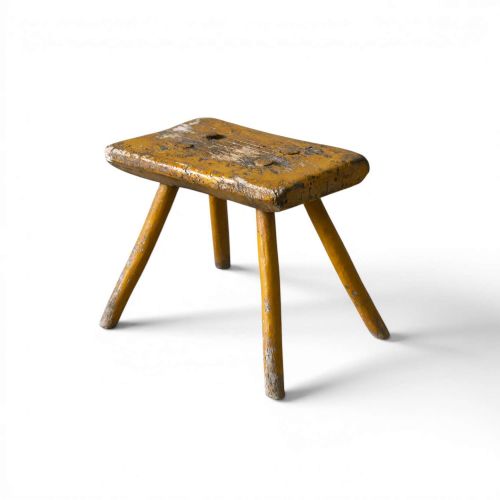
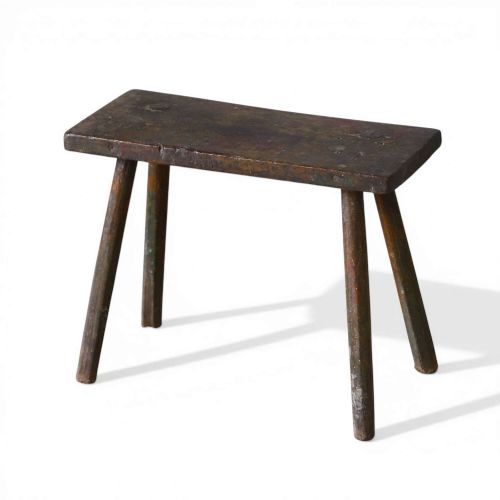
Surfaces occasionally retain original paint finishes in ochre, yellow, green, or white, while others display bare scrubbed timber. Rush seating and cane work are also employed on specific low stool variants.
Listings feature items spanning the Georgian period through the early twentieth century, utilising oak, elm, ash, pine, and original paint.
What varies in quality
Quality rests in the integrity of the timber selection, such as burr yew or well-figured oak, paired with robust pegged joints. The presence of original surface paint versus later stripping shifts the character significantly.
Proportion and sculptural presence differentiate standard utility items from unusual diminutive or ball-foot forms. Retained original rush work and balanced vernacular turning elevate the standing of individual examples.
The Rustic Country Footstool Glossary
- Joint stool
- A sturdy wooden stool constructed with mortise and tenon joints, often associated with sixteenth to eighteenth-century joinery. These pieces commonly utilise solid oak planks.
- Windsor stool
- A seating form featuring turned legs and spindles wedged directly into a solid sculpted wooden seat. They frequently incorporate elm or ash timbers.
- Milking stool
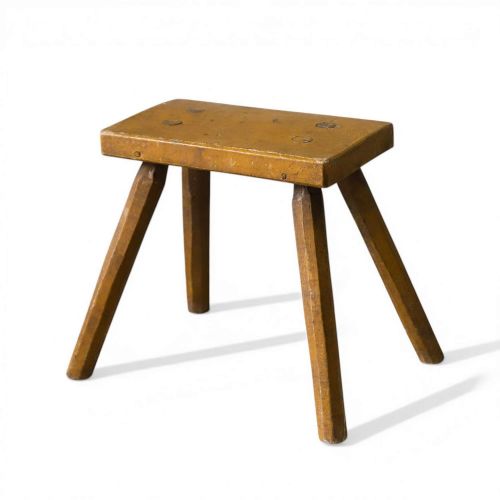
- A low, typically three-legged stool designed for stability on uneven agricultural floors. Examples often exhibit simple turned legs and round wooden tops.
- Hearth stool
- A low stool positioned near a fireplace for sitting or resting feet. They are recorded in oak and various vernacular woods across multiple periods.
- Vernacular
- Objects made by local craftspeople using regional traditions and readily available materials rather than high-style metropolitan designs. This encompasses utilitarian seating from various rural European districts.
Rustic Country Footstool: Frequently Asked Questions
What is a rustic country footstool used for?
These low stools served practical agricultural and domestic functions, from milking animals to sitting near the hearth.
Today, buyers use them as decorative accent pieces, low seats, or functional footrests in living spaces.
How do I identify a period country stool?
Examine the timber species, tool marks, and construction methods such as pegged joints or wedged legs.
Nineteenth-century examples often show distinct vernacular turning, while Georgian and earlier pieces display heavier joinery and older oak or elm boards.
Are original paint finishes common?
Some pieces retain original layers of ochre, yellow, or green paint, particularly milking stools from Eastern Europe and France.
Other examples have bare scrubbed timber surfaces resulting from decades of scrubbing and wear.
What woods were used for these stools?
Makers relied on durable native hardwoods and softwoods available in their local regions. Oak, elm, ash, pine, and beech are frequently recorded.
Some smaller or finer pieces utilise uncommon timbers like burr yew or sycamore.