
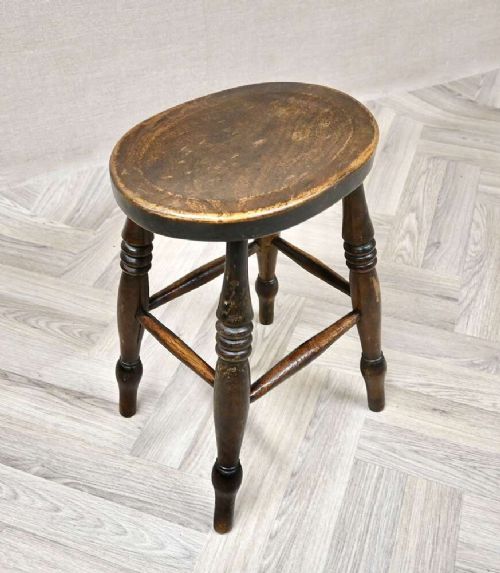
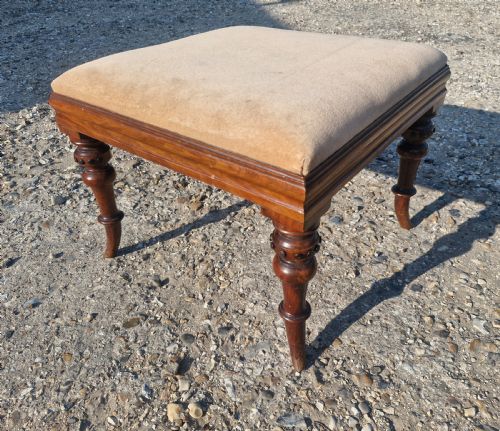
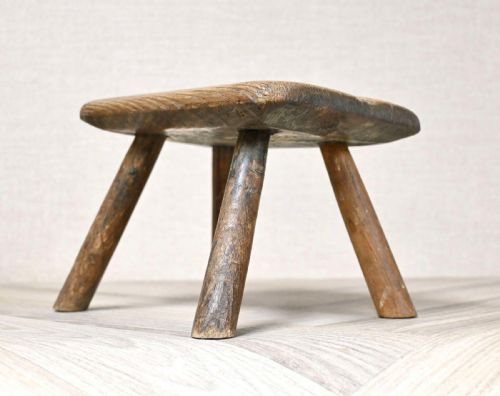


Carved Wooden Hearth Stool
These carved wooden hearth stool examples bring solid period timber and traditional seating close to the fireside.
Carved Wooden Hearth Stool
A carved wooden hearth stool serves as low seating or foot support by the fireplace, drawing on centuries of domestic utility. These pieces provide stable, compact platforms designed for warmth and comfort in the main room of the house.
The versions most commonly met on this page date from the nineteenth century, including specific Victorian interpretations alongside earlier eighteenth-century examples. Forms range from rustic country designs to refined walnut and mahogany framing.
Makers shaped these low forms from solid timber such as oak, walnut, elm, and mahogany, often pairing the carved wooden structure with original needlepoint, tapestry, or cane upholstery. Every piece reflects the practical requirements of period domestic life.
How they were made
Carpenters and joiners constructed these frames using dense hardwoods like oak, walnut, and mahogany, alongside secondary timbers such as pine and elm. Solid construction joints ensured the low frames could withstand heavy daily use near the heat of the hearth.
Carving and surface decoration included relief work, ebonising, and detailed pokerwork, transforming plain seating into decorative furnishings. Upholstery methods utilised durable textiles, tapestries, and needlepoint fixed securely to the wooden bases.
A nineteenth-century Scottish pokerwork stool on this page bears the spirited local inscription 'TOUCH ME WHA DAUR'.
What varies in quality
The grade of timber and the ambition of the carving set individual examples apart, distinguishing simple utility items from pieces made for formal reception rooms. Deeply detailed relief carving and well-figured walnut or mahogany indicate higher workshop standards.
The integrity of the original upholstery and the retention of period textiles, such as hand-worked needlepoint or tapestry, influence the character of each piece. Superior execution shows in the crispness of the woodwork and the balance of the proportions.
The Carved Wooden Hearth Stool Glossary
- Fender stool
- A long, low stool designed to fit snugly alongside a fireplace fender. These pieces kept feet warm away from cold stone floors.
- Pokerwork
- A decorative technique using heated metal tools to scorch designs into timber surfaces. Scottish examples occasionally feature mottoes or regional inscriptions.
- Needlepoint
- Stitched yarn worked through a stiff open-weave canvas ground. Surviving period examples often retain intricate floral or geometric patterns.
- Ebonised
- Timber treated with chemical finishes or dark stains to imitate costly ebony. This dark finish gained popularity during the Victorian period.
- Jacobean Revival
- A nineteenth-century revival style mimicking seventeenth-century furniture forms. Pieces typically display turned supports and heavy oak framing.
Carved Wooden Hearth Stool: Frequently Asked Questions
What is a hearth stool used for?
These low pieces served primarily as seats close to the fire or as rests for tired feet after a long day. Their compact height kept users below the level of the mantelpiece draughts.
They also functioned as convenient movable seats for children or guests gathered tightly around the hearth in colder months.
How do I date a wooden stool?
Dating relies on identifying the underlying timber species, the tool marks left by the maker, and the overall style of the carving. Eighteenth-century examples typically display heavier timber construction and simpler joinery than later pieces.
Victorian variations often introduce refined walnut frames, ebonised finishes, or elaborate revival styles such as Gothic and Jacobean motifs.
Are the upholstery top materials original?
Some pieces retain their original needlepoint, tapestry, or cane surfaces, showing genuine period wear and hand-worked detail. Other examples have undergone reupholstery over the decades to ensure practical continued use in modern rooms.
Examining the underside and tack lines often reveals whether the textile covering dates to the original manufacture or a later period.
What woods were used for these stools?
Cabinet makers and country joiners utilised whatever native or imported timber was readily available to the workshop. Oak, walnut, mahogany, elm, and pine appear frequently across these surviving pieces.
More ambitious urban workshops favoured walnut and mahogany for formal reception rooms, while rural makers relied on sturdy elm and oak.