
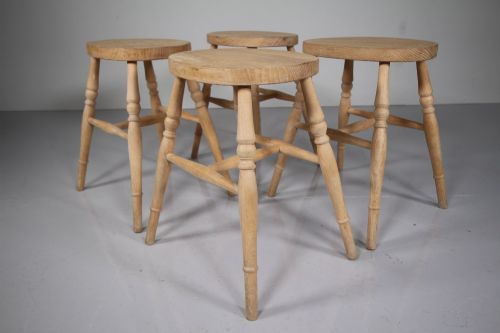
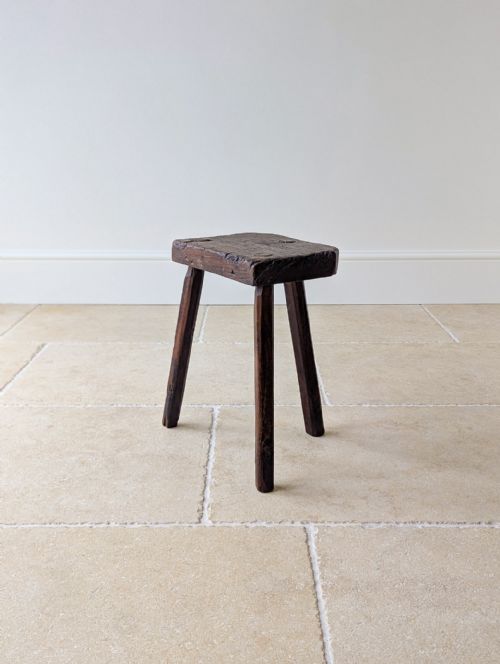
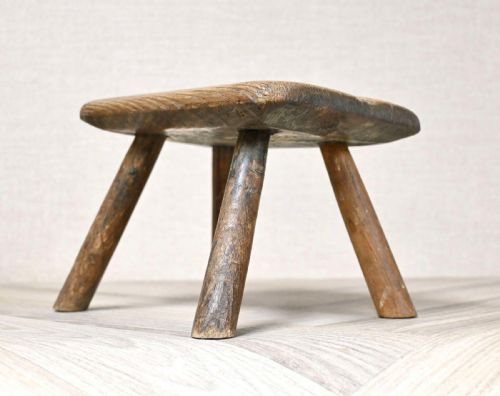
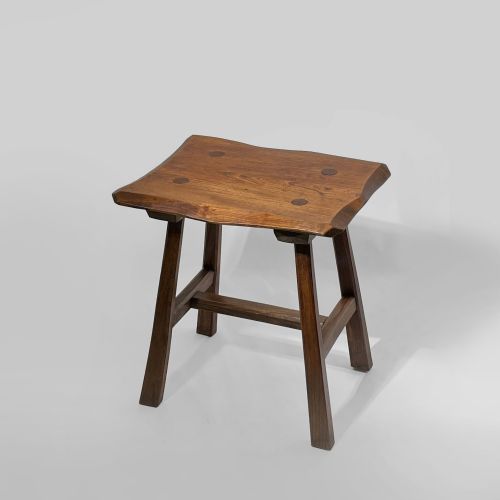


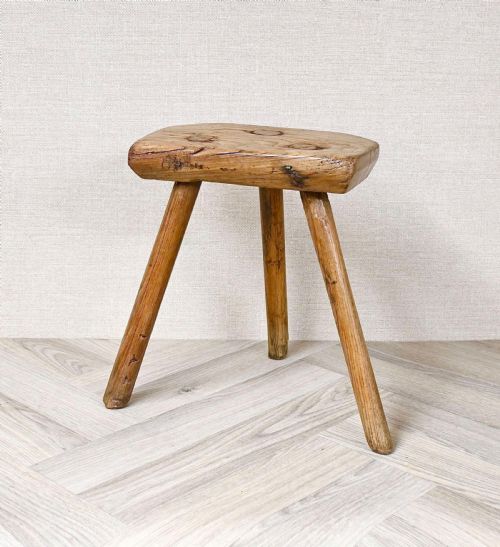


Elm Low Stool
An elm low stool brings honest vernacular character and sturdy utility into a modern room through honest timber construction.
Elm Low Stool
When you search for an elm low stool, you encounter an array of utilitarian seating that spans centuries of domestic and workshop life. These pieces include hearth stools, milking stools, and dining stools rooted in rustic country traditions.
You are most likely to meet nineteenth-century examples fashioned with solid timber seats and three or four legs. Simple forms dominate this category, reflecting their original practical purposes in homes and trades.
Origins stretch across English country workshops and Chinese vernacular production, resulting in diverse seating and occasional table forms. Each piece carries the marks of daily use and unpretentious craftsmanship.
Materials and construction
Makers utilised elm for seats because of its interlocking grain, which resists splitting under heavy downward pressure. This tough timber pairs with ash, oak, or beech for legs and stretchers.
Traditional joinery relies on wedged through-tenons and pegged joints to secure legs directly into thick wooden slabs. Surfaces often show the hollowed contours of adze work and simple lathe turnings.
Current listings feature pieces built from elm, ash, oak, pine, and beech, demonstrating the reliance on accessible local hardwoods.
Factors that separate examples
Quality rests in the balance of the proportions and the character of the timber figuring in the seat. A well-chosen slab of elm displays deep grain patterns that elevate a simple utilitarian form.
Wear patterns tell a story of longevity, where patination developed through decades of contact adds depth to the wood. Altered heights or replaced legs diminish the integrity of the original design.
The Elm Low Stool Glossary
- Vernacular
- Everyday objects made by local craftspeople for practical domestic or agricultural use without high-style academic pretension. These pieces prioritise function over ornamental design.
- Hearth stool
- A low seat traditionally placed near a fireplace for warmth or domestic chores. Their modest height keeps users close to the fire.
- Adze
- A sharp, balt-like tool with an arched blade used to hollow out wooden seat blanks. Tool marks left behind reveal the hand of the maker.
- Stretchers
- Horizontal wooden bars connecting the legs of a stool to provide structural rigidity. They often show wear from resting feet.
- Patina
- The surface sheen and darkening acquired by wood over centuries through handling, light, and waxing. It acts as a visual indicator of age and continuous use.
Elm Low Stool: Frequently Asked Questions
What were elm low stools used for originally?
These low stools served practical roles around the home, farm, and workshop. People used them for milking, sitting by the hearth, or performing low-level daily tasks.
Craftspeople also utilised specialised versions for trades, such as jewellery making, where stability and a low vantage point mattered most.
How do I live with an antique elm stool?
An elm low stool adapts easily to modern interiors as a side table, a plant stand, or extra seating in a hallway. Their compact size allows them to tuck beneath surfaces or sit quietly in a corner.
Keep the wood away from direct heat sources and sudden humidity changes to prevent the timber from splitting.
How can I tell the age of a country stool?
Dating relies on observing construction methods, tool marks, and the natural ageing of the wood. Hand-carved surfaces and traditional joinery without modern metal fasteners point to earlier periods.
Examine the underside for the type of timber used in the legs and the wear around the footings to understand its history.
Are Chinese low tables related to these stools?
Chinese vernacular low tables share a similar domestic economy with European country stools, focusing on solid timber construction. Both categories represent utilitarian design traditions from distinct geographic regions.
They utilise heavy hardwood planks and straightforward framing suited for low-level seating or display.