




Low Padded Footrest
These low padded footrest pieces offer a practical fireside seat, combining nineteenth-century timber frames with period textile upholstery.
Low Padded Footrest
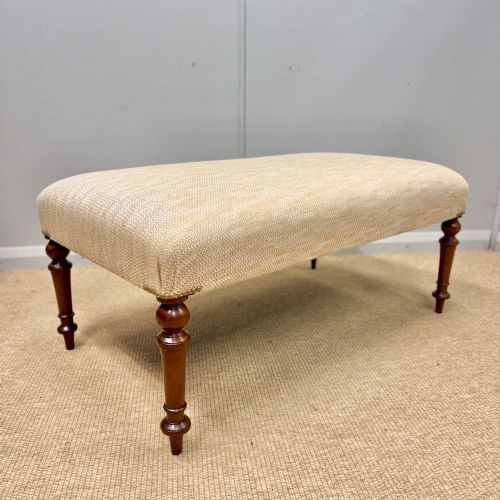
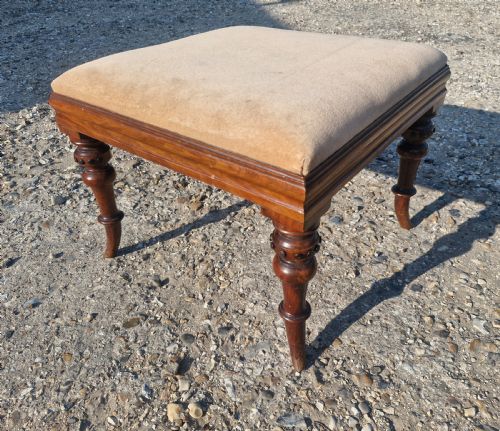
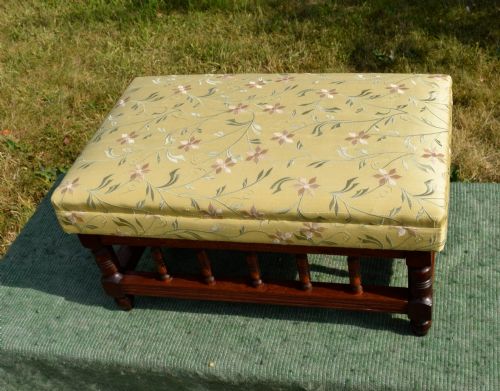
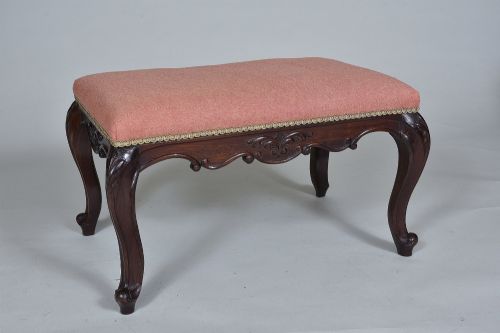
A low padded footrest serves as a fireside companion or a dressing table seat, designed to keep feet raised above cold floors. When you search for a low padded footrest, you encounter nineteenth-century walnut and mahogany frames alongside Edwardian examples.
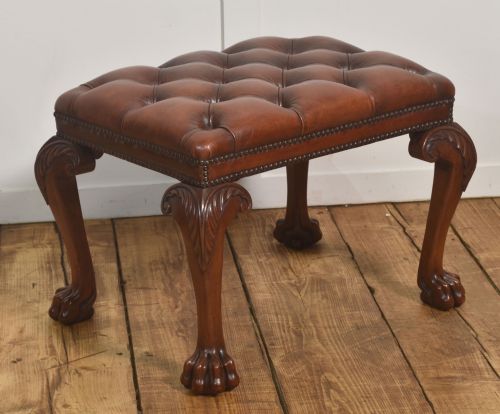
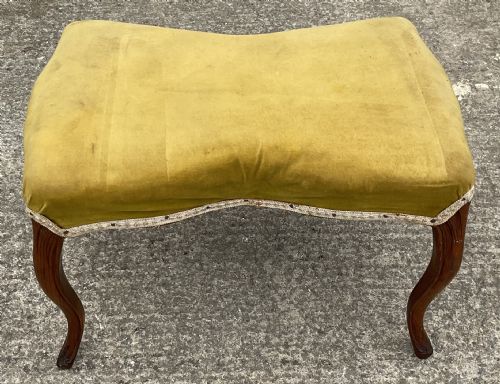
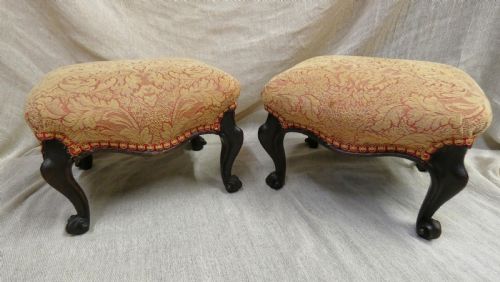
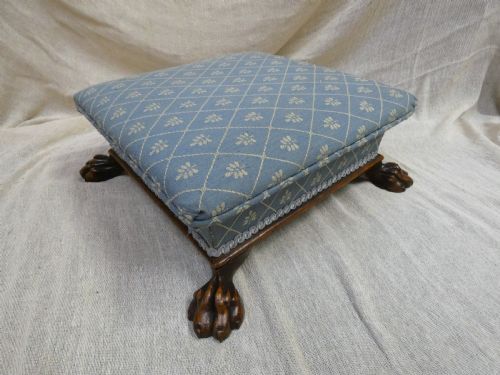
The most common form on this page is the Victorian upholstered stool, typically standing on short legs or brass castors. These pieces often draw upon Queen Anne, Chippendale, or George III revival styles, interpreted by makers working in mahogany, walnut, and pitch pine.
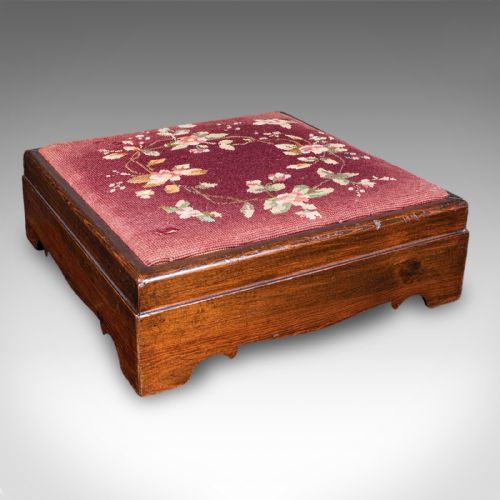
Makers shaped these low forms as oblong, oval, or long fender stools designed to sit neatly before a hearth. The upholstery ranges from plain leather and wool to decorative tapestry and needlepoint.
Materials and construction
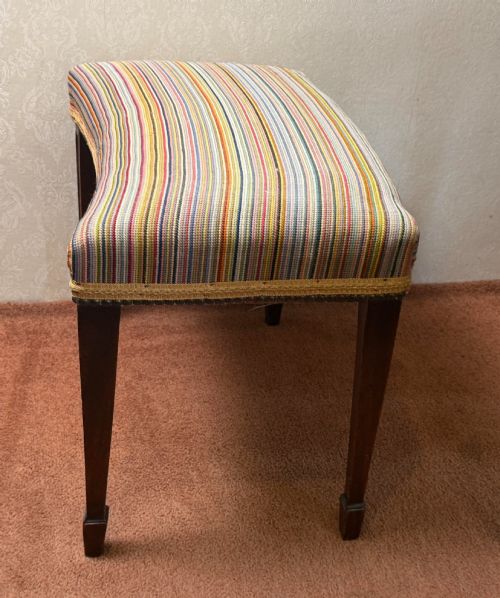
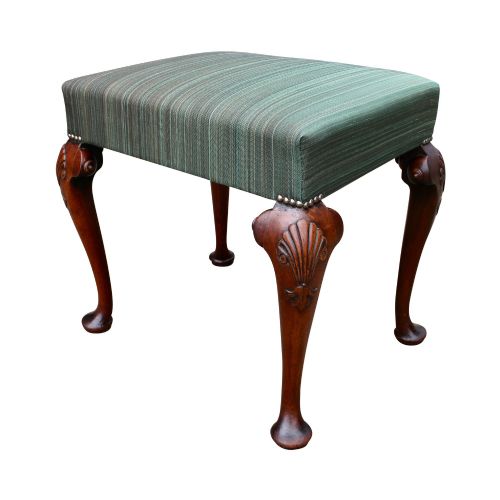
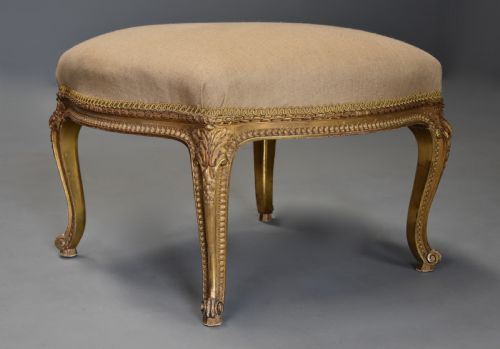
Carpenters built the structural frames using dense hardwoods like mahogany, walnut, pitch pine, and oak, often shaping them with cabriole legs, square tapering supports, or carved details. Brass castors frequently appeared on nineteenth-century examples to ease movement across heavy carpets.
Upholstery formed the integral padded top, utilising textiles such as wool, fabric, leather, tapestry, and woven rattan stretched over stuffing. Makers secured these materials to the wooden rails with careful stitching and tacks, finishing the edges with decorative braid or piping.
Upholstery materials recorded here include leather, wool, tapestry, needlepoint, and woven rattan.
Judging the work
Quality rests in the crispness of the timber carving and the structural integrity of the frame joints. Solid walnut or mahogany frames with well-defined cabriole legs stand apart from simpler utility pieces.
The standard of upholstery and the retention of period textiles influence the character of each piece. Original leather, needlepoint, or tapestry work executed with traditional hand-stitched methods elevates the standing of an antique stool.
Howard and Sons·Loidrault Freres Paris·Mathew Gregson
The Low Padded Footrest Glossary
- Cabriole leg
- A furniture leg that curves outward at the knee and tapers inward to an ankle, inspired by animal limbs. This form frequently defines walnut and mahogany seating from the Victorian period.
- Fender stool
- A long, narrow footstool designed to fit closely alongside a hearth fender. These pieces kept feet elevated from cold stone hearths in nineteenth-century drawing rooms.
- Needlepoint
- A type of canvas work embroidery using wool yarn to create dense patterned surfaces. Victorian makers frequently utilised this technique for fireside stool covers.
- Pitch pine
- A durable softwood with prominent grain patterns utilised by nineteenth-century cabinet makers. It provided a sturdy structural alternative to traditional hardwoods.
Low Padded Footrest: Frequently Asked Questions
What is a low padded footrest?
A low padded footrest is a short upholstered seat designed for domestic comfort, commonly placed near a hearth or in front of an armchair.
These pieces use timber frames such as mahogany or walnut combined with textile, leather, or wool upholstery to provide a soft surface for resting feet.
How were these stools used?
Victorian households utilised these low seats beside fireplaces to keep feet elevated away from cold draughts. They also served secondary duties as dressing table seats or low resting benches in libraries.
Their compact height made them versatile additions to nineteenth-century reception rooms, easily moved where needed.
How do I tell Victorian periods apart?
Victorian pieces often display robust walnut or mahogany frames with revival detailing such as cabriole legs or carved mouldings. Earlier nineteenth-century examples might show Regency scroll tops, while later Edwardian versions introduce lacquered finishes or lighter pine structures.
Examining the timber type, framing technique, and upholstery style helps establish the likely decade of manufacture.
Are these stools suitable for daily use?
These antique stools handle everyday domestic use well when the underlying wooden frame remains sound. Many nineteenth-century examples retain sturdy joinery that supports regular sitting.
Buyers often place them by modern armchairs or use them as functional decorative accents in living spaces.