
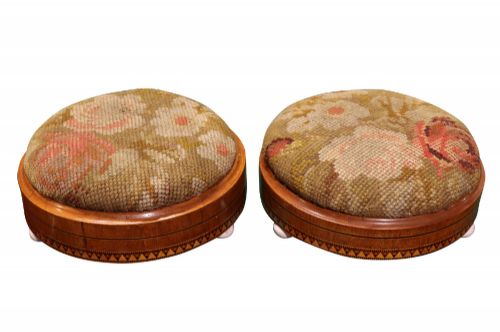
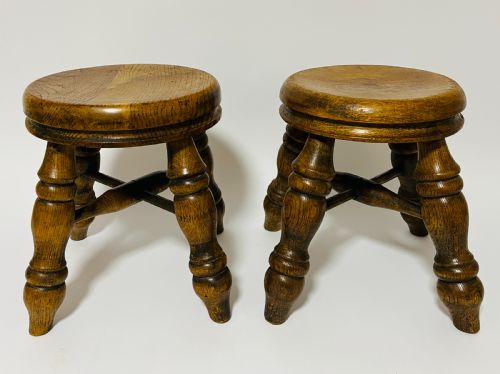


Victorian Footstool Pair
A victorian footstool pair brings low, companionable seating to a hearth or library, pairing sturdy timber frames with needlework tops.
Victorian Footstool Pair
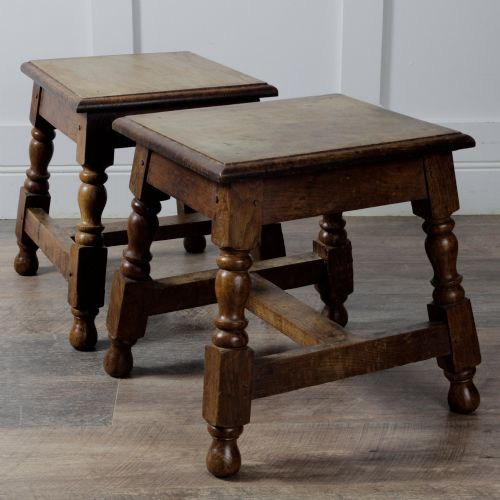
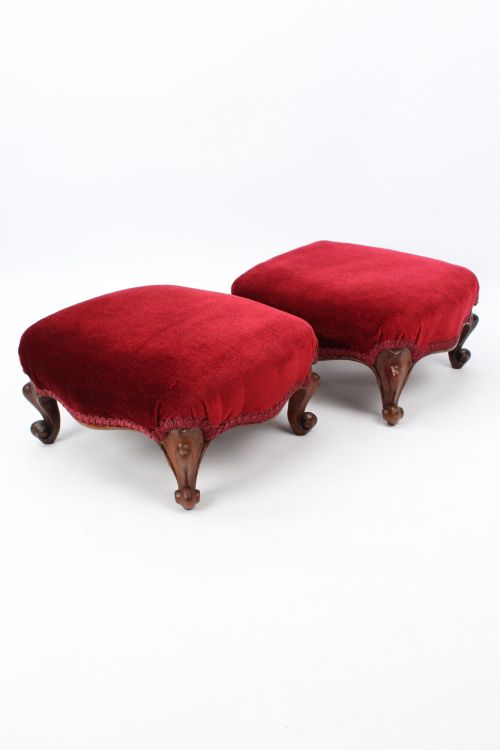
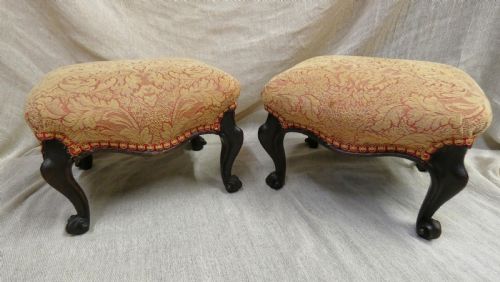
A victorian footstool pair brings matched low seating into a room, typically designed to support feet or serve as compact informal seats by a hearth. You will most frequently meet mahogany and walnut frames supporting textile, velvet, leather, or wool-work tops.
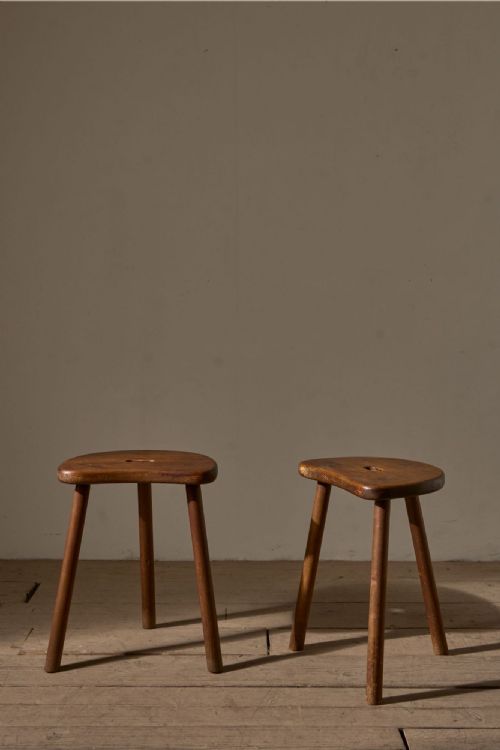
The selections span small circular stools, rectangular forms with carved frames, and larger upholstered resting pieces. While the core of the evidence sits firmly in the nineteenth century, you also encounter earlier Georgian and Regency influences alongside later country pine and elm variants.
Makers ranged from standard cabinet makers to firms like James Shoolbred, producing everything from simple vernacular pine to elaborate buttoned leather library window seats. The unifying trait across the selection is the paired format, offering balanced proportions for matching chairs or fireside placement.
Materials and construction methods
Timbers such as mahogany, walnut, oak, rosewood, and pitch pine form the structural frames, often shaped with cabriole legs, carved details, or simple jointed construction. Cabinet makers relied on traditional joinery to ensure stability in low-slung pieces subject to constant pressure.
Upholstery techniques involve traditional stuffing secured beneath textile, velvet, silk, or hand-dyed leather, frequently finished with deep buttoning or intricate needlework. Berlin work and beadwork panels demonstrate the prevalent domestic handcraft applied to these functional frames.
Original animal needleworks peer up from several footstools, preserving tiny stitched pets that outlasted their living models.
Judgement of quality and execution
The standard of a victorian footstool pair rests on the crispness of the timber carving and the integrity of the underlying frame construction. Finer examples display carefully selected grain in walnut or mahogany, whilst vernacular pieces rely on honest, robust joins in pine, elm, or oak.
Upholstery finish distinguishes standard workshop output from superior pieces, particularly where original needlework, Berlin work beadwork, or hand-dyed leather remain intact. A cohesive pair demonstrates matched timber patination and uniform wear that confirms their shared history.
James Shoolbred
The Victorian Footstool Pair Glossary
- Berlin Work
- A type of nineteenth-century canvas embroidery worked from printed and hand-coloured grid patterns. It allowed makers to produce intricate floral and pictorial designs for upholstery.
- Cabriole Leg
- A furniture leg that curves out and then in, resembling an animal's curving leg. This shape appears frequently on refined Victorian seating.
- Tunbridge Inlaid
- Woodwork decorated with tiny mosaic tiles assembled from different coloured woods to form geometric or pictorial scenes. It adorns small circular walnut tops.
- Needlepoint
- Canvas work embroidered with wool using tent stitch or cross stitch. It provides the durable textured surface seen on many period footstools.
- Vernacular
- Everyday utilitarian furniture made by local carpenters using regional timbers rather than following strict high-style metropolitan fashions.
Victorian Footstool Pair: Frequently Asked Questions
How were these stools originally used?
These low stools supported feet near the fireplace or served as casual auxiliary seats in parlours and libraries. Their paired format allowed balanced placement beside armchairs or window seats.
Heavier leather or upholstered variants also functioned as short window benches or resting pieces for tired travellers in larger nineteenth-century homes.
Can I use them as daily seats?
Most antique footstools tolerate casual sitting, though their primary nineteenth-century design was supportive rather than load-bearing for heavy daily use. Solid timber frames in oak or mahogany remain sturdy, but older upholstery may require careful handling.
Placing them in low-traffic areas preserves both the wooden joints and the fragile needlework or leather surfaces.
How do I care for antique upholstery?
Protect antique textiles and leather from direct sunlight to prevent fading and drying of the natural fibres. Gentle brushing removes dust from wool-work and velvet without damaging the pile or threads.
Leather surfaces benefit from occasional neutral conditioning to maintain flexibility in the antique hide without altering the original dye.
How do I distinguish Victorian from earlier styles?
Victorian pieces frequently employ heavier walnut and mahogany with robust buttoning, exuberant curves, or Revival details. Earlier Georgian and Regency influences show lighter, restrained lines and simpler geometric proportions.
Checking the timber patina, joinery methods, and upholstery tack types helps confirm whether a piece belongs to the mid-nineteenth century or earlier traditions.