
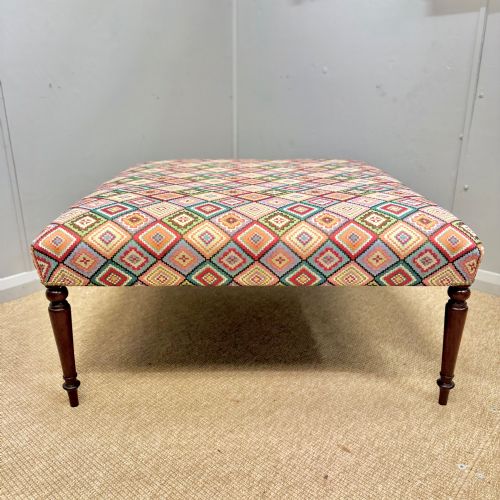
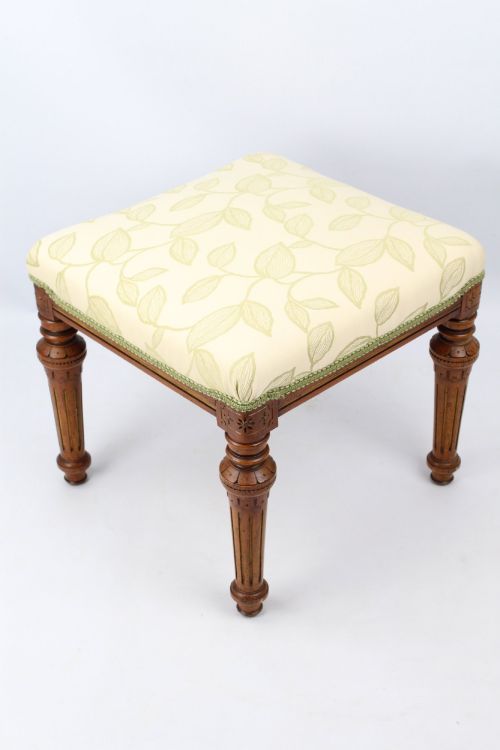
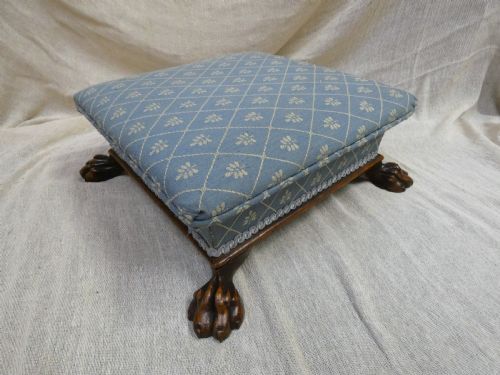


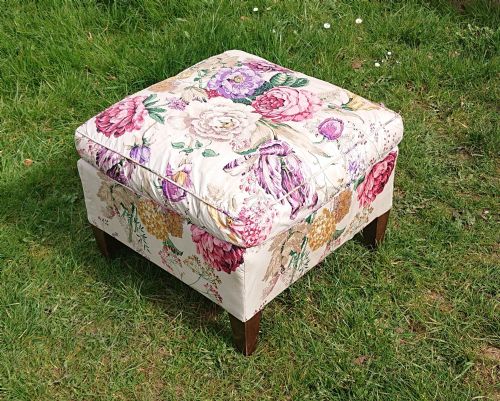


Patterned Fabric Footstool
Patterned fabric footstools are low upholstered seats covered in decorative textiles that bring texture and useful extra resting places to a room.
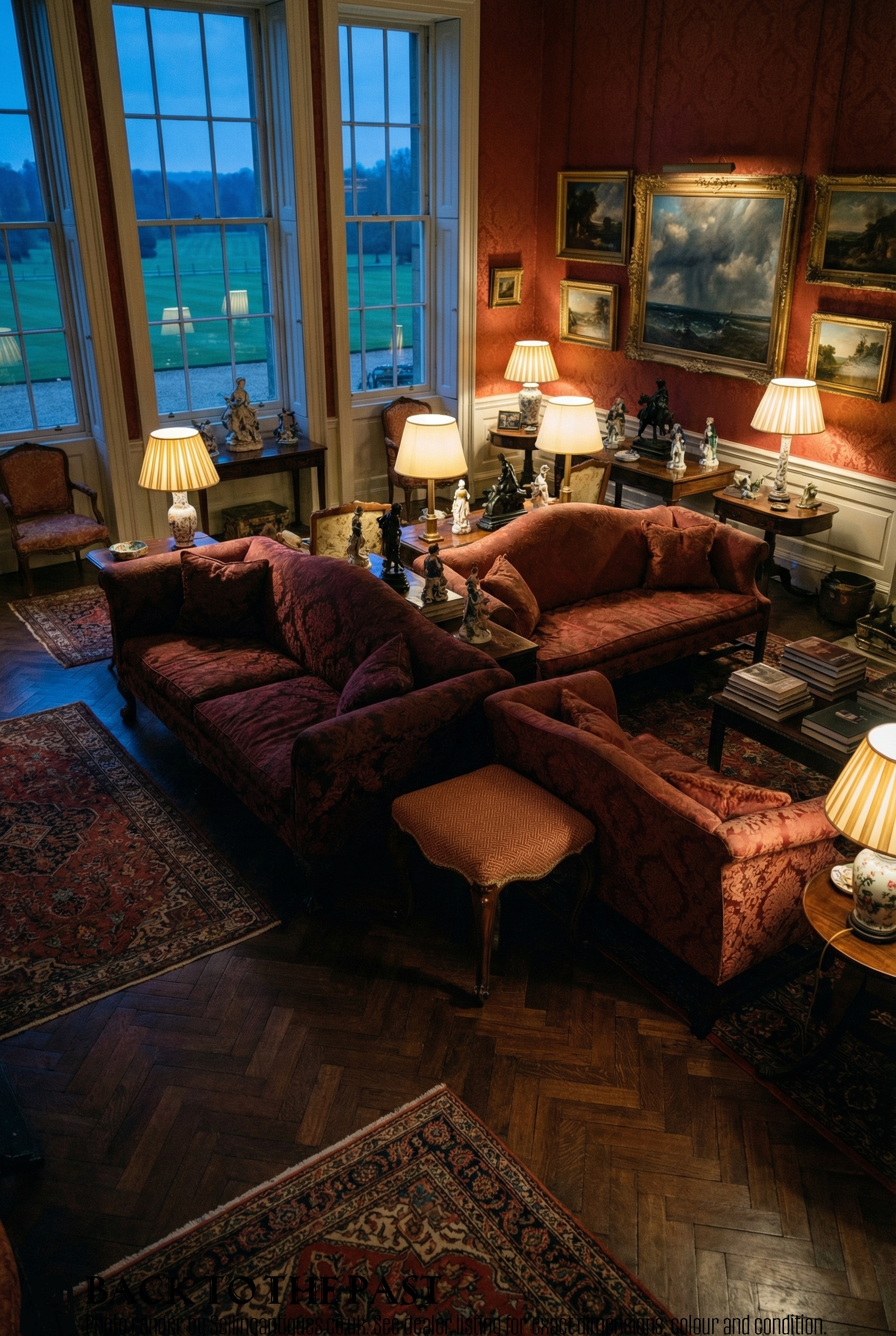
What They Are
A patterned fabric footstool is a low seat designed to support the feet or serve as a small occasional perch. These pieces appear in forms ranging from simple footstools and dressing table stools to waisted ottoman stools.
The pieces on this page span the Georgian period, the Victorian era, the nineteenth century, and the early twentieth century. Styles encompass Victorian design, Victorian and Art Nouveau combinations, Louis XV Revival, and Victorian Rococo Revival.
Buyers most frequently encounter Victorian examples and timber-framed pieces upholstered in distinctive textiles such as Liberty fabric. Origins include British and French workshops working in traditional furniture forms.
How They Were Made
Makers constructed the frames of these stools from timber including rosewood, mahogany, oak, and parcel gilt wood. Carved details often decorated the solid wood structures.
Upholstery techniques applied fabric and cotton coverings over the frames, sometimes incorporating brass elements as structural or decorative fixings.
Retail Price Guide 2026
Typical UK retail prices for patterned fabric footstool, calculated from the Sellingantiques database of over a million retail prices indexed since 2003. This retail price guide relies exclusively on Sellingantiques data; no external sources or auction records are used, so the figures do not describe the wider market.
What Varies in Quality
Quality rests on the crispness of timber carving in woods such as rosewood and mahogany versus simpler turned frames. The choice of covering fabric, from standard cotton to distinctive textiles like Liberty material, alters the character of the piece.
The ambition of the design distinguishes standard items from revival pieces, such as those exhibiting Louis XV Revival or Victorian Rococo Revival forms. Proportion and structural integrity determine how successfully a stool sits in an interior.
The Patterned Fabric Footstool Glossary
- Ottoman stool
- A fully upholstered low seat, often with a waisted shape, designed to serve as a footrest or seat. These pieces frequently feature decorative textile coverings.
- Parcel gilt
- Woodwork that is partially gilded with gold leaf to highlight carved details against the natural timber grain. This technique appears on Victorian frames.
- Louis XV Revival
- A nineteenth-century style that reinterprets eighteenth-century French curves, asymmetrical ornamentation, and cabriole forms. It is seen on French stools from this period.
- Victorian Rococo Revival
- A mid-nineteenth-century decorative style marked by exuberant carved scrolls, floral motifs, and organic shapes. Stools in this style often use rosewood or mahogany.
Frequently Asked Questions
How do I style a footstool?
Place a patterned fabric footstool before an armchair to create a traditional resting place for the feet. It also functions as an independent low seat in a corner or beside a dressing table.
Choose a piece that complements existing textiles in the room through its fabric pattern. The low profile allows it to sit easily beneath tables or in compact spaces when not in use.
What is an ottoman stool?
An ottoman stool is a fully upholstered low seat designed for comfort and utility. The examples recorded here include waisted forms covered in decorative fabric.
These pieces provide a larger surface area than standard footstools. They work well as flexible seating options that can move easily between rooms.
How do I date a footstool?
Dating relies on identifying the timber used in the frame, such as rosewood, mahogany, or oak. Stylistic clues like Victorian Rococo Revival or Art Nouveau details help narrow the period of manufacture.
Construction methods and the type of upholstery fabric also offer guidance. Comparing the carved ornament to known historical styles clarifies whether a piece is Georgian, Victorian, or early twentieth century.
Are these stools comfortable?
These stools are built with padded upholstery designed to provide a soft surface for the feet or a firm perch for sitting. The underlying frame supplies solid support beneath the textile covering.
Depending on the age of the piece, the internal padding may reflect historical stuffing methods. Buyers should expect traditional firmness suited to period seating.