

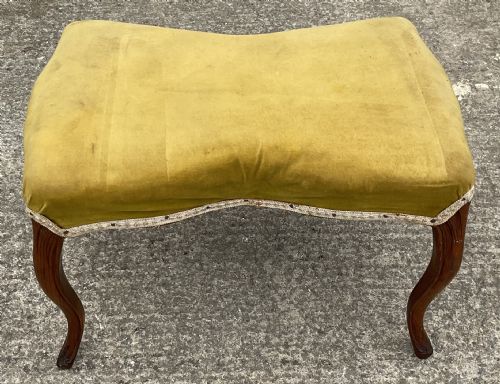
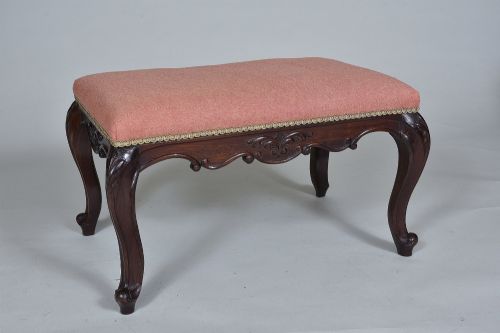
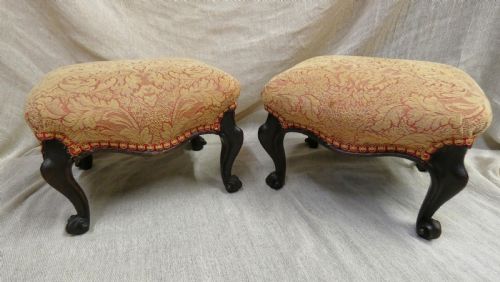
Victorian Cabriole Stool
A victorian cabriole stool brings solid nineteenth-century timber and curved legs together into a compact, sturdy seat that fits easily beside a fireplace or dressing table.
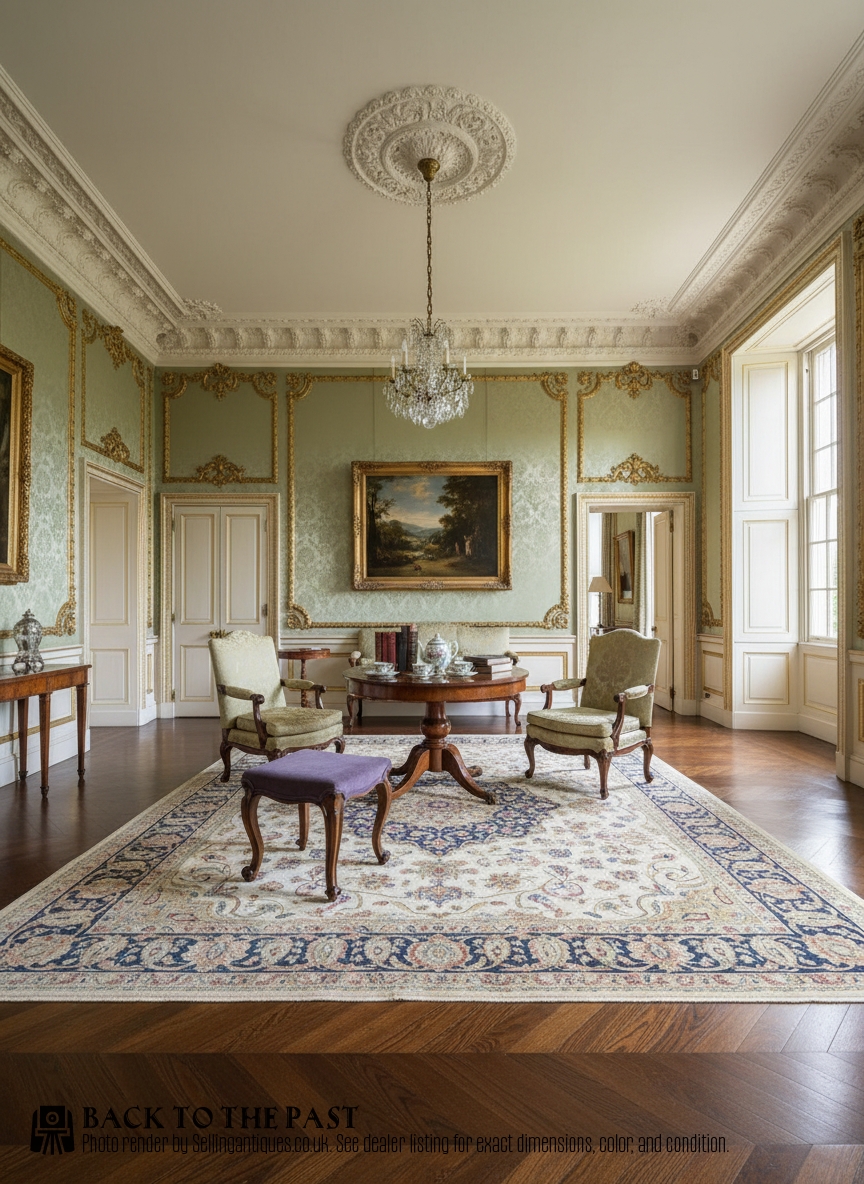
Victorian Cabriole Stool
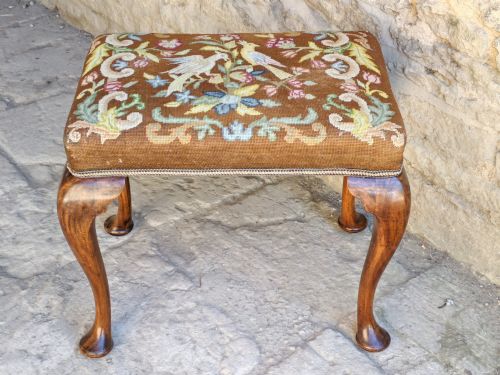
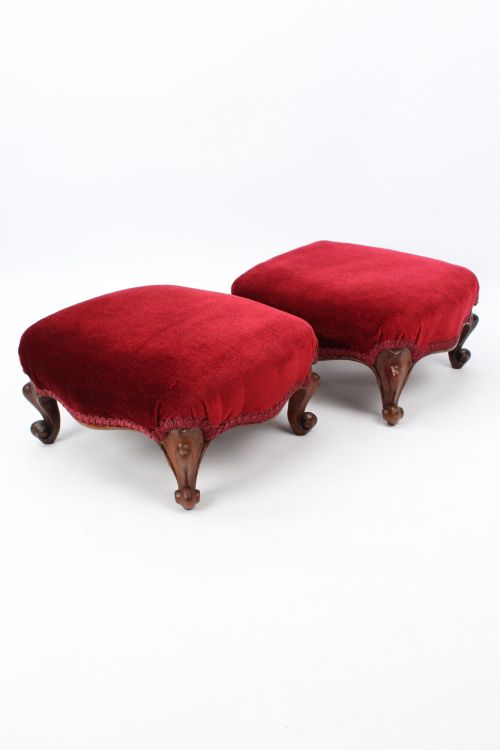
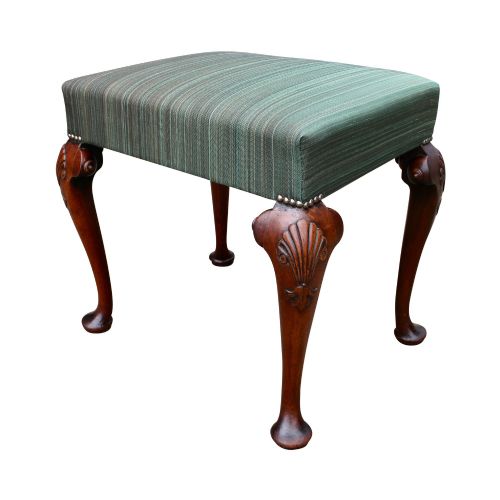
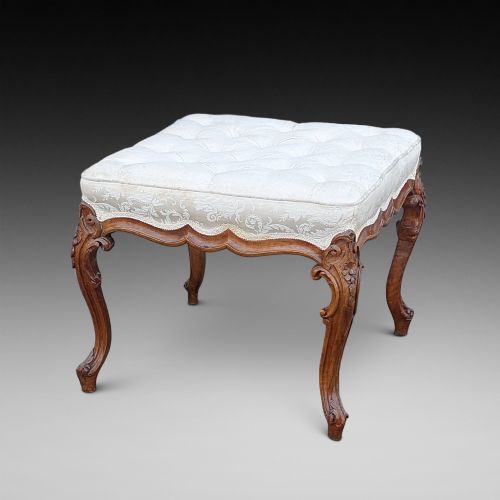
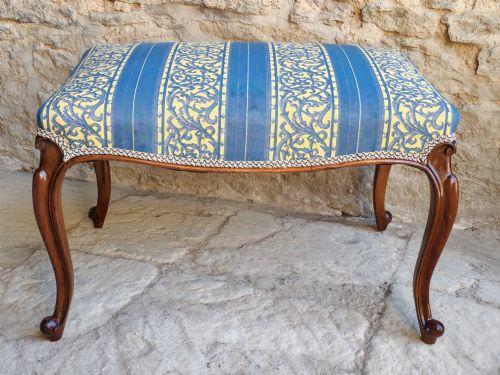
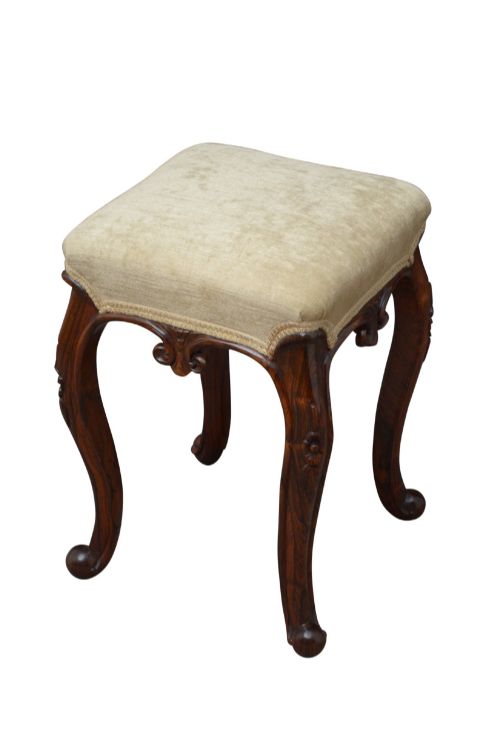
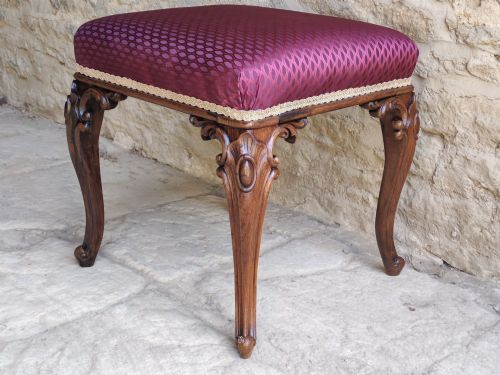
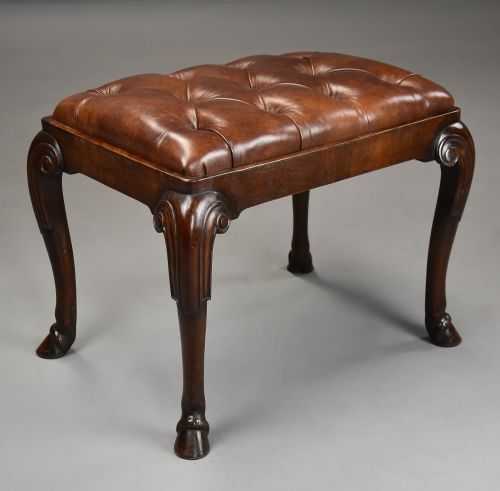
A victorian cabriole stool is a low seating piece defined by its signature curved legs, which sweep outward at the knee and taper inward toward the foot. These pieces appear primarily as footstools, dressing table seats, and small salon stools spanning the nineteenth century.
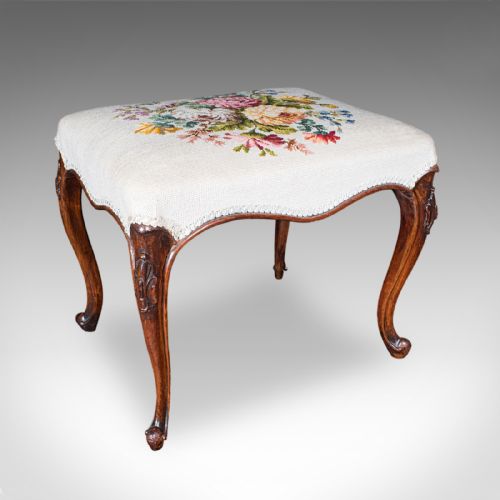
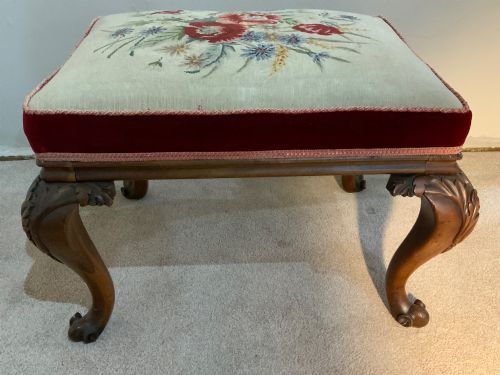
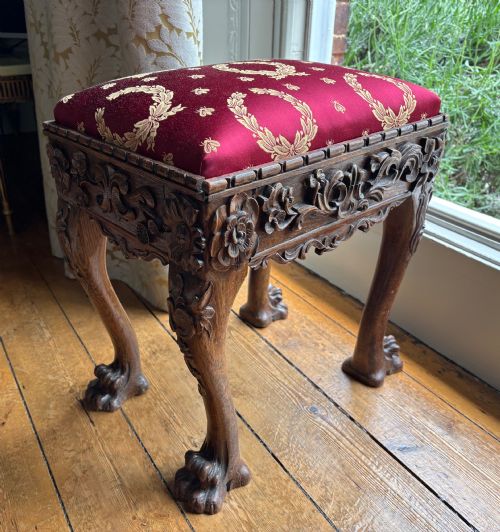
The most common examples encountered here date from the mid-Victorian decades, constructed from dense hardwoods and featuring either low platforms or upholstered tops. Many of these pieces borrow stylistic cues from earlier revivals, displaying carved knees or scroll feet that reflect Queen Anne and Rococo influences.
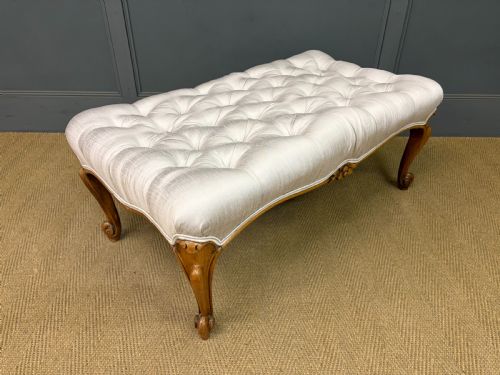
Makers designed these items for specific domestic uses, ranging from fireside hearth placement to piano seating and bedroom dressing. Their proportions vary from small square footstools to long rectangular window seats and centre stools.
Materials and Construction
Carpenters typically built the frames of these stools using solid timbers such as walnut, mahogany, and rosewood, chosen for their ability to hold intricate carved details along the legs and rails. These hardwoods were frequently turned or hand-carved to achieve the characteristic double curvature of the cabriole form.
Upholstered surfaces relied on traditional stuffing methods, utilising textiles like wool needlepoint, tapestry, velvet, and patterned fabric secured over webbing and padding. Some examples incorporated decorative brass hardware or leather upholstery depending on their intended domestic function.
Victorian Cabriole Stool Retail Price Guide 2026
Typical asking prices for victorian cabriole stool among the pieces listed under this phrase on Sellingantiques today, from the lower quarter to the upper quarter. They describe what is for sale here now, not the wider market.
Some miniature footstools were built low enough to keep ankles safely clear of drafty nineteenth-century floorboards.
Distinctions in Quality
Quality in these stools rests largely on the crispness of the wood carving and the robustness of the timber frame joints. Superior examples exhibit deep, hand-carved ornamentation on the knees and rails rather than shallow machine-moulded profiling.
The choice of primary wood also dictates standard, with richly figured walnut and rosewood standing above standard mahogany or secondary softwoods. Furthermore, pieces retaining their original structural integrity and high-grade textile coverings or leather finishes command greater appreciation.
The Victorian Cabriole Stool Glossary
- Cabriole leg
- A furniture leg that curves outward at the top and inward near the bottom, mimicking an animal's curving limb. This form gained widespread popularity during the eighteenth century and saw frequent revivals throughout the Victorian era.
- Needlepoint
- A type of counted thread embroidery stitched onto an open-weave canvas foundation. It frequently covers the top surfaces of nineteenth-century footstools and fireside seats.
- Centre stool
- A larger freestanding seating piece designed to sit in the middle of a room rather than against a wall. These versions often feature generous dimensions and elaborate upholstery.
- Serpentine form
- A line or edge that curves outward in the centre and inward at the sides, creating a gentle wave effect. Victorian makers frequently applied this contour to the wooden frames and upholstered tops of stools.
- Rococo revival
- A design movement during the mid-nineteenth century that imitated the ornate, asymmetrical scrolling and floral motifs of the eighteenth-century French style. This aesthetic heavily influenced the carved wooden frames of many Victorian stools.
Victorian Cabriole Stool: Frequently Asked Questions
What were these stools originally used for?
Victorian households utilised these low stools primarily as footrests by the fireplace, as dressing table seats in bedrooms, or as movable salon seating for guests.
Their compact dimensions allowed them to be easily shifted around the room to provide convenient auxiliary seating wherever required.
How do I date a cabriole leg stool?
Dating relies on examining the timber species, the style of the carved details, and the structural construction methods used inside the frame. Solid walnut and rosewood frameworks coupled with mid-nineteenth-century revival motifs typically point toward the peak of the Victorian period.
Later Victorian interpretations often incorporate sharper machine tooling or distinct stylistic crossovers that separate them from earlier decades.
Are these stools suitable for daily use?
Most surviving nineteenth-century stools remain structurally robust enough for regular everyday sitting or resting feet, provided the wooden frame is secure. Buyers should verify that the internal joinery and webbing remain sound before subjecting the piece to heavy daily weight.
Many examples also lend themselves well to reupholstering if the existing fabric requires updating to suit modern interiors.
What is the difference between a footstool and a salon stool?
Footstools are generally smaller and lower to the ground, designed specifically to support a seated person's feet rather than to bear the full weight of a sitting body. Salon stools and centre stools stand taller and offer larger, firmer upholstered surfaces meant for independent seating.
Window seats also provide elongated platforms built to accommodate one or more people positioned along a room's perimeter.