


Upholstered Blanket Box
An upholstered blanket box brings functional storage and traditional textile work together, offering a practical seat and a deep repository for linens.
What an upholstered blanket box is
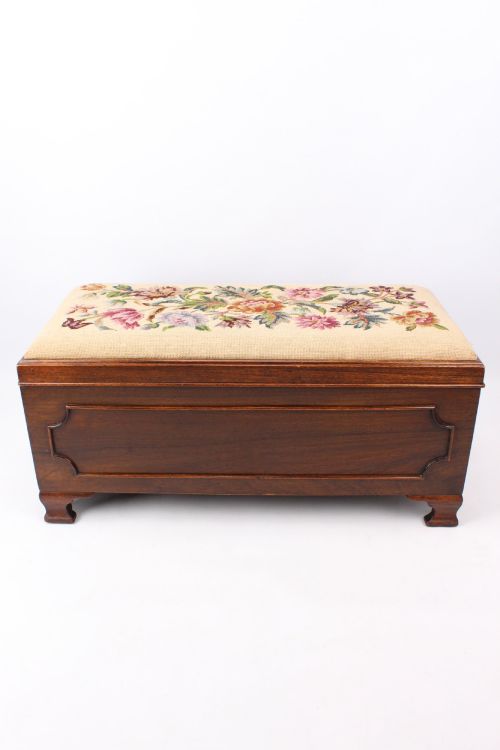
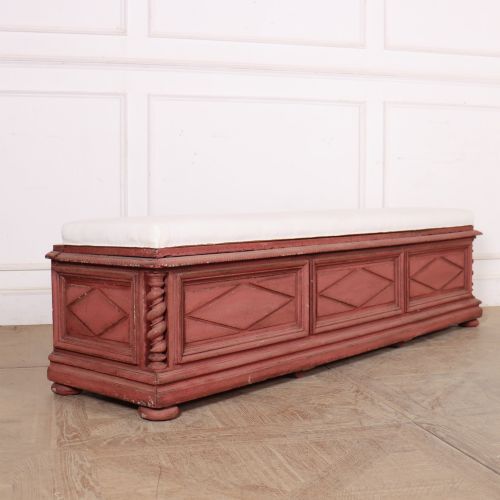
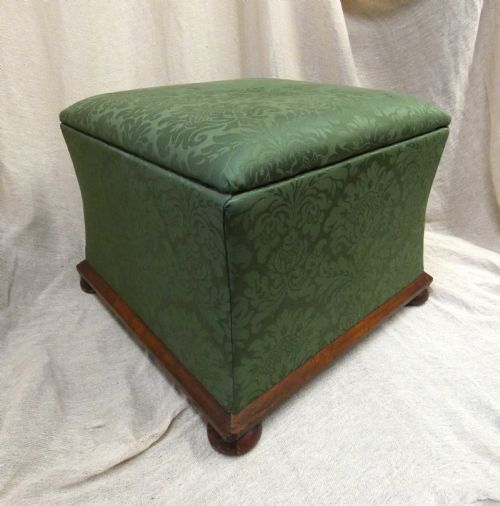
An upholstered blanket box serves as a dual-purpose piece of furniture, combining a timber storage trunk with a padded seat on top. This inventory spans Victorian examples alongside early twentieth-century pieces, including items from eighteen eighty and nineteen twenty.
The primary forms appearing here include ottomans, storage chests, and blanket boxes. These pieces often arrive covered in textiles such as fabric, linen, baize, and crushed velvet.
Makers historically produced these trunks using pine and general timber, sometimes incorporating iron fittings. Surviving examples range from large storage chests to deep buttoned ottomans.
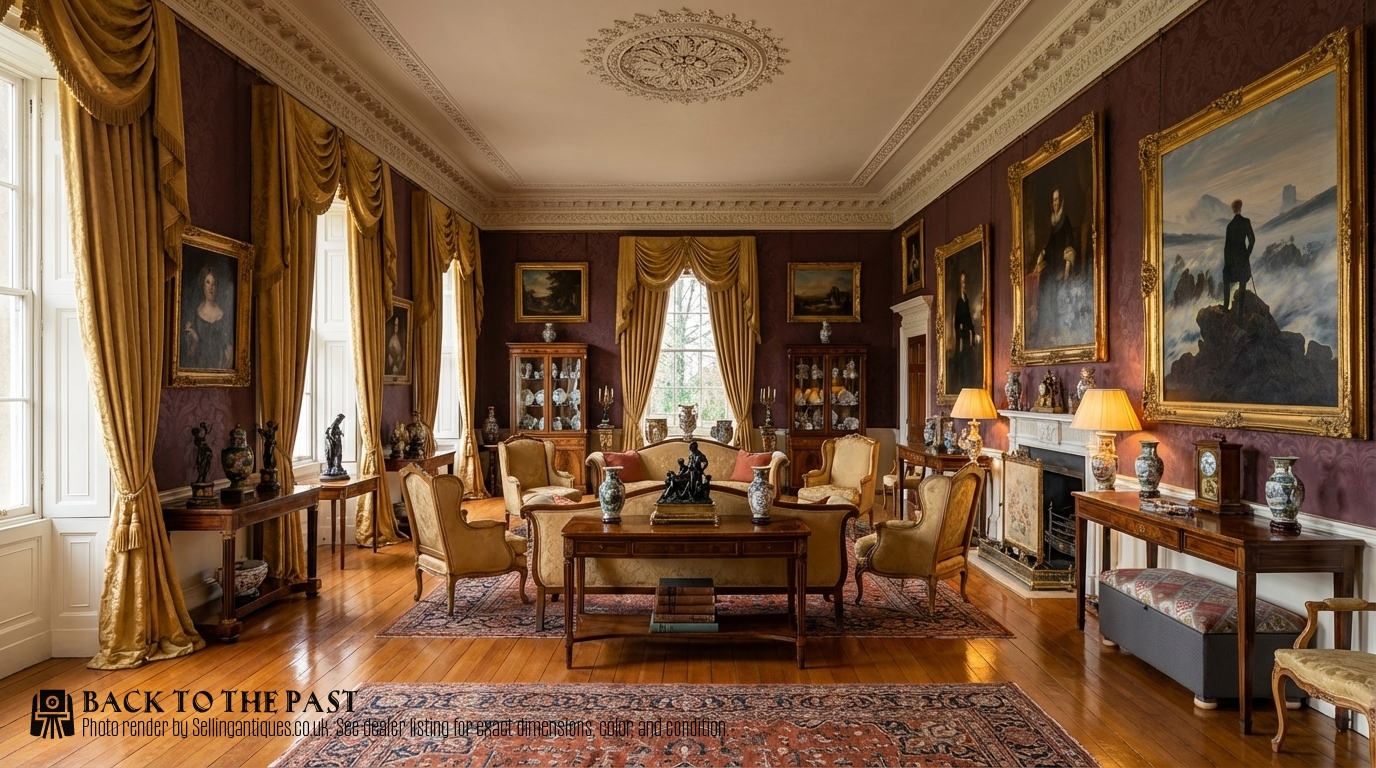
How they were made
Makers constructed the carcases of these boxes principally from pine and timber, creating rigid internal structures designed to bear weight. Iron hardware often reinforced the joints and provided functional hinges or handles.
The exterior padding and upholstery relied on traditional textile application, utilising fabrics like linen, baize, and crushed velvet. Some examples incorporate deep buttoning techniques across the seat to secure the internal padding.
Retail Price Guide 2026
Typical UK retail prices for upholstered blanket box, calculated from the Sellingantiques database of over a million retail prices indexed since 2003. This retail price guide relies exclusively on Sellingantiques data; no external sources or auction records are used, so the figures do not describe the wider market.
What varies in quality
Quality rests in the structural integrity of the timber carcase and the original execution of the upholstery. Pieces featuring solid pine construction and durable textile coverings demonstrate superior longevity.
The sophistication of the surface design separates standard examples from finer ones. Elements like deep buttoning and shaped profiles indicate a higher degree of initial craftsmanship.

The Upholstered Blanket Box Glossary
- Ottoman
- A low upholstered seat or bench without a back or arms, typically featuring a hinged lid that opens for interior storage. These pieces function as both seating and trunks.
- Baize
- A coarse woolen material resembling felt, frequently utilised historically for lining the interiors of storage chests and blanket boxes to protect delicate textiles.
- Pine
- A softwood commonly employed by nineteenth-century makers for the structural carcases of utility furniture and storage chests due to its availability and workability.
- Crushed velvet
- A lustrous fabric with a patterned appearance caused by irregular pile direction, sometimes found on the exterior upholstery of twentieth-century boxes.
- Deep buttoning
- An upholstery technique where twine is pulled through padding and secured with buttons to create a diamond pattern, adding both tension and decoration.
Frequently Asked Questions
What is an upholstered blanket box?
An upholstered blanket box is a storage chest featuring a padded, fabric-covered lid designed for use as a seat. These pieces combine timber construction with textile work.
They provide concealed space for linens and clothes while serving as functional furniture in bedrooms or living areas.
How do I date a blanket box?
Dating relies on examining the timber species, construction methods, and the style of the upholstery. Nineteenth-century examples often display solid pine carcases and traditional textile coverings.
Later pieces from the nineteen twenties or thirties introduce different fabric choices, such as crushed velvet, while retaining the core storage function.
Were these boxes used for seating?
These pieces were specifically designed to function as seats in addition to holding textiles. The padded lids allowed them to double as benches or ottomans at the foot of a bed.
Strong timber frames and secure iron hinges supported regular sitting without compromising the internal storage.
What fabrics were used originally?
Period pieces frequently feature coverings of linen, baize, or standard fabric tailored to match contemporary interior tastes. Later variations incorporate textured materials like crushed velvet.
Interiors often remained lined with simpler textiles or plain timber to protect stored items.