
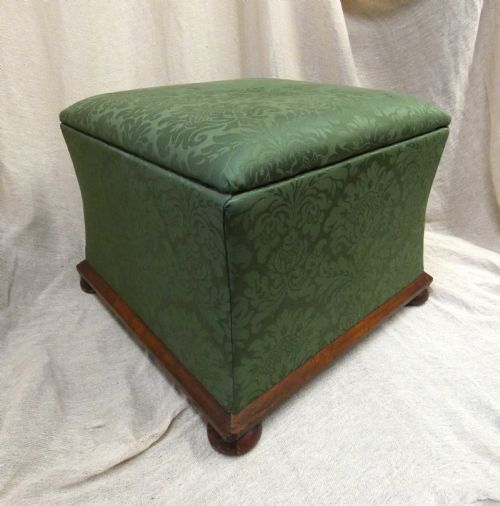


Padded Storage Chest
A padded storage chest conceals linen or blankets beneath an upholstered seat, bringing practical utility and period character to a room.
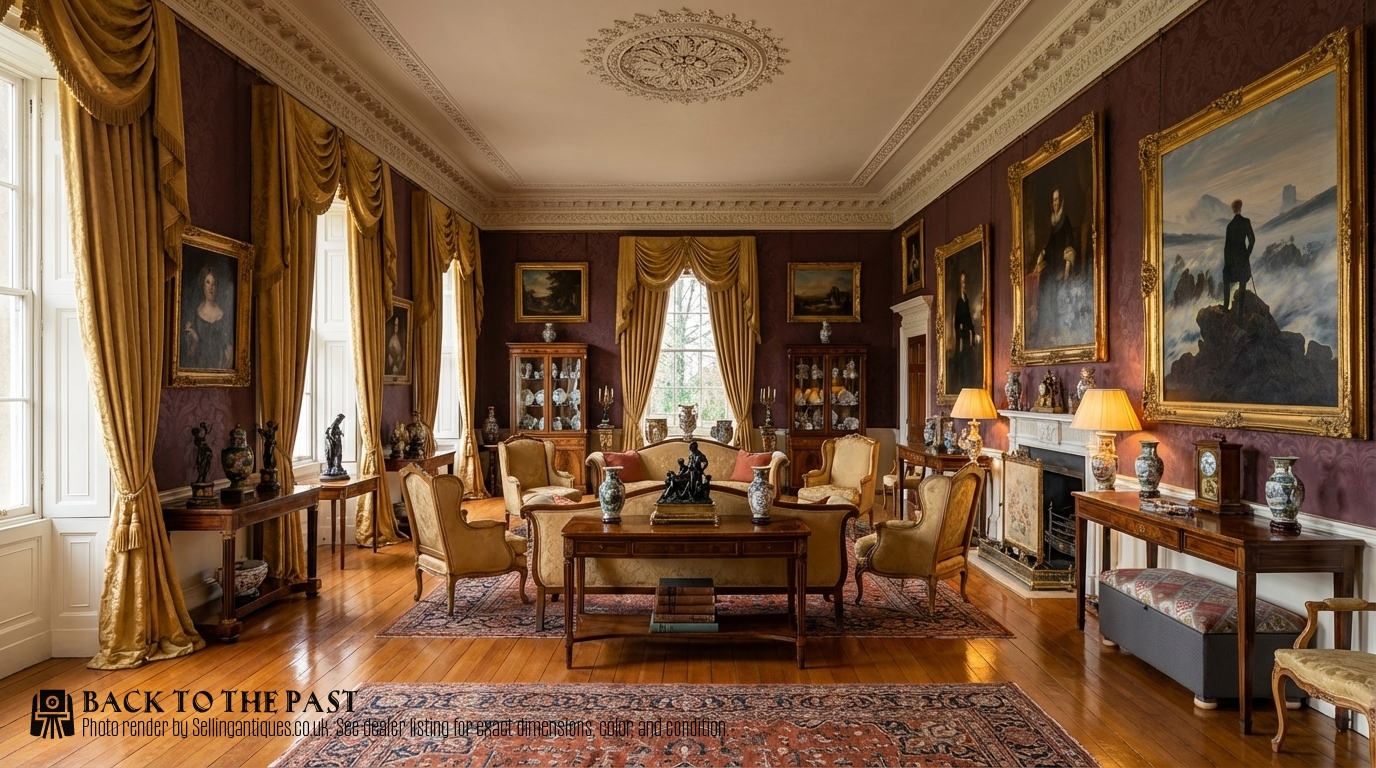
Padded Storage Chest
A padded storage chest combines the utility of a blanket box or trunk with the comfort of an upholstered seat, serving multiple purposes in a room. These pieces appear in forms such as ottomans, footstools, blanket boxes, and window stools, often designed with hinged or lift-off tops to access the compartment within. A buyer searching for a padded storage chest will encounter various iterations ranging from compact footstools to large blanket boxes intended for bedroom or living space use.
The examples seen on this page span several distinct periods including the Regency, William IV, and Victorian eras, alongside early twentieth-century interpretations. Materials range from dense timbers like mahogany, rosewood, walnut, birch, and oak to softer pine, complemented by leather, fabric, and linen upholstery. Forms vary from simple box ottomans to sophisticated concave shapes and waisted designs resting on lions paw feet.
How they were made
Cabinetmakers constructed the structural carcasses of these chests using hardwoods such as mahogany, rosewood, and oak, often joining the timber with traditional methods to ensure durability under daily seating use. The internal compartments were designed to protect stored textiles, while the exterior woodwork was planed, polished, or turned to suit prevailing aesthetic tastes.
Upholstery forms the defining characteristic of these pieces, utilising materials like leather, fabric, linen, and specialised needlework such as gros-point. Padding was secured over the lid to provide comfortable seating, sometimes incorporating deep buttoning techniques or decorative brass hardware to finish the edges.
The listings on this page span the Regency, Victorian, and early twentieth-century periods, utilising materials such as mahogany, rosewood, leather, and oak.
What varies in quality
The distinction between standard examples and finer pieces lies in the selection of timber and the sophistication of the woodwork. Superior chests utilise richly grained hardwoods like rosewood or figured mahogany, featuring refined details such as carved lions paw feet, concave shaping, or waisted profiles rather than plain plank construction.
Upholstery execution and the retention of original textiles significantly influence the character of an ottoman or blanket box. Pieces retaining period leather, fine fabric, or original gros-point needlework demonstrate a higher degree of preservation and craftsmanship than those with later or generic replacement covers.
The Padded Storage Chest Glossary
- Ottoman
- A low upholstered seat or stool, frequently designed with a hinged top that opens to reveal a storage compartment for blankets or linen. This form gained popularity during the nineteenth century as both a functional and decorative item.
- Waisted
- Describing a piece of furniture whose sides curve inward toward the centre before flaring out again. This profile adds visual elegance to seating furniture like window stools.
- Kist
- A traditional regional term for a large wooden chest or box used for storage. These sturdy wooden trunks were common household items for keeping personal possessions.
Padded Storage Chest: Frequently Asked Questions
What is a padded storage chest?
A padded storage chest is a dual-purpose piece of furniture that functions as both a seated bench or stool and a covered container for household items.
These pieces typically feature a hinged or lift-off top upholstered in leather, fabric, or needlework above a wooden box frame.
How were these chests used historically?
Historically, these items served to store blankets, linens, and garments in bedrooms or sitting rooms while providing additional seating.
Some specialised variants, such as work boxes or window stools, were tailored for specific domestic tasks or placement beneath windows.
How do I identify a Victorian ottoman?
Victorian ottomans often feature dense timbers like mahogany or walnut, sometimes displaying deep buttoned upholstery or needlework tops.
They span various forms from simple box chests to more ornate framework with turned wooden supports.
Where should I place an ottoman chest?
An ottoman chest functions well at the foot of a bed for storing spare bedding, or in a living room as a combined seat and storage solution.
Its compact footprint allows it to fit beneath windows or along hallways without obstructing movement.