

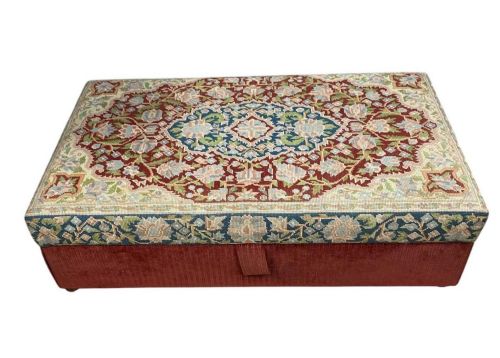
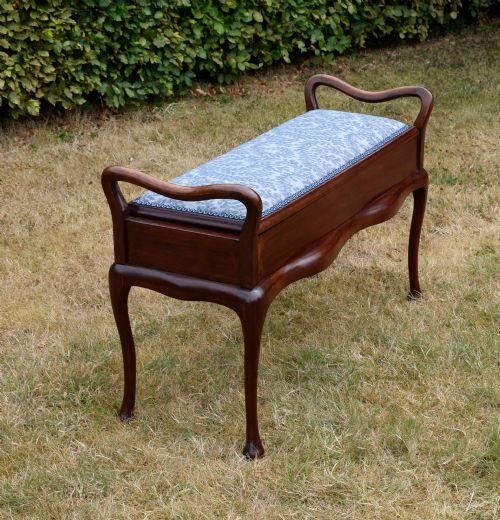
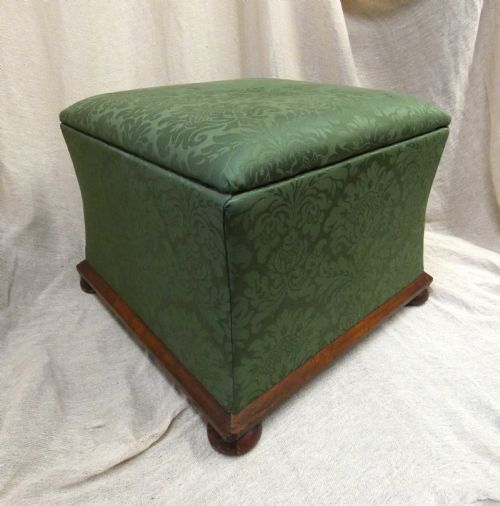


Traditional Storage Stool
Traditional storage stool designs combine practical hidden compartments with period craftsmanship, offering a clever way to keep living spaces tidy.
Traditional Storage Stool
A traditional storage stool provides a practical seat alongside a concealed compartment for household items. Buyers exploring this category encounter pieces from the eighteenth, nineteenth and early twentieth centuries.
The selections on this page span several distinct eras, featuring Victorian, Edwardian and earlier foundational forms. Piano stools with hinged seats and carved oak box stools represent the primary variations available.
Makers utilised resilient timbers such as mahogany and oak to construct these functional items. Upholstery fabrics, damask and brass details frequently complete the traditional aesthetic of each piece.
Materials and construction methods
Carpenters relied on sturdy hardwoods like mahogany, satinwood and oak to build the primary frames and box structures. These timbers ensured the stability required for both seating and frequent access to internal storage.
Craftspersons integrated functional mechanics such as hinged seats and lift-up lids into piano stools and box stools. Detail work often involved intricate inlay and traditional carving directly onto the timber surfaces.
Traditional Storage Stool Retail Price Guide 2026
Typical asking prices for traditional storage stool among the pieces listed under this phrase on Sellingantiques today, from the lower quarter to the upper quarter. They describe what is for sale here now, not the wider market.
Materials documented across these listings include mahogany, oak, satinwood, brass, damask and various upholstery fabrics.
Distinctions in craftsmanship and materials
Superior examples showcase finer timber selection, such as figured mahogany paired with delicate satinwood inlay work. The depth and precision of the carved ornamentation further distinguish higher quality pieces from simpler utilitarian versions.
The integrity of the internal storage mechanism and the quality of the original upholstery fabric influence the overall character of the stool. Pieces featuring robust brass hardware and durable joinery demonstrate superior longevity.
The Traditional Storage Stool Glossary
- Box stool
- A seating item featuring a hollow base and a removable or hinged lid designed for storage. These timber pieces date back to the eighteenth century.
- Duet piano stool
- An extended seat designed for two musicians, frequently incorporating a hinged storage compartment for sheet music. Edwardian and Victorian examples often feature mahogany frames.
- Inlay
- A decorative technique where contrasting woods or materials are set into the surface of a primary timber. Edwardian makers utilised this method to embellish mahogany piano stools.
- Damask
- A reversible figured fabric traditionally used for furnishing and upholstery. This material appears on period seating to provide a textured top surface.
Traditional Storage Stool: Frequently Asked Questions
What is a traditional storage stool?
A traditional storage stool is a period seat designed with a hollow interior for keeping household items out of sight. These pieces range from early oak box stools to Edwardian music seats.
Hinged lids or lift-up seats provide direct access to the storage space inside. They combine practical utility with the decorative styles of past centuries.
How were piano stools used?
Piano stools provided seating for musicians while offering built-in storage for sheet music and folios. Duet versions accommodated two players simultaneously.
The lift-up seat allowed players to retrieve scores quickly during practice sessions. Mahogany and oak were common materials for these functional music room seats.
What woods were used for storage stools?
Craftspersons built storage stools using durable hardwoods suited to daily seating and frequent lid operation. Oak and mahogany are the most prevalent timbers found across these listings.
Some Edwardian and Victorian pieces also incorporate satinwood for decorative inlay work. These materials ensured the stools survived generations of domestic use.
How do I identify a Victorian stool?
Victorian storage stools often feature robust timber construction, carved oak details or heavy hinged mechanisms. The era spans the nineteenth century and encompasses diverse ottoman and box stool forms.
Examining the wood type, upholstery fabric and joinery style helps determine the period. Makers of this era favoured both plain functional boxes and more ornate piano stools.