







Mahogany Storage Footstool
A mahogany storage footstool combines timber warmth with hidden depth, offering a practical seat and a concealed compartment for domestic clutter.

Mahogany Storage Footstool
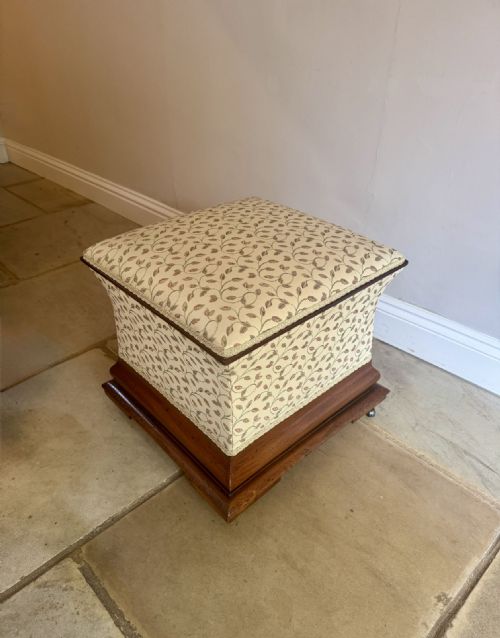
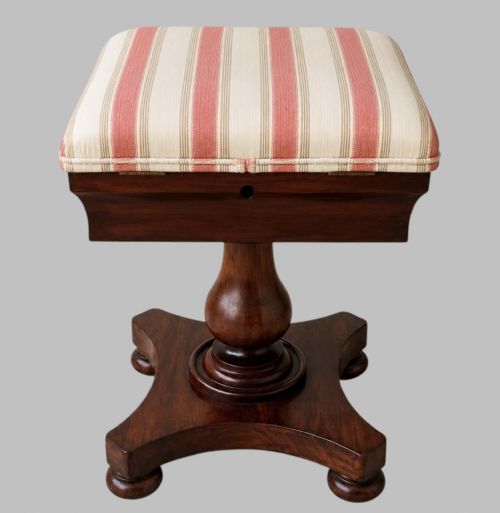
A mahogany storage footstool brings together timber frames and hinged upholstery, serving as both a seat and a receptacle. The listings show forms ranging from compact box ottomans to large country house pieces and piano stools with lifting seats.
Buyers seeking a mahogany storage footstool encounter examples spanning the Regency, William IV, and Victorian periods, alongside Edwardian and later 1920s variants. These pieces frequently double as sewing box stools, work tables, or blanket boxes.
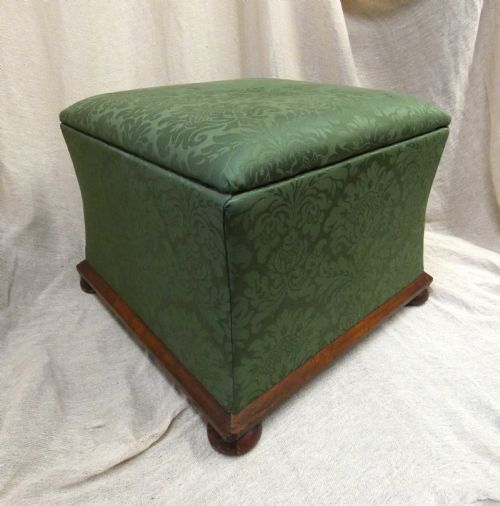
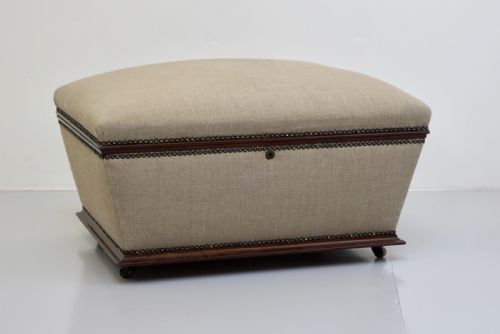
Originating across the nineteenth and early twentieth centuries, these items utilise hardwood structures wrapped in diverse textiles. The variety extends from simple footstools and ottomans to waisted frames and concave shapes.
How they were made
Makers built these pieces using solid mahogany and hardwood frames, often incorporating brass details such as lions paw feet. Structural integrity relied on traditional cabinetmaking joinery to support the daily weight of sitting.
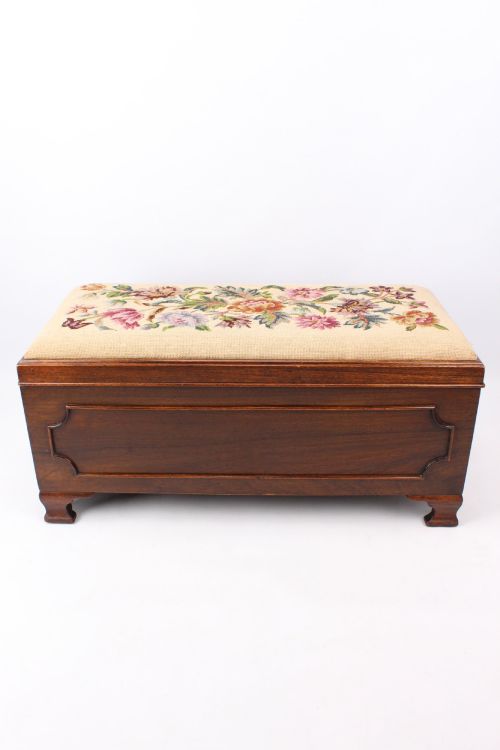
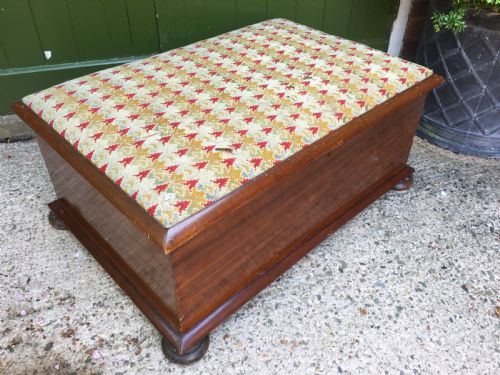
Upholstery techniques involved covering hinged lids with fabrics including wool, velvet, damask, and Liberty textiles. Many retained traditional needlework tops such as gros-point or standard needlework inserted directly into the seat framework.
Mahogany Storage Footstool Retail Price Guide 2026
Typical asking prices for mahogany storage footstool among the pieces listed under this phrase on Sellingantiques today, from the lower quarter to the upper quarter. They describe what is for sale here now, not the wider market.
Several examples hide sewing gear beneath their seats, proving that nineteenth-century relaxation still involved a considerable amount of hidden productivity.
What varies in quality
Quality reveals itself in the choice of timber and the precision of the cabinetwork, distinguishing standard utility items from grand country house commissions. Finer examples display carefully figured mahogany and crisp carving around the feet and rails.
The sophistication of the upholstery and the durability of the internal storage compartment separate basic utilitarian boxes from distinguished reception room pieces. Original needlework tops and intact brass mechanisms elevate the character of individual stools.
Hallett & Sons
The Mahogany Storage Footstool Glossary
- Ottoman
- A low upholstered seat or stool without a back or arms, typically featuring a hinged lid that opens to reveal internal storage space. These forms frequently appear in nineteenth-century domestic interiors.
- Gros-point
- A heavy, counted-thread embroidery stitch worked on canvas, often utilised for durable historic seat covers. This technique creates a textured, hard-wearing surface suitable for frequent use.
- William IV
- A British design period spanning the 1830s characterised by robust classical revival forms and substantial timber framing. Pieces from this era often display bold architectural proportions.
- Regency
- An early nineteenth-century design phase influenced by classical Greek and Roman aesthetics. Furniture from this period frequently incorporates decorative brass elements and refined turned supports.
- Damask
- A reversible figured fabric woven on a jacquard loom, traditionally featuring floral or geometric patterns. It provides a formal textile finish for period seating upholstery.
Mahogany Storage Footstool: Frequently Asked Questions
What is a mahogany storage footstool?
A mahogany storage footstool is a piece of nineteenth or early twentieth-century furniture featuring a timber frame and a hinged upholstered seat. It functions simultaneously as a low seat or rest and a concealed box for domestic items.
These pieces range from simple piano stools and work boxes to large country house ottomans and blanket boxes. Their dual purpose made them popular across multiple design periods.
How were they used historically?
Historically, these items served multiple roles in the Victorian and Regency interior, functioning as seating, footrests, and hidden storage receptacles for sewing materials or blankets. Versions equipped with specialised compartments acted as work tables for needlework.
In musical households, piano duet stools provided seating alongside internal space for sheet music. Their versatility allowed them to move easily between drawing rooms and bedrooms.
How do I date a mahogany storage footstool?
Dating relies on observing stylistic markers, construction methods, and materials associated with periods such as Regency, William IV, and Victorian. The presence of specific foot designs, such as brass lions paws, often points toward earlier nineteenth-century manufacturing.
Fabric choices and needlework types also offer clues, though textiles are frequently replaced over time. Examining the timber framing and hinge mechanisms helps confirm the era of production.
How do I care for the upholstery?
Caring for the upholstery involves gentle cleaning appropriate to the specific textile, whether it is wool, velvet, damask, or needlework. Regular light vacuuming with a soft brush attachment helps remove dust from the fabric fibres.
Protection from direct sunlight prevents fading in historic textiles. For delicate gros-point needlework, professional textile cleaning is advisable to preserve the integrity of the threads.