




Regency Mahogany Footstool
These regency mahogany footstool pieces are robust timber supports for tired feet, offering authentic period character and practical daily comfort to any sitting room.

Regency Mahogany Footstool
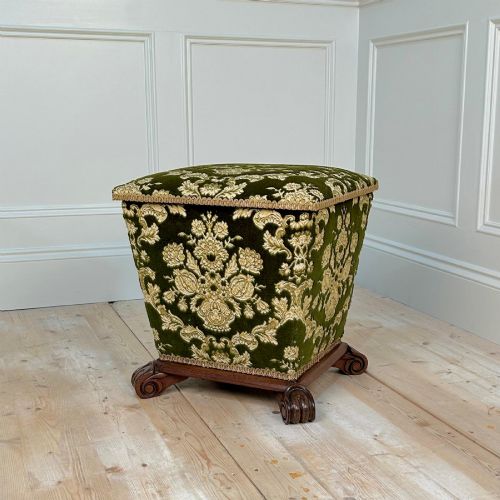
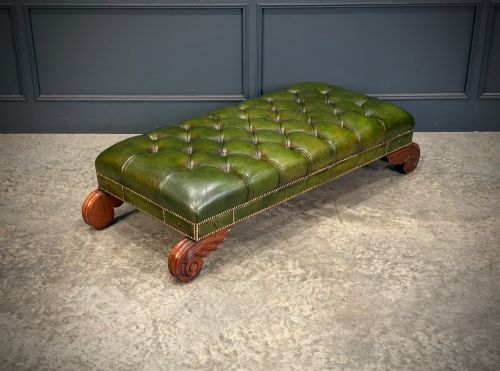
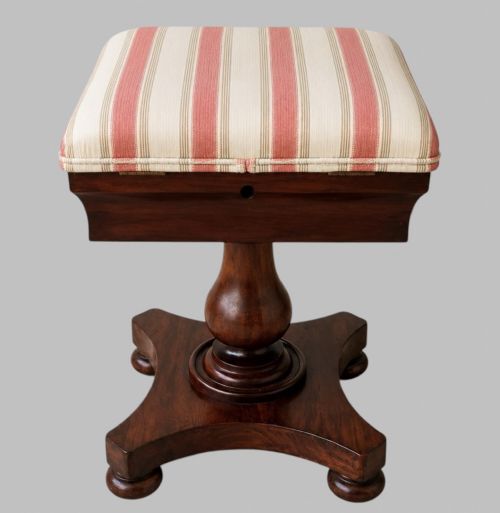
A regency mahogany footstool brings dense, dark timber frames and period upholstery into a modern interior. The selection spans compact low stools, larger ottomans, and multi-functional sewing box designs.
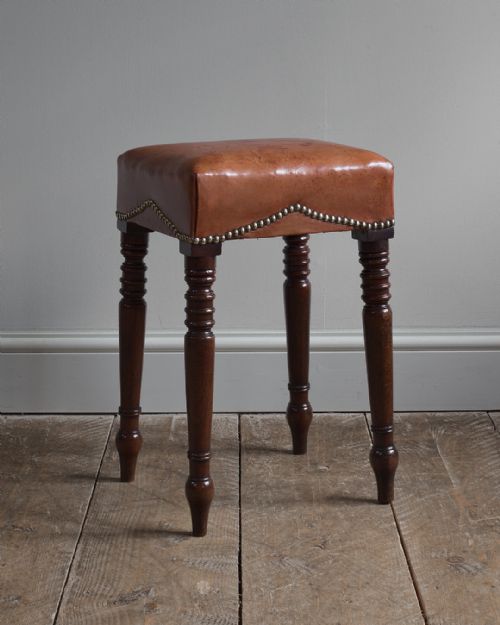
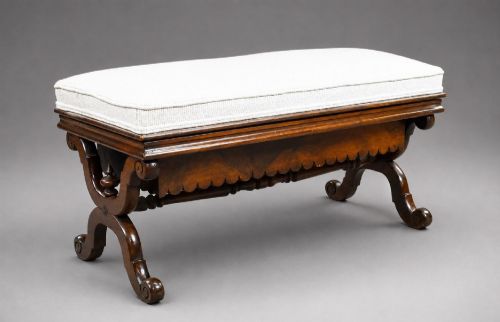
Most examples date from the Regency and wider nineteenth-century periods, with occasional Georgian and later Edwardian variations. Common structural forms include square frames, X-frame supports, and sabre-legged shapes.
How they were made
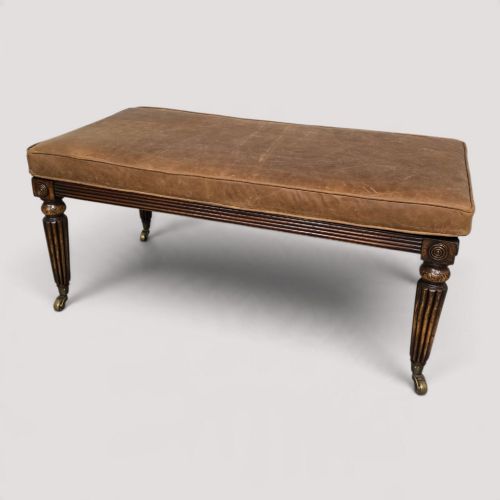
Makers utilised solid mahogany for the structural frames, often polished to a deep lustre. Metal accents such as brass castors or ormolu mounts appear on select elevated pieces.
Upholstery techniques varied from simple drop-in pads to buttoned leather, velvet, chenille, and traditional ticking stripe textiles. Caned tops also provide a lighter texture on specific frames.
Regency Mahogany Footstool Retail Price Guide 2026
Typical asking prices for regency mahogany footstool among the pieces listed under this phrase on Sellingantiques today, from the lower quarter to the upper quarter. They describe what is for sale here now, not the wider market.
Several examples double as sewing boxes or work tables, proving that nineteenth-century feet rarely remained idle for long.
What varies in quality
The refinement of the timber turnings and leg carving sets the better examples apart from plain workshop output. Sabre legs, scroll tops, and carved lion paw feet indicate higher ambition.
Integrity of the timber frame and the historical accuracy of the upholstery material dictate the overall standing of an individual piece.
Mathew Gregson
The Regency Mahogany Footstool Glossary
- Mahogany
- A durable, reddish-brown tropical hardwood chosen by cabinetmakers for its strength and fine grain. It forms the primary structure of these stools.
- Ormolu
- Gilded bronze ornamentation applied to furniture mounts. This decorative detail elevates the status of select Regency pieces.
- Sabre leg
- A curved, tapering leg sweeping outwards in the manner of a cavalry sword. This form defines many authentic Regency seating designs.
- X-frame
- A structural support formed by two intersecting diagonal members resembling the letter X. It provides both rigid strength and architectural flair.
Regency Mahogany Footstool: Frequently Asked Questions
How do I use a footstool today?
These pieces serve their original purpose as foot rests before armchairs or double as low occasional seats. Larger box ottomans also provide discreet storage space in a living room.
Their sturdy mahogany construction ensures they handle daily use well. Position them near a sofa or keep a pair by a fireplace for flexible seating.
Are these stools comfortable for daily seating?
Most pieces feature padded textile, leather, or buttoned upholstery designed for resting feet or brief sitting. The cushioning depends entirely on the specific period stuffing and modern restoration work.
Firmer examples with caned tops work well as small side tables or plant stands. Softer leather and velvet versions offer traditional comfort.
How do I identify a Regency period frame?
Look for characteristic design elements such as sabre legs, scroll tops, and rich mahogany grain. Details like brass feet or turned tapering supports point firmly to the early nineteenth century.
Construction methods inside the frame, including hand-cut joints and period fixings, help confirm the age of the piece alongside the timber's patina.
Can I mix different wood tones in my room?
Mahogany naturally adapts to various interior schemes through its deep reddish-brown tones and dark polish. Pairing a nineteenth-century stool with lighter woods creates an eclectic, layered arrangement.
The rich colour of the timber anchors brighter fabrics and contrasts effectively against neutral carpets or wooden floorboards.