


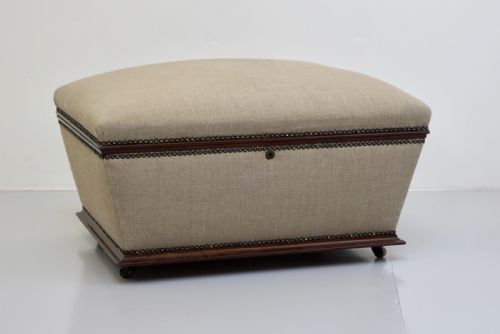
Mahogany Box Ottoman
A mahogany box ottoman combines a sturdy timber frame with concealed storage beneath an upholstered seat, offering practical utility and period elegance.

Mahogany Box Ottoman
When you search for a mahogany box ottoman, you encounter versatile multi-functional pieces designed to hold textiles, sewing gear, or household items while serving as a comfortable seat. The form bridges the gap between functional storage chests and refined household seating.
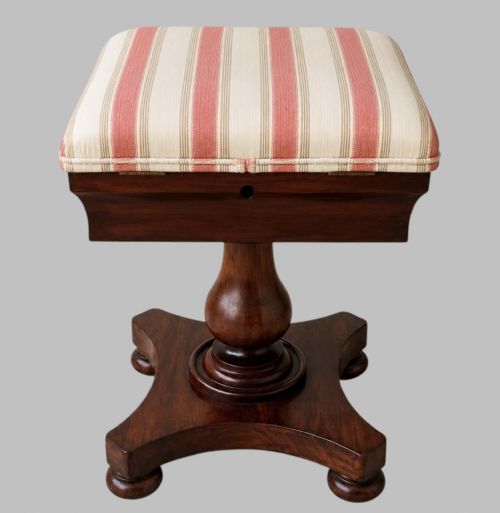
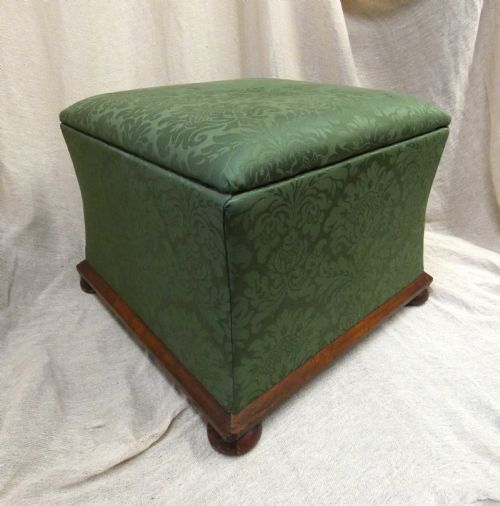
The pieces appearing most frequently across this selection date from the Georgian, Regency, William IV, and Victorian periods, often taking the form of square or concave stools. Makers of these eras utilised dense hardwood to create robust carcass frames that could support daily sitting while concealing interior compartments.
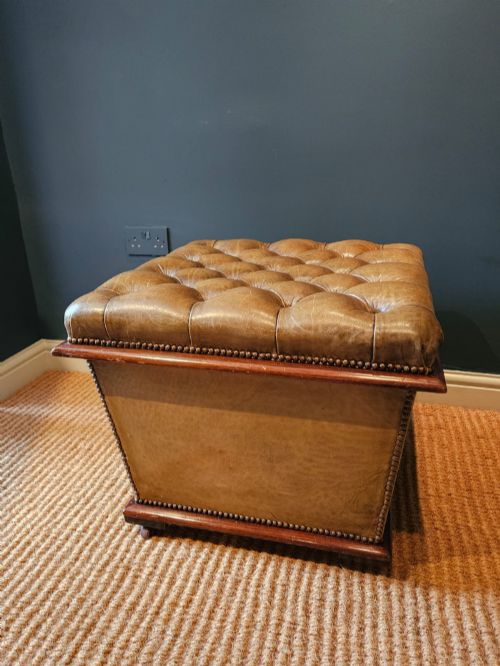
Many examples double as work boxes, shoe cabinets, or blanket boxes, reflecting the Victorian and Regency appetite for dual-purpose furniture in drawing rooms and bedrooms. These items range from modest domestic pieces to large country house variants.
Markers of distinction
The superiority of one piece over another often lies in the precision of the timber joinery and the sculptural quality of the mahogany frame, such as shaped concave sides or carved feet. Superior examples display thoughtful proportions that balance the visual weight of the storage box with the supporting base.
The integrity of the interior compartment and the execution of the original or period-appropriate upholstery further separate standard examples from finer commissions. Pieces featuring specialist textiles or recorded workshop attributions demonstrate higher artisanal ambition.
Some nineteenth-century makers cleverly disguised footstools as miniature shoe cupboards, combining foot care with footwear storage.
Hallett & Sons
The Mahogany Box Ottoman Glossary
- Ottoman
- A padded seat or stool without a back or arms, typically featuring a hinged lid that opens to reveal internal storage space. This form became a staple of nineteenth-century interior furnishing.
- Gros-point
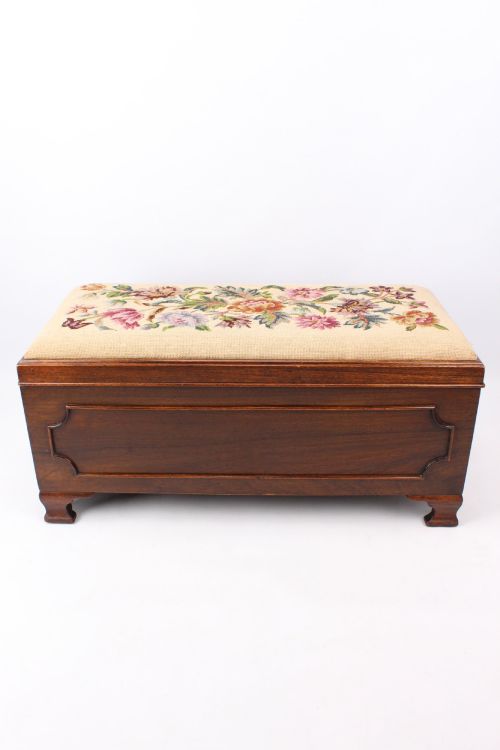
- A heavy, counted-thread embroidery stitch worked on coarse canvas, frequently seen on the upholstered tops of nineteenth-century stools. It provides a durable and textured surface suited to daily use.
- Concave
- A curved inward profile applied to the sides of certain box ottoman frames, creating a more refined silhouette. This shaping softens the boxy geometry of the storage compartment.
- Work box
- A small lidded chest or ottoman designed specifically to contain sewing implements, threads, and textile projects. These pieces often incorporate internal trays and compartments.
- Crewel work
- Embroidery executed with fine wool yarn on a plain-woven fabric base, creating tactile floral or patterned designs. It is commonly found on Victorian seating tops.
Mahogany Box Ottoman: Frequently Asked Questions
What is inside a mahogany box ottoman?
These pieces contain a hollow compartment beneath the hinged seat, historically utilised for storing blankets, needlework, shoes, or personal items.
The interior space is often plain timber, though some work box variants include fitted trays for smaller utensils.
How do I date a mahogany box ottoman?
Dating relies on observing stylistic markers, such as the Regency preference for classical lines and lions paw feet, or the robust proportions typical of Victorian and William IV examples.
Timber patination, upholstery techniques, and construction methods also help place a piece within the eighteenth or nineteenth century.
Where were these pieces used historically?
Ottomans were typically placed in drawing rooms, bedrooms, or dressing rooms where both seating and discreet storage were required.
Smaller work box variants were kept near parlour seating for accessible handcraft activities.
Are the needlework tops original?
Many pieces retain period gros-point, crewel work, or needlework textiles that align with the manufacturing era of the wooden frame.
Careful inspection of the stitching materials and textile wear helps determine whether the upholstery dates to the original period of construction.