

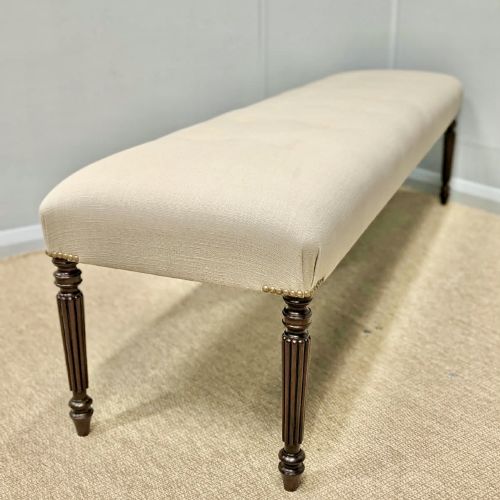
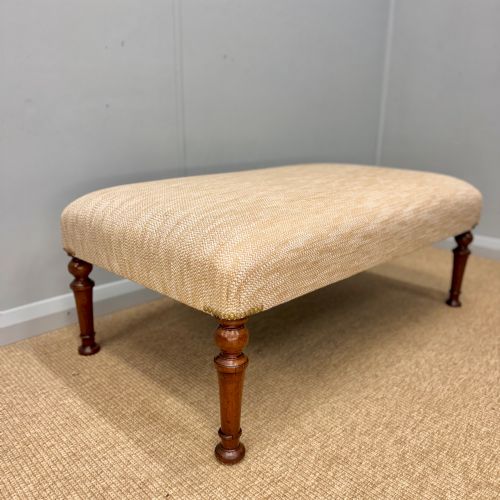
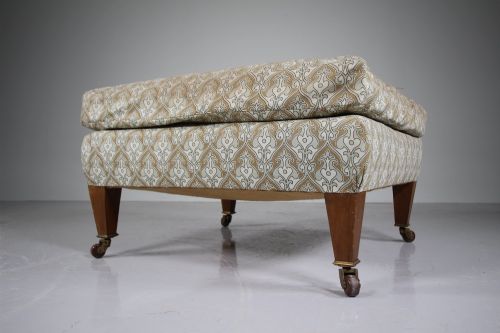
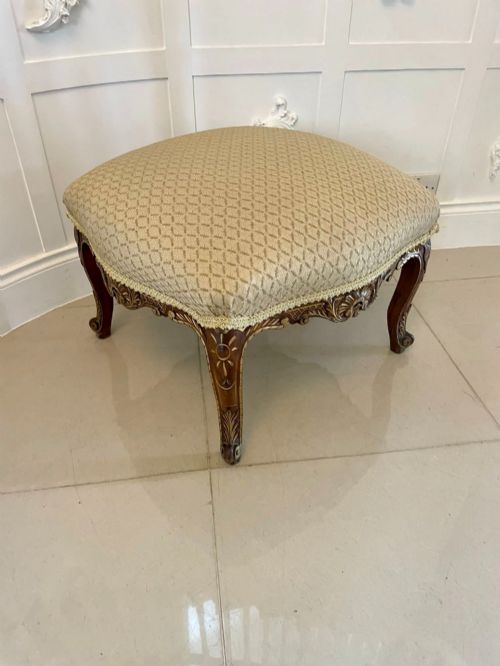



Beige Upholstered Footstool
These beige upholstered footstool examples combine period timber frames with soft textile coverings, offering practical comfort for traditional interiors.
Beige Upholstered Footstool
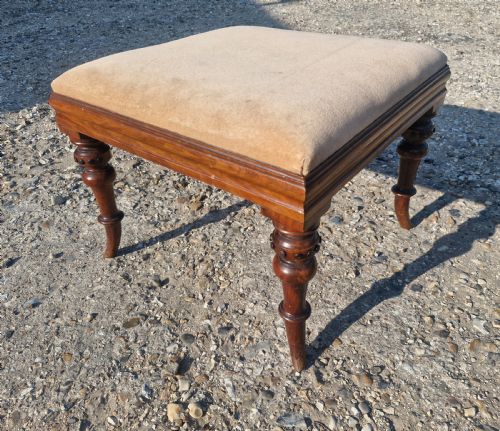
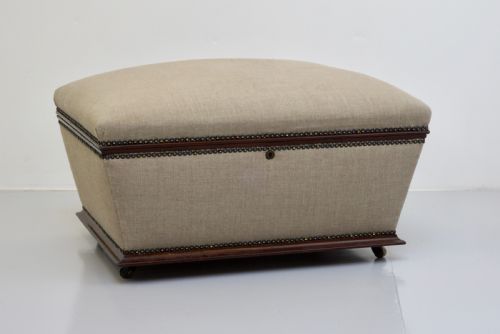
A beige upholstered footstool serves as a low seat or rest, typically featuring a padded top supported by a wooden base. The selections on this page span the 19th Century, Victorian, and Regency periods, encompassing various forms from simple box ottomans to carved fender stools.
Buyers encounter diverse configurations including oblong shapes, oval designs, and larger centre stools. Many pieces integrate traditional textiles such as linen, wool, and tapestry over mahogany, walnut, or giltwood frames.
How they were made
Frame construction relies on hardwoods such as mahogany and walnut, alongside gilded or carved woodwork reflecting Victorian and Regency styles. Joinery methods of the period ensure structural rigidity beneath the upholstery.
Padding and covering involve traditional textile applications, utilising wool, linen, and general fabric or tapestry finishes secured to the wooden bases.
Beige Upholstered Footstool Retail Price Guide 2026
Typical asking prices for beige upholstered footstool among the pieces listed under this phrase on Sellingantiques today, from the lower quarter to the upper quarter. They describe what is for sale here now, not the wider market.
One exceptional French entry arrives bearing a Paris maker stamp directly upon its carved giltwood frame.
What varies in quality
The sophistication of the woodwork marks the distinction between standard items and finer examples, particularly where detailed carving or giltwood embellishment appears. Finer stools exhibit crisp execution in cabriole legs and structural details.
The integrity of the frame and the quality of the upholstery materials determine the overall standing of each piece. Original timber condition and harmonious proportions remain central to the assessment of merit.
LOIDRAULT FRERES PARIS
The Beige Upholstered Footstool Glossary
- Fender stool
- A long, low stool designed to sit in front of a fireplace hearth. These pieces traditionally allowed users to warm their feet.
- Box ottoman
- A hollow footstool featuring a hinged or liftable top for internal storage. This form combines seating utility with concealed compartment space.
- Cabriole leg
- A furniture leg that curves outward and then tapers inward, typically ending in an ornamental foot. This design appears frequently on Victorian seating.
- Giltwood
- Wood that has been coated with a thin layer of gold leaf or gilt finish. This treatment enhances decorative framework on period pieces.
Beige Upholstered Footstool: Frequently Asked Questions
What is a beige upholstered footstool?
A beige upholstered footstool is a low padded seat or rest featuring a neutral fabric covering over a period wooden frame. These items function as supportive furniture pieces in traditional reception rooms.
Designs range from compact Victorian footstools to larger Regency box ottomans and fender stools, accommodating various interior layouts.
How were these stools used historically?
Historically, these items served primarily for resting feet while seated in armchairs or by the fireplace hearth. Some variations included internal storage for blankets or sewing supplies.
Larger centre stools also functioned as supplementary seating within formal drawing rooms when entertaining guests.
How do I identify a Victorian footstool?
Victorian footstools often feature dark timber frames made from walnut or mahogany, frequently displaying carved details or cabriole legs. Upholstery choices from this era typically include wool, tapestry, or heavy woven textiles.
Form variations such as oval shapes and fender stools help distinguish specific nineteenth-century domestic seating types.
How do I style a period footstool today?
A period footstool integrates well into contemporary or traditional spaces as a tactile accent piece beside classic seating. Neutral beige upholstery allows the item to coordinate with existing colour schemes.
These pieces work effectively as standalone accent items or positioned before sofas to provide functional leg support.