



Antique Ottoman on Castors
These antique ottoman on castors selections offer practical seating and footrests, combining period frames with portable mobility for traditional rooms.
Antique Ottoman on Castors
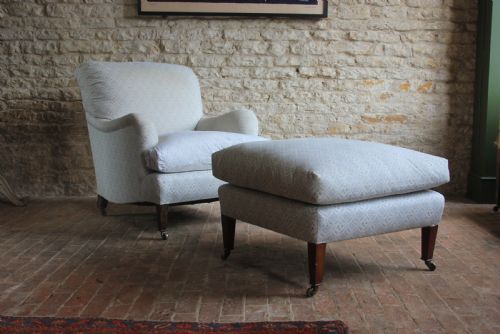
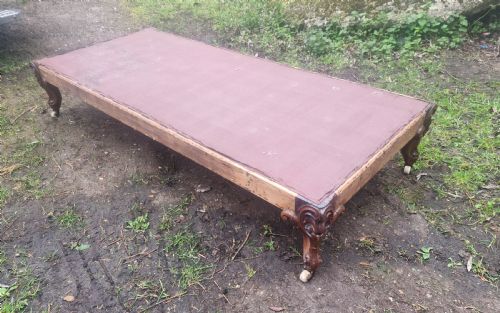
An antique ottoman on castors typically takes the form of a footstool, window seat, centre stool, or box ottoman. These low seating forms appear across the Georgian, Regency, Victorian, and Edwardian periods.
The version most commonly met on this page is the Victorian mahogany or walnut framed stool, upholstered in fabrics like chenille or linen, supported by small wheels. Larger country house models and box ottomans also feature regularly among the listings.
Originating as movable furniture for drawing rooms, libraries, and bedrooms, these pieces serve as footrests or casual seating. Their low profiles and integrated castors allow for easy repositioning across carpeted and wooden floors.
How they were made
Maker workshops constructed the rigid frames of these pieces using dense hardwoods such as mahogany, walnut, and oak. Frame assembly often involved traditional joinery methods like mortise and tenon to withstand the daily weight of sitting and resting feet.
Support and mobility come from turned wooden legs or cabriole legs fitted with brass castors, sometimes incorporating ceramic wheels. Upholstered surfaces utilise traditional stuffing materials beneath outer layers of fabric, leather, or linen.
Gout stools offered adjustable sloping tops so nineteenth-century gentlemen could elevate tender feet in absolute comfort.
What varies in quality
Quality in an antique ottoman on castors rests upon the integrity of the timber frame and the retention of original brass wheel fittings. Heavier hardwoods and robust joinery distinguish superior workshop output from lighter commercial alternatives.
The sophistication of the turning, carving, or cabriole leg shaping marks the distinction between standard production and finer commissions. Surviving early upholstery methods and intact castor assemblies preserve the historical character of the piece.
Howard and Sons·James Shoolbred
The Antique Ottoman on Castors Glossary
- Castor
- A small wheel mounted on a swivel attached to the foot of a piece of furniture for ease of movement. Brass and ceramic versions appear frequently on nineteenth-century seating.
- Box ottoman
- A low upholstered seat featuring a hinged lid that opens to reveal internal storage space. These pieces combine seating functionality with compartment utility.
- Window seat
- A long, narrow form designed specifically to fit into architectural window recesses. They frequently share the low-slung, wheeled configuration of standard footstools.
- Gout stool
- A specialised footrest designed with an adjustable sloping top to support the foot of a person suffering from gout. These items appear in mid-nineteenth-century walnut configurations.
- Centre stool
- A large freestanding stool designed to stand in the middle of a room rather than against a wall. They often match large sofa and armchair suites of the period.
Antique Ottoman on Castors: Frequently Asked Questions
How do I date an ottoman?
Dating relies upon examining the timber species, leg profiles, and structural joinery methods. Regency pieces often display classical mahogany framing, while Victorian examples frequently feature buttoned upholstery and cabriole legs.
Cabinetmaker signatures or stamps on the wooden frame or castors can also help identify the period of manufacture. Construction techniques shift visibly between the Georgian era and later Edwardian production.
Were these pieces used for storage?
Certain forms, specifically box ottomans, incorporate internal storage beneath a hinged upholstered lid. Other configurations like standard footstools and centre stools are solid frames built purely for seating or resting feet.
Storage variants allowed nineteenth-century households to tuck away blankets or textiles within drawing rooms and bedrooms. The presence of a lid distinguishes the box ottoman from open-frame stools.
How should I care for the upholstery?
Care depends upon whether the fabric is original historic material or a later replacement. Gentle surface cleaning helps maintain delicate textiles like chenille or linen without damaging the underlying stuffing.
Avoiding direct sunlight prevents the fading of period fabrics and preserves the condition of the wooden frame. Periodic checks of the castor fixings ensure the mobility mechanism remains stable.