




Floral Upholstered Footrest
A floral upholstered footrest provides a low, padded seat for relaxation, bringing period pattern and craftsmanship directly to your living space.
Floral Upholstered Footrest
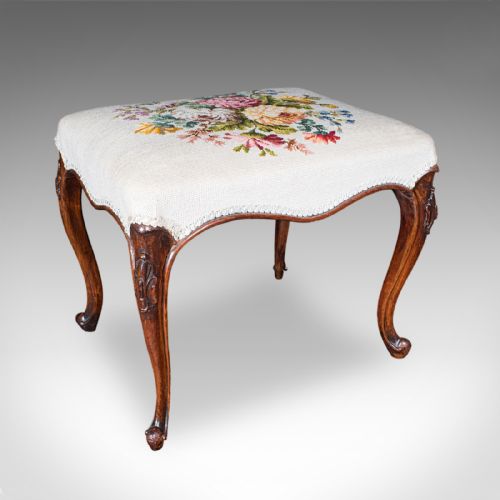
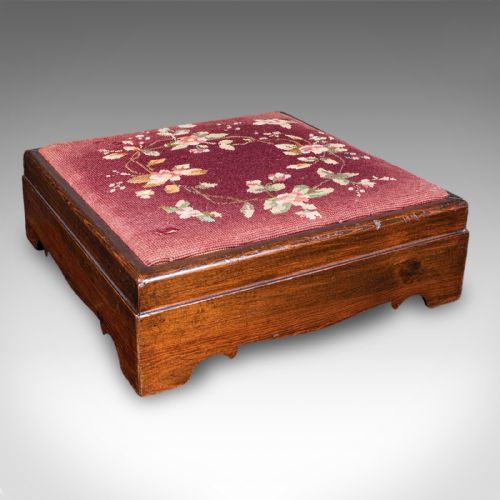
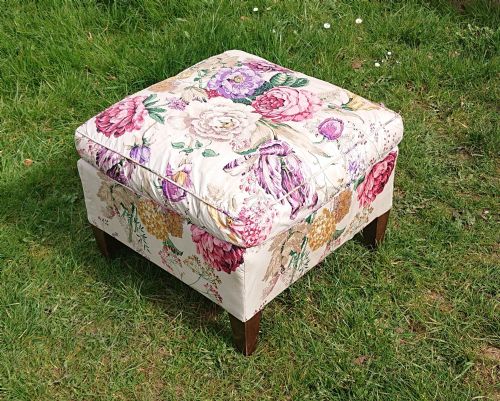
A floral upholstered footrest encompasses low seats designed for resting feet or sitting, appearing in forms such as footstools, ottomans, and poufs. When searching for a floral upholstered footrest, buyers encounter pieces spanning from the eighteenth century through to the early twentieth century, including Victorian, Edwardian, and Queen Anne styles.
How they were made
Construction relies upon traditional cabinet timbers, notably mahogany, walnut, pitch pine, hardwood, and rosewood, occasionally supplemented by painted finishes or ebonisation. These sturdy frames support padded tops secured with textiles including wool, tapestry, needlepoint, and patterned fabrics.
Detailing often involves turned or carved wooden supports, exposed brass elements, and precise needlework upholstery. Makers such as Whytock and Reid or workshops working in the manner of Howard and Sons utilised durable joinery to ensure lasting structural integrity.
Materials recorded on this page include walnut, mahogany, brass, wool, tapestry, and Liberty fabric.
What varies in quality
Distinction across the range lies in the fineness of the timber framing and the complexity of the upholstery work. Pieces featuring hand-worked needlepoint or tapestry and solid hardwood structures sit at the upper end of the tier.
Design ambition also sets examples apart, from simple utilitarian stools to elaborate frames with stylistic references to Louis XV Revival or Queen Anne design. The integrity of the original wood and the preservation of the textile surface determine the standing of each piece.
Whytock and Reid·Howard and Sons
The Floral Upholstered Footrest Glossary
- Needlepoint
- A type of counted thread embroidery stitched over canvas mesh to create dense floral and geometric patterns. It forms the decorative top of many traditional stools.
- Ottoman
- A low, upholstered seat or footstool typically lacking arms or a back, sometimes incorporating internal storage beneath the cushion top. These pieces serve multiple functions in a room.
- Tapestry
- A form of textile art woven on a loom, featuring pictorial or floral designs. It provides a durable and decorative surface for historical seating.
- Queen Anne Style
- A design movement characterised by cabriole legs, pad feet, and graceful curved lines. Stools in this style often employ walnut frames.
Floral Upholstered Footrest: Frequently Asked Questions
How were these footrests used?
These pieces served primarily for resting feet beside the fireside or providing extra low seating in sitting rooms. Larger ottoman variants also functioned for seating and concealed storage.
Over time, their roles adapted to formal drawing rooms and everyday domestic spaces alike, often positioned before armchairs or sofas.
How do I live with one?
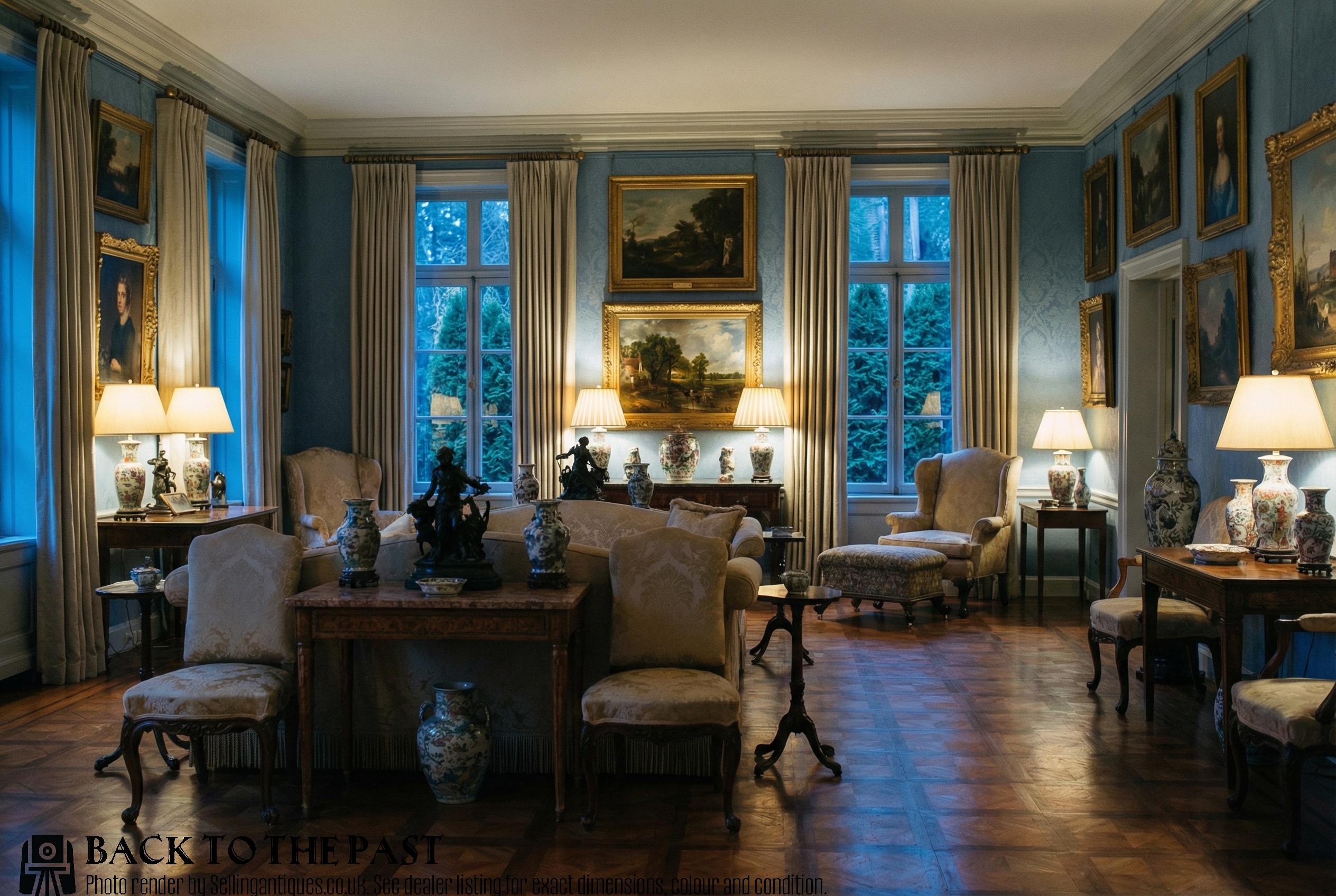
Integrate a footrest into a living room as a functional accent piece in front of an armchair or sofa. They fit easily into traditional and contemporary interiors.
Protect the textile upholstery from direct sunlight to preserve the wool and fabric colours. Gentle brushing maintains the surface of needlepoint and tapestry tops.
How do I tell periods apart?
Victorian and Edwardian examples often display rich mahogany or walnut frames with distinct turned legs and plush upholstery. Earlier eighteenth-century styles show classic forms like cabriole legs.
Materials such as pitch pine, ebonised wood, and specific fabrics like Liberty textiles help anchor pieces to the nineteenth and early twentieth centuries.
What defines an ottoman?
An ottoman is a fully upholstered low seat, frequently built with a hinged top that opens to reveal a storage compartment. They offer a larger surface area than standard footstools.
Versions range from long Victorian storage ottomans to waisted designs covered in decorative fabrics.