


Carved Wooden Pouffe
A carved wooden pouffe brings substantial timber and period character to a room, offering a versatile seat or footrest built to endure.
Carved Wooden Pouffe
A carved wooden pouffe encompasses low seating pieces, footstools, and ottomans spanning the Victorian era, the Georgian period, and the early twentieth century. These furnishings combine solid timber frames with upholstered tops, functioning as practical footrests or occasional seats in a traditional interior.
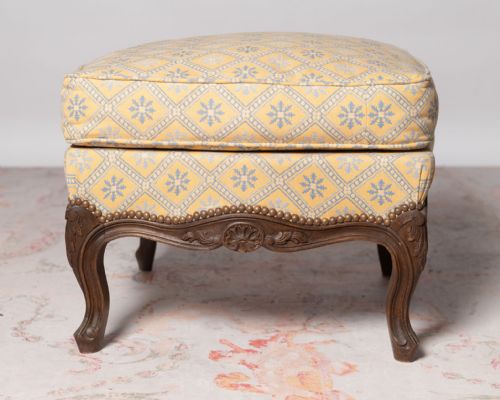
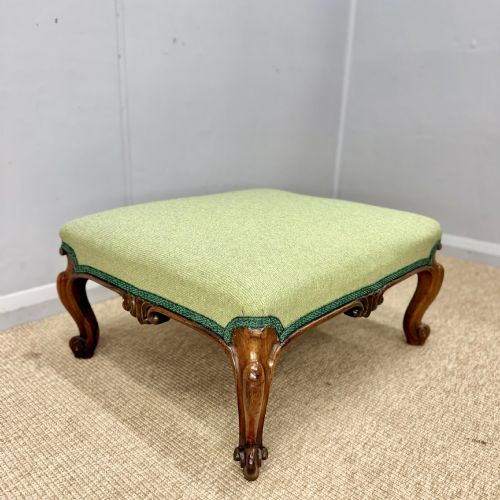
The selections available here range from modest nineteenth-century stools to elaborately detailed examples reflecting French Chateau, Jacobean Revival, Louis XV Style, and Anglo-Indian design influences. Buyers encounter various forms, from simple hardwood frames to paired rosewood footstools and centre stools adorned with upholstery.
What varies in quality
The distinction between standard and superior pieces rests in the execution of the timber carving and the choice of dense woods like rosewood and mahogany over basic hardwoods. Finer examples display crisp, detailed ornamentation on the frame, reflecting the stylistic aspirations of periods such as the Georgian era or French Chateau designs.
Structural integrity and the retention of original timber patination elevate certain items above simpler utility stools. The sophistication of stylistic details, such as Louis XV curves or Anglo-Indian carved motifs, determines the overall refinement of the piece.
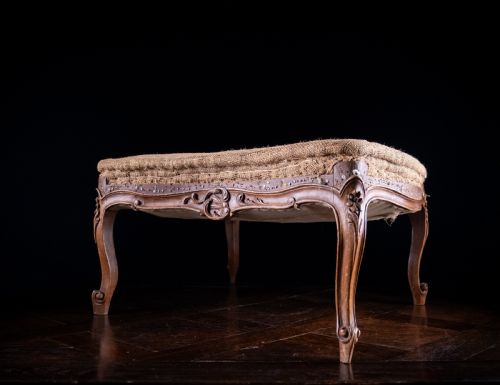
Several Victorian frames sit patiently bare, stripping away decades of padding to let their naked beech and mahogany carvings speak for themselves.
The Carved Wooden Pouffe Glossary
- Footstool
- A low piece of furniture used for resting the feet, typically featuring an upholstered top supported by a wooden frame. These range from simple nineteenth-century utilitarian items to highly decorative Victorian examples.
- Ottoman
- A low, upholstered seat or footstool without a back or arms, often built on a substantial wooden base. Larger than standard footstools, they serve double duty as casual seating.
- Hardwood
- Timber derived from broad-leaved trees, including mahogany, rosewood, oak, walnut, and beech. These dense woods provide the durable framework necessary for enduring seating.
- Upholstery
- The materials, including fabric, padding, and webbing, that form the soft seating surface of a stool. Many period frames are sold ready for new upholstery to suit modern interiors.
- Patina
- The surface sheen and coloration developed by aged wood over decades of handling and exposure. A desirable patina signals genuine age and careful maintenance of the timber.
Carved Wooden Pouffe: Frequently Asked Questions
What is a carved wooden pouffe?
A carved wooden pouffe is a low upholstered seat or footstool supported by a decorative timber frame. These pieces originate from various periods including the Victorian era and the Georgian period.
They combine functional comfort with period woodworking styles, ranging from French Chateau designs to Anglo-Indian forms.
How were these footstools used?
These pieces served primarily as footrests before armchairs or as low occasional seating in formal reception rooms. Their compact size allowed them to move easily around a drawing room or parlour.
Today they function similarly, fitting neatly beside sofas or serving as decorative accents in a bedroom.
Are these items sold with fabric?
Some pieces feature newly applied upholstery or retained historic fabric, while others are offered as bare frames ready for custom covering. Buying a frame ready for upholstery allows you to select modern textiles that match your interior scheme.
Check individual listings to see whether the current fabric is newly fitted or requires replacement.
What woods are used in these frames?
Craftsmen constructed these frames using a variety of timbers including mahogany, rosewood, oak, walnut, beech, and general hardwood. Dense woods like rosewood and mahogany frequently indicate finer nineteenth-century production.
Each timber brings a distinct grain pattern and coloration to the finished piece.
How do I identify the period?
Period identification relies on observing the stylistic characteristics, such as Louis XV curves, Jacobean Revival motifs, or Victorian Art Nouveau details. The choice of primary timber, such as rosewood in Victorian pieces or oak in earlier revivals, also offers clues to the date of manufacture.
Comparing the carving techniques and overall form with documented examples helps narrow down the decade.