
Upholstered Ottoman Stool
An upholstered ottoman stool combines rigid timber frames with soft, textile-covered seating, offering practical foot support and hidden storage.
Upholstered Ottoman Stool
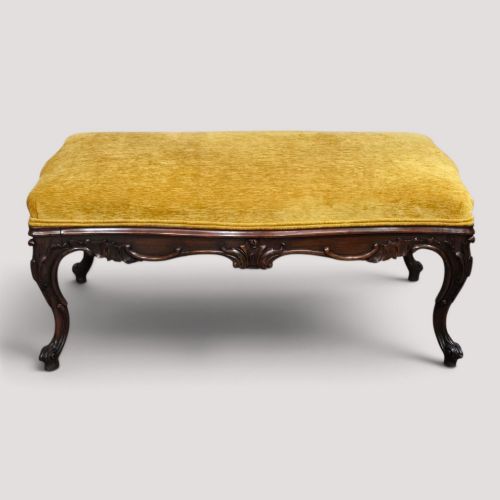
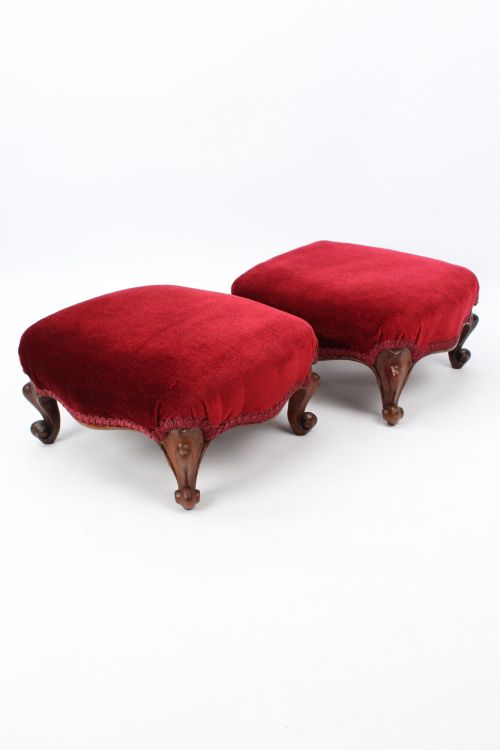
An upholstered ottoman stool serves primarily as a supportive footrest, a low seat, or a concealed storage chest within domestic spaces. When exploring this selection, buyers frequently encounter Victorian box ottomans alongside 19th-century mahogany and walnut footstools.
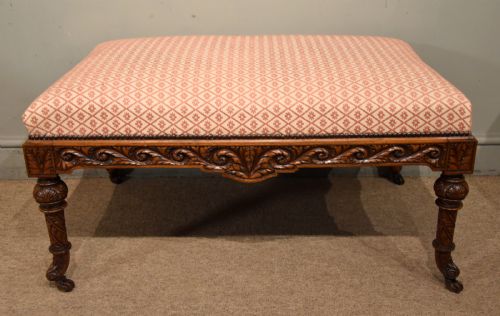
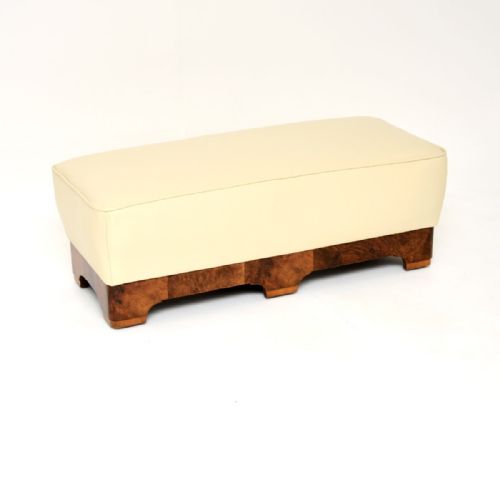
The category spans diverse formats, including long dressing stools, square box trunks, and carved revival pieces. Origins range from English country houses to Continental workshops, encompassing various periods from the Regency era through to the early 20th century.
How they were made
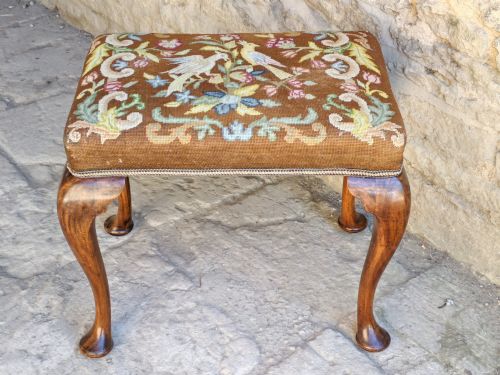
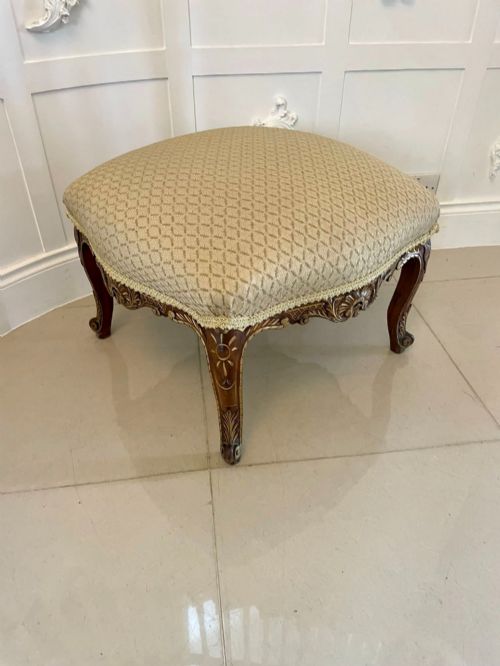
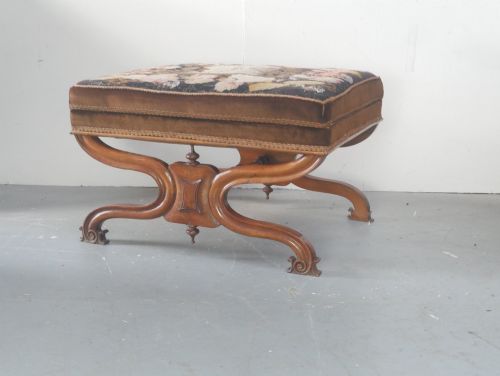
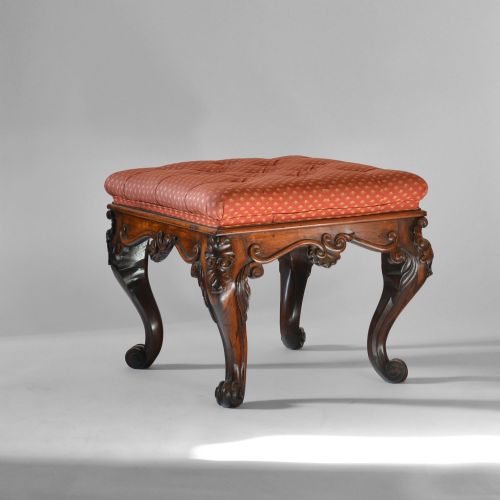
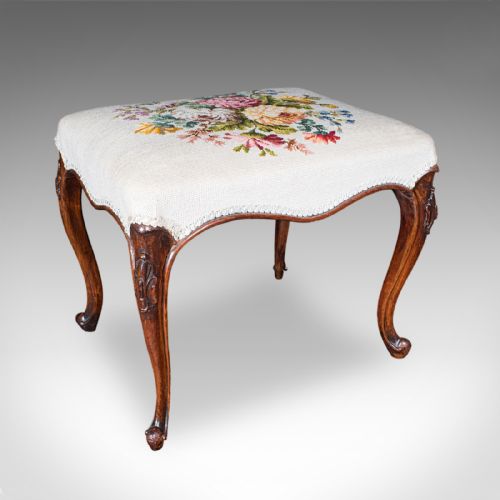
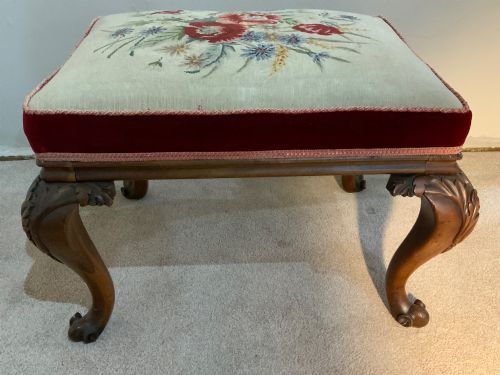
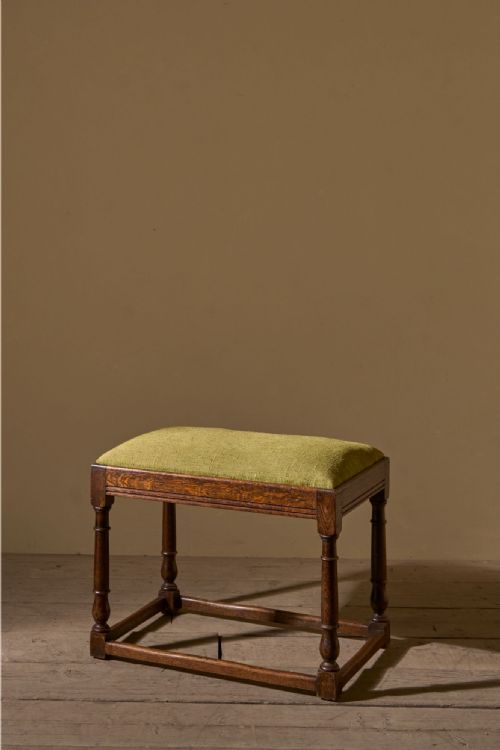
Carpenters and cabinet makers constructed the rigid foundations using dense hardwoods such as mahogany, walnut, rosewood, and oak. These frames were frequently shaped with cabriole legs, cross stretchers, or gilded carvings depending on the prevailing style.
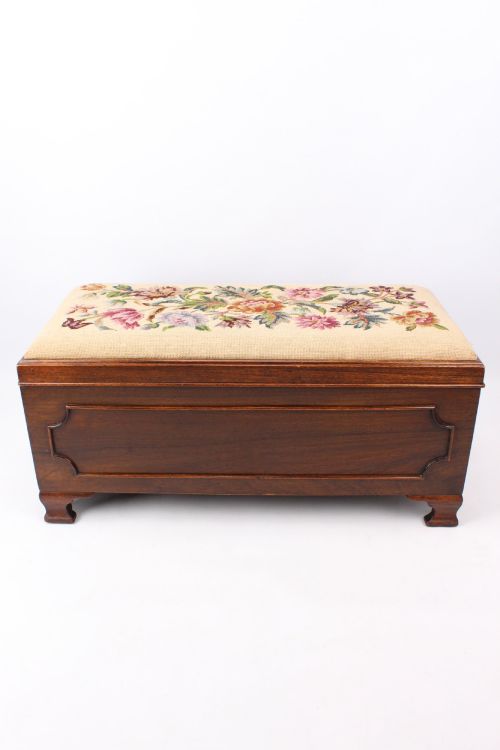
Seating areas and compartment lids incorporated traditional textiles like velvet, leather, needlepoint, silk, and contemporary woven stripes. Padding was secured over webbing or springs, creating a resilient surface designed for daily domestic utility.
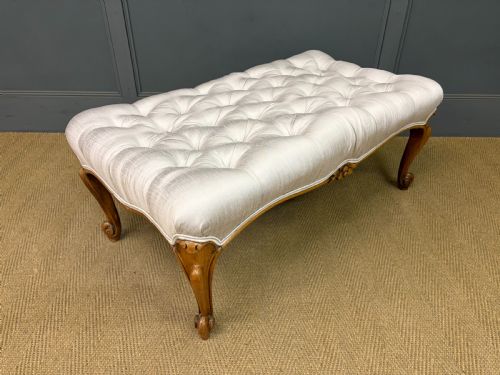
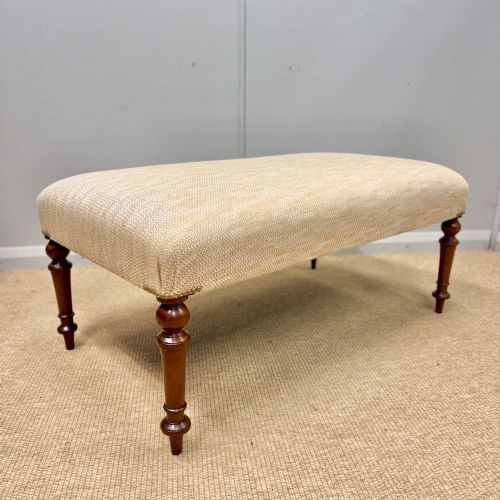
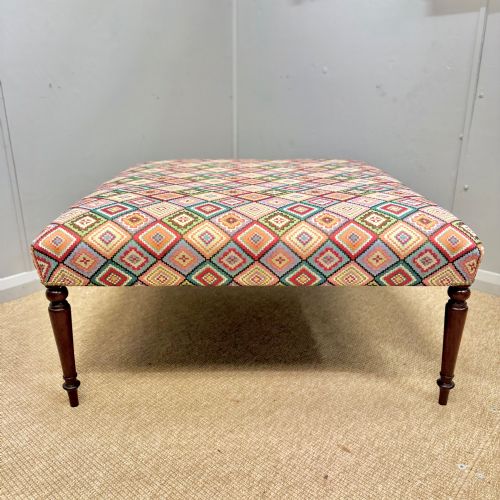
Listings feature walnut, mahogany, and rosewood frames paired with diverse textiles like leather, velvet, and ticking stripe.
What varies in quality
The distinction between standard examples and superior pieces rests upon the selection of timber and the intricacy of frame carving. Dense, well-figured mahogany or walnut combined with hand-carved details indicates a higher standard of cabinet-making.
Upholstery execution and fabric choice further differentiate the range, as expert re-covering using specialist textiles or traditional needlework elevates the visual finish. The structural integrity of internal storage boxes and hinged mechanisms also marks out finer workshop output.
Miles & Edwards
The Upholstered Ottoman Stool Glossary
- Ottoman
- A low, upholstered seat or box stool typically lacking arms and a back. These pieces often feature a hinged lid concealing an internal storage compartment.
- Cabriole leg
- A furniture leg that curves outward at the knee and tapers inward toward the foot, inspired by animal limbs. This form frequently appears on 18th-century revival and Victorian walnut frames.
- Needlepoint
- A type of canvas work embroidery utilised historically for durable seat covers. It employs counted stitches to create dense, patterned decorative surfaces.
- Cross stretcher
- Wooden rails connecting furniture legs near the base to provide structural reinforcement. They are commonly found on 19th-century dressing and footstools.
- Curule
- An ancient Roman chair shape characterised by intersecting curved legs forming an X frame. This classical form influences specific antique footstool designs.
Upholstered Ottoman Stool: Frequently Asked Questions
What is an ottoman stool used for?
An ottoman stool functions primarily as a comfortable footrest or an auxiliary low seat in living spaces and bedrooms. Many variations include a hinged lid that opens to reveal a concealed storage box for blankets or linens.
These versatile items bridge decorative upholstery and functional furniture. Their compact footprint allows them to sit easily beside firesides or at the foot of a bed.
How do I identify a Victorian footstool?
Victorian footstools frequently utilise dark timbers such as mahogany or walnut combined with turned or cabriole legs. Upholstery choices often feature deep buttoning, needlepoint, or crewel work reflecting mid-to-late 19th-century taste.
Box variants from this period often incorporate concave wooden trunk bodies designed to hold textiles. Construction methods generally display solid hardwood framing underneath traditional padding and heavy fabrics.
Are these stools suitable for daily use?
Most antique and vintage stools are constructed from robust hardwoods designed for enduring household utility. Frames are built to withstand regular sitting and foot-resting when placed in domestic settings.
Many pieces feature newly applied upholstery fabrics while retaining their historic wooden frames. This combination offers sturdy modern seating surfaces paired with period craftsmanship.
What styles are common in this collection?
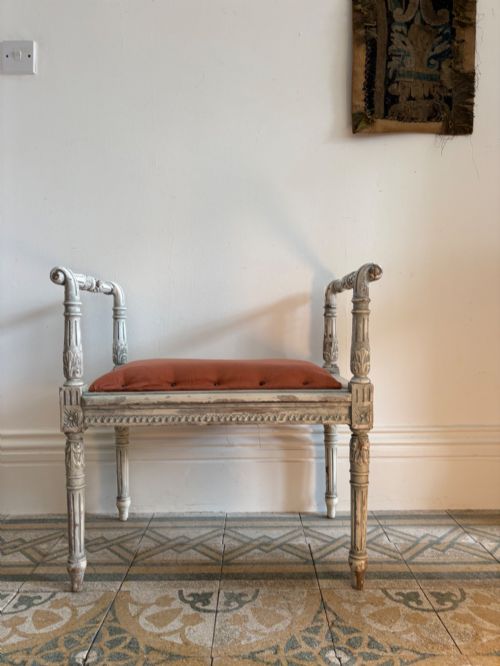
The selection encompasses revival aesthetics including Queen Anne, Chippendale, and Louis styles alongside Victorian and Regency designs. These pieces mirror historical European furniture traditions through carved details and specific leg forms.
English country house influences and French chateau aesthetics also appear frequently across the listed inventory. Each style dictates the specific woodwork finish and textile pattern utilised on the frame.