







Padded Dressing Table Stool
A padded dressing table stool provides low seating for vanity use, combining sturdy timber frames with cushioned upholstery across various historic periods.
Padded Dressing Table Stool
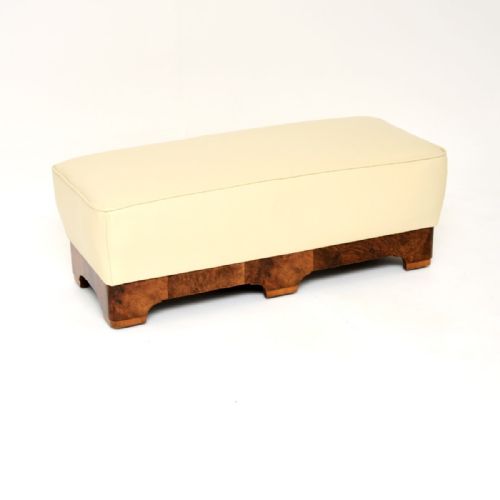
A padded dressing table stool serves as a low seat for bedroom use, appearing frequently across Victorian, Edwardian, and Art Deco periods. These pieces bridge utilitarian seating and decorative furnishing, designed to tuck beneath bedroom dressing tables.
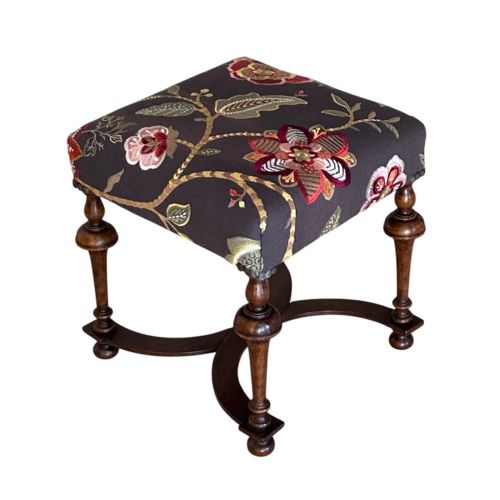
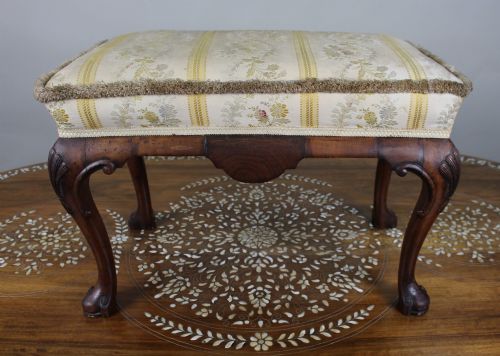
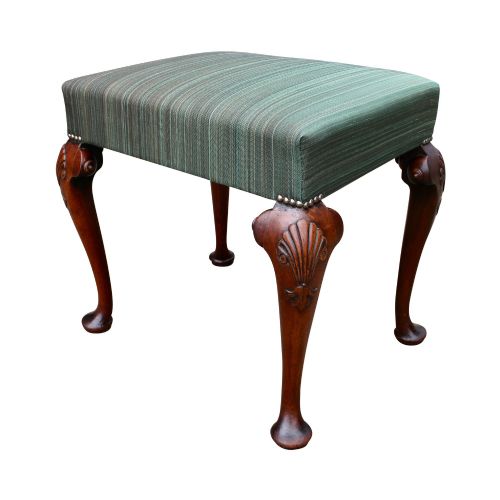
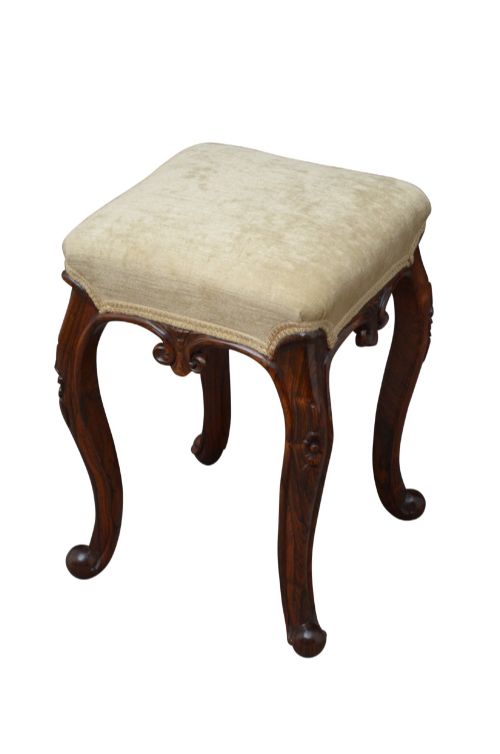
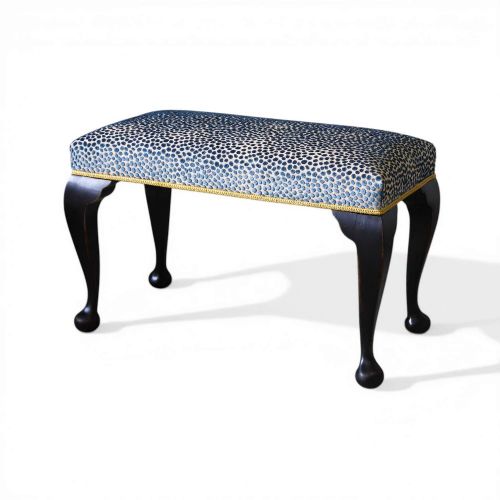
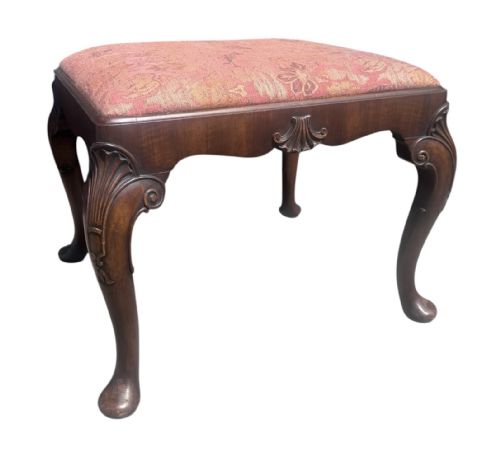
The version most commonly met on this page pairs a timber frame such as walnut or mahogany with an upholstered top, often featuring cabriole legs or turned supports. Styles range from plain Queen Anne revivals to carved Victorian examples and geometric Art Deco designs.
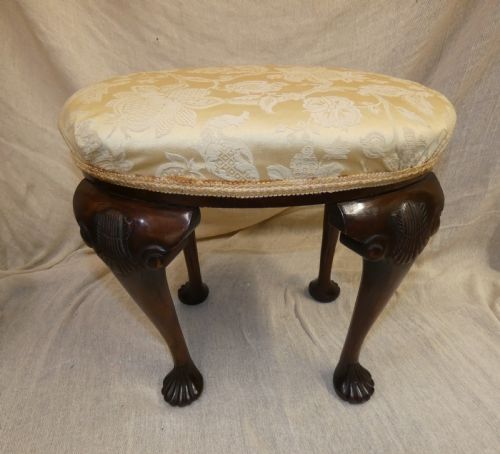
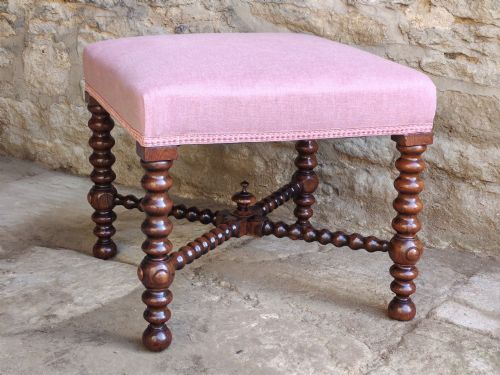
Makers shaped these items in various forms, including oval, rectangular, and square footprints, sometimes incorporating cross stretchers or twist turned supports for added stability.
Materials and construction methods
Carpenters utilised dense hardwoods such as walnut, mahogany, and rosewood for the structural frames, carving cabriole legs or turning supports on a lathe. Selected timbers often received polish to highlight the natural grain.
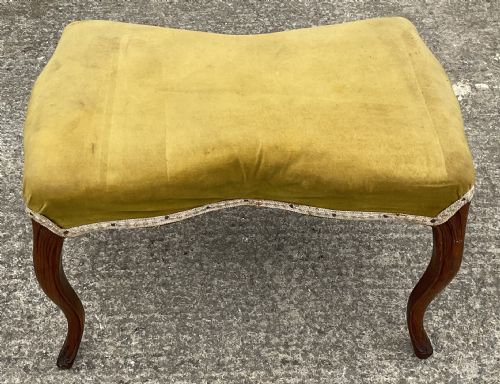
Upholstery techniques combined internal padding with textile coverings including velvet, needlepoint tapestry, and leather secured to the wooden base. Brass details occasionally appeared as structural accents or decorative tacks.
Padded Dressing Table Stool Retail Price Guide 2026
Typical asking prices for padded dressing table stool among the pieces listed under this phrase on Sellingantiques today, from the lower quarter to the upper quarter. They describe what is for sale here now, not the wider market.
Bobbin legs turn simple bedroom seating into miniature feats of reel-stacking geometry.
Distinctions in craftsmanship
The refinement of the timber carving and the integrity of the frame construction distinguish different examples of a padded dressing table stool. Hand-carved cabriole legs and tight joinery indicate higher skill than simpler turned elements.
The choice of covering material and the execution of the upholstery work also set pieces apart. Dense hardwoods and detailed needlepoint or velvet textiles reflect a higher grade of production than plain secondary woods and basic fabrics.
The Padded Dressing Table Stool Glossary
- Cabriole leg
- A furniture leg that curves outward at the knee and tapers inward toward the ankle, typical of Queen Anne and Victorian pieces. This shape mimics animal limbs and provides sturdy support without heavy bracing.
- Needlepoint
- A type of canvas work embroidery utilising yarn to create pictorial or geometric patterns on stool seats. It offers a textured surface that stands up to regular use.
- Cross stretcher
- Wooden rails connecting the lower legs of a stool in an X-shape to increase rigidity. They prevent the legs from wobbling under lateral pressure.
- Bobbin leg
- A turned furniture leg shaped to resemble a series of wooden reels or bobbins stacked end to end. This decorative turning method gained popularity during the mid-nineteenth century.
- Giltwood
- Timber coated with a thin layer of gold leaf or gold paint for decorative effect. It creates a bright surface finish found on select formal seating.
Padded Dressing Table Stool: Frequently Asked Questions
Can I use these stools in other rooms?
These versatile seats function well beyond the bedroom as piano stools, hallway perches, or low footstools next to armchairs. Their compact footprint allows them to fit easily into tight spaces.
Placing an antique stool in a modern room adds textural contrast through traditional upholstery like needlepoint or velvet.
What woods were used for these stools?
Cabinetmakers primarily employed hardwoods including walnut, mahogany, and rosewood to ensure structural strength under the seat frame. Softer or alternative timbers like oak, ebonised wood, and goncalo alves also appear.
Selected woods were often polished to emphasise the natural grain patterns of the period.
What upholstery fabrics are common?
Common covering materials include velvet, leather, and hand-worked needlepoint tapestry. These textiles were chosen for durability and tactile appeal.
Many surviving pieces retain their historic fabric or feature replacement covers that respect the original aesthetic of the design.