
Cabriole Leg Dressing Stool
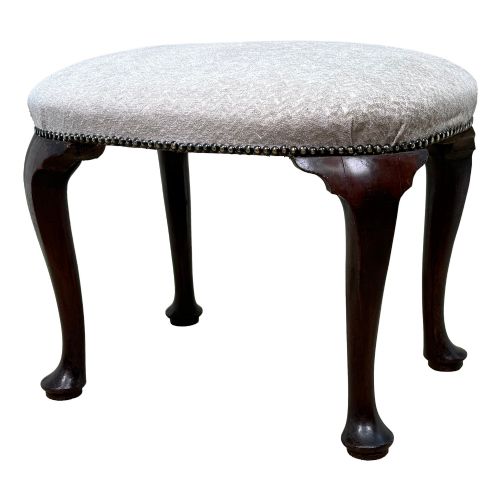
A cabriole leg dressing stool brings serpentine wood and traditional upholstery together to anchor a dressing table or vanity space.
Cabriole Leg Dressing Stool
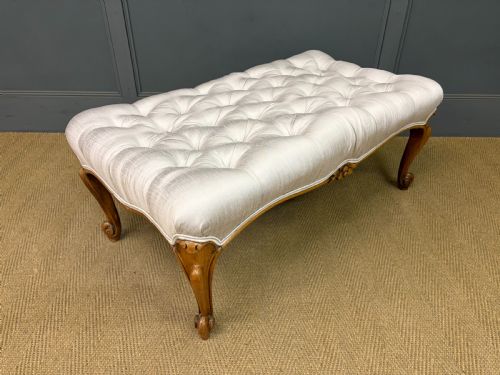
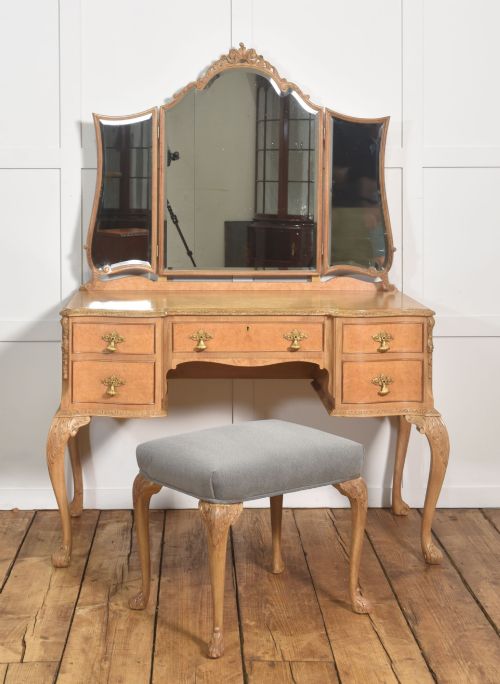
A cabriole leg dressing stool is a low, upholstered seat designed primarily for use at a dressing table or vanity. The form bridges domestic utility and decorative arts, appearing frequently in Victorian, Edwardian, and revivalist iterations.
Most examples found here date from the nineteenth century and the early decades of the twentieth century. Walnut and mahogany dominate the structural timber, often shaped to mimic earlier Georgian and Queen Anne aesthetics.
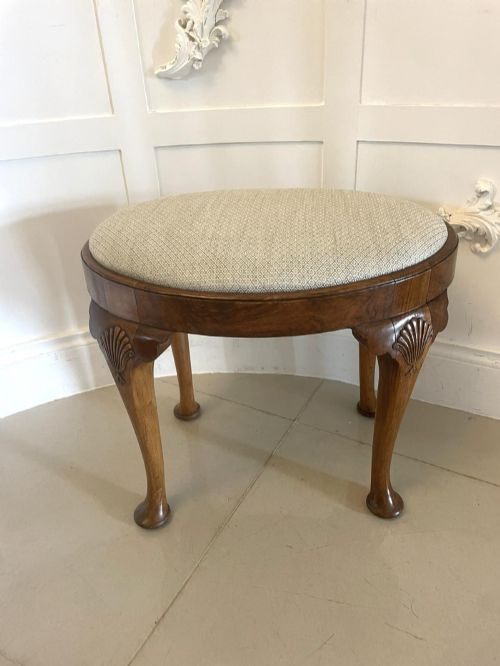
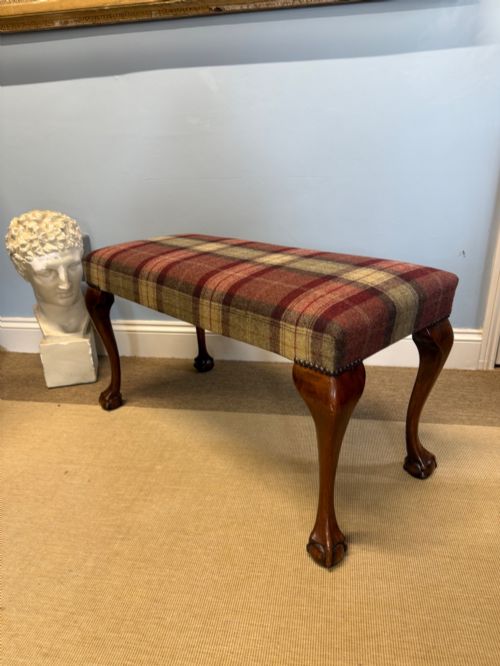
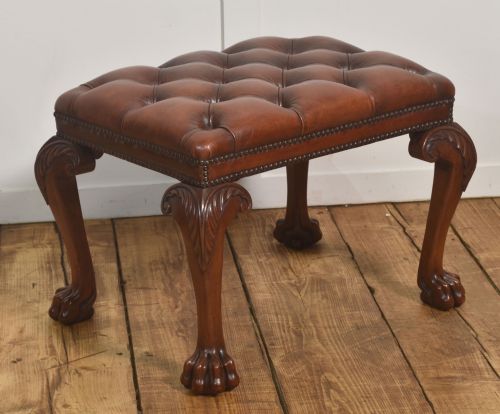
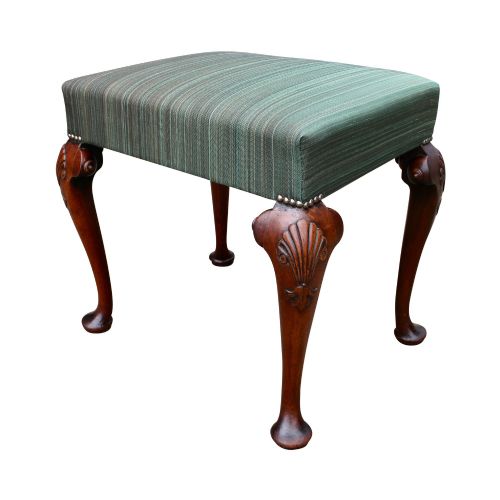
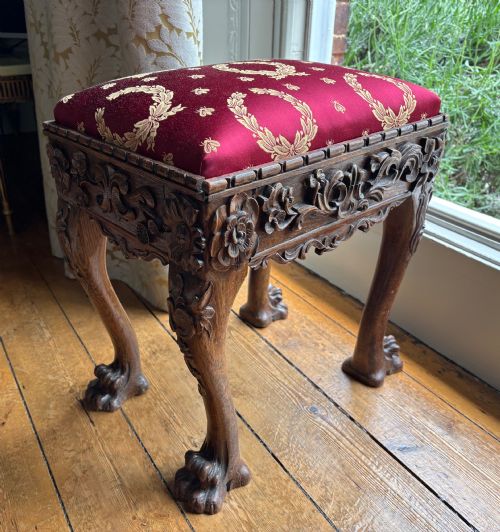
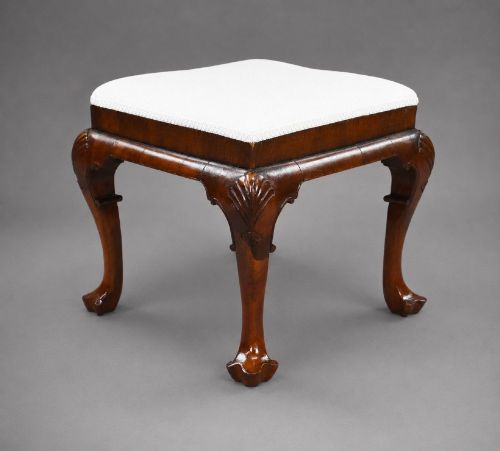
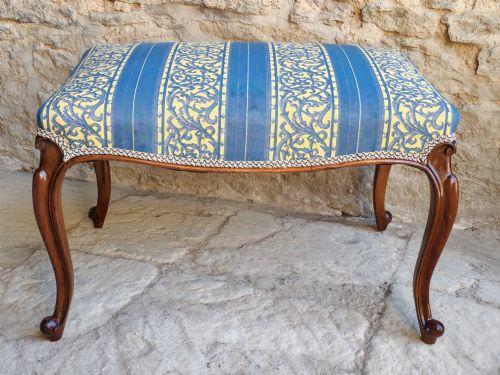
Beyond dressing rooms, these pieces function as piano seats, fireside footstools, and small occasional benches. The defining architectural element remains the curved leg, which tapers down to pad or ball-and-claw feet.
Materials and construction
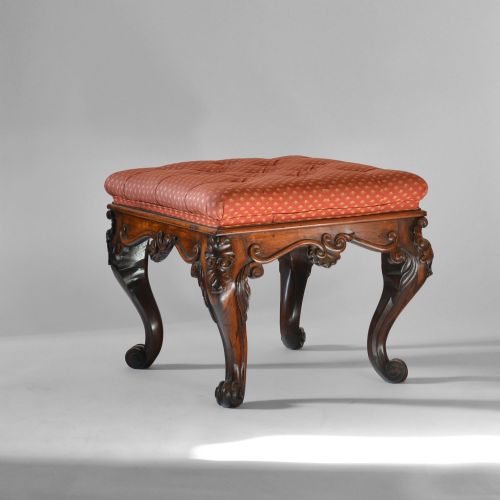
Cabinet makers utilised dense hardwoods such as walnut, mahogany, and rosewood to carve the complex curves of the legs without compromising structural integrity. Timber selection dictates the weight and overall presence of the frame, with walnut and mahogany offering smooth grain patterns suited to elaborate carving.
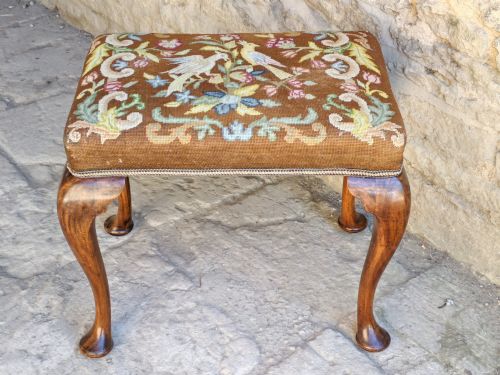
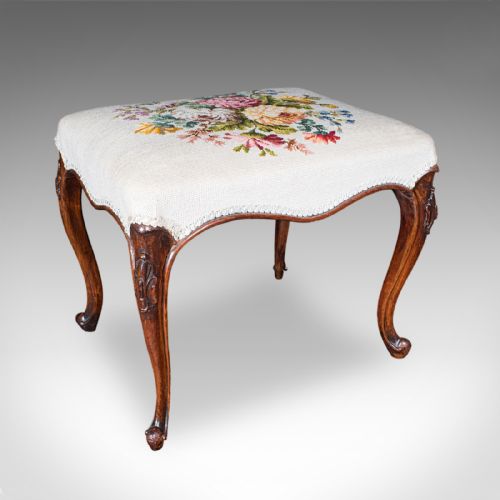
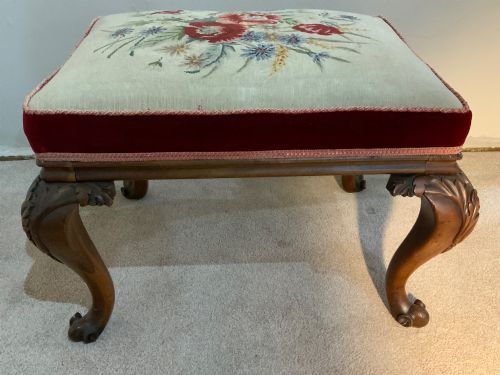
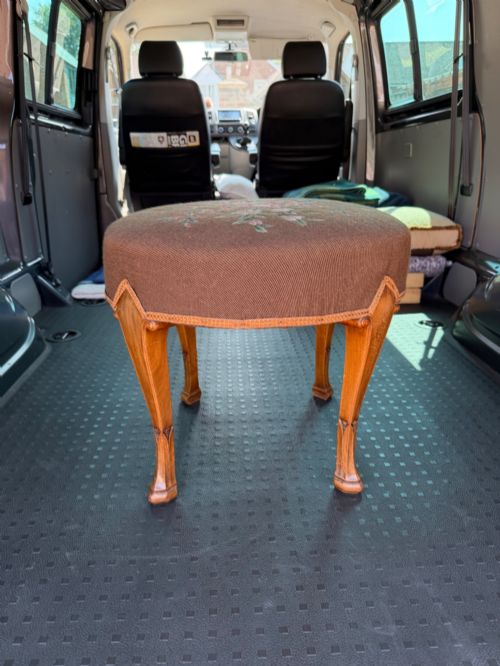
Seat platforms typically feature traditional webbing and stuffing beneath top layers of fabric, needlepoint, tapestry, or velvet. Textile choices range from simple period cottons to decorative decorative needlework secured with brass tacks.
Listings feature walnut, mahogany, and rosewood frames paired with needlepoint, tapestry, and velvet upholstery across the Victorian and Edwardian periods.
Distinctions in quality
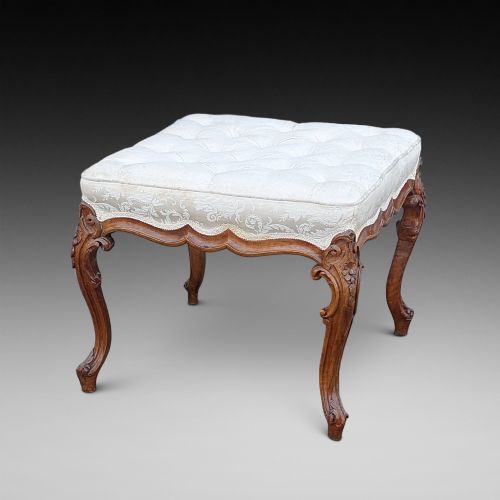
The distinction between standard domestic seating and superior examples rests in the depth and crispness of the wood carving. Fine pieces display hand-carved shell or floral motifs on the knees of the cabriole legs rather than plain, machine-turned contours.
Joinery execution and timber selection set higher-tier items apart from utilitarian workshop output. Solid walnut or rosewood frames with tight mortise and tenon joints maintain structural rigidity better than softer secondary woods finished to imitate premium timber.
LOIDRAULT FRERES PARIS
The Cabriole Leg Dressing Stool Glossary
- Cabriole leg
- A furniture leg that curves outward at the knee and inward at the ankle, mimicking the shape of an animal's limb. This design originated in antiquity and saw heavy revival during the eighteenth and nineteenth centuries.
- Needlepoint
- A type of canvas work embroidery used extensively for historical upholstery. It provides a durable, textured surface featuring geometric or floral patterns.
- Queen Anne Style
- A design movement characterised by curved lines, cabriole legs, and understated elegance. Pieces in this style emphasise graceful proportion over heavy ornamentation.
- Goncalo Alves
- A dense exotic hardwood sometimes utilised in nineteenth-century British furniture framing. It is known for its striking dark brown and cream contrasting grain patterns.
Cabriole Leg Dressing Stool: Frequently Asked Questions
What distinguishes a dressing stool from a footstool?
Dressing stools are built slightly taller and feature stable seating platforms intended for prolonged sitting at a vanity or dressing table. Footstools sit much lower to the ground, designed to support resting legs rather than bear full upright posture.
While both forms utilise similar carved timber frames and upholstered tops, the proportional height remains the clearest indicator of original intended use.
How do I identify a revival period piece?
Revival pieces replicate earlier eighteenth-century aesthetics, such as Queen Anne or Chippendale styles, but utilise nineteenth or twentieth-century construction techniques. Look at the interior frame timbers and secondary woods to determine the actual manufacturing era.
Machine-cut components alongside hand-finished carving usually point toward a Victorian or Edwardian interpretation of an older design.
What fabrics are historically correct for upholstery?
Needlepoint, wool tapestry, velvet, and heavy woven textiles appear most frequently on period seating from the nineteenth century. These materials were chosen for both durability and decorative alignment with interior trends of the era.
Many surviving pieces retain later replacement upholstery, which remains a standard aspect of antique seating maintenance.
Are these stools sturdy enough for daily use?
Solid hardwood frames joined with traditional corner blocks offer robust structural support suitable for everyday seating. Checking the stability of the leg joints ensures the timber can handle regular weight.
Periodic maintenance of the internal webbing and padding keeps the seating surface supportive over time.