




French Provincial Footstool
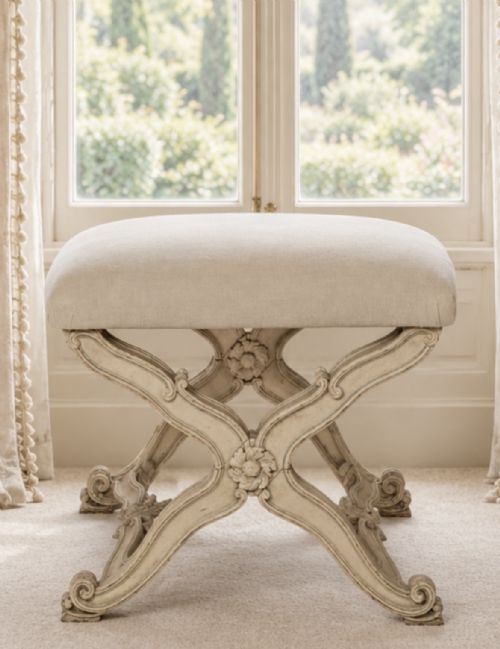
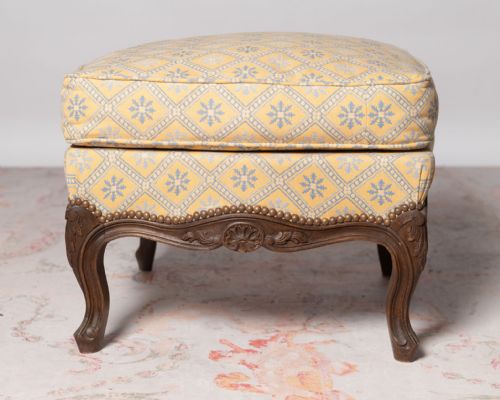
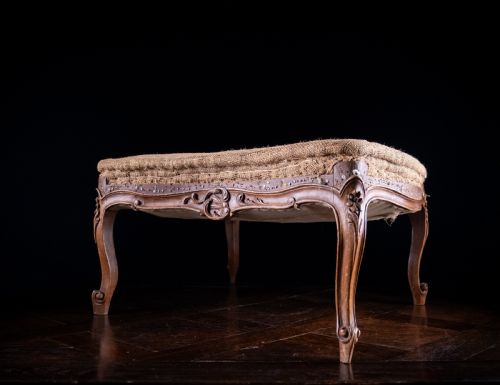
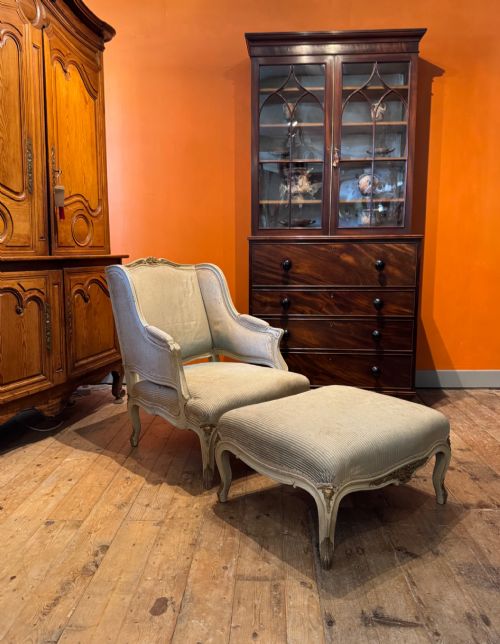
A french provincial footstool brings enduring country charm and carved grace to a room, offering low seating or a place to rest tired feet.
French Provincial Footstool
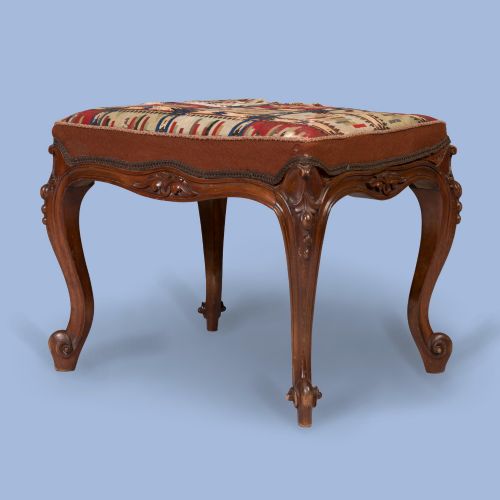
When you search for a french provincial footstool, you are looking at low seating options shaped by traditional cabinet-making traditions from across France. These pieces emerge in various periods, including the Victorian era and the early twentieth century, spanning dates from eighteen eighty up to nineteen thirty.
Origins trace directly to continental design influences, bringing decorative carving and turned supports into domestic interiors. Whether finished in original paint, gilt, or left ready for fresh upholstery, each piece provides a tactile connection to historical craftsmanship.
Materials and construction
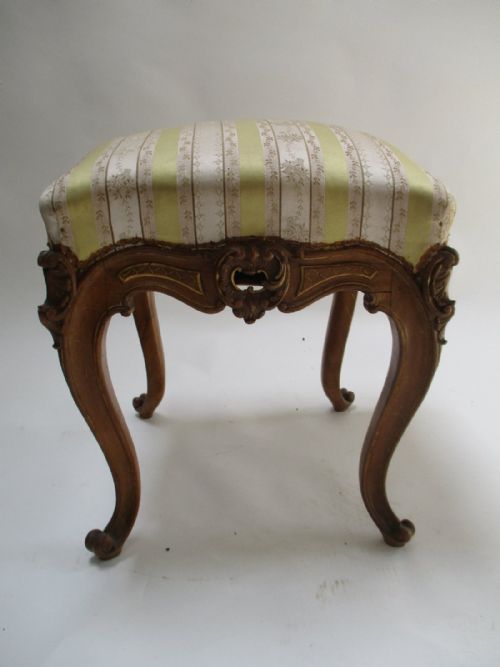
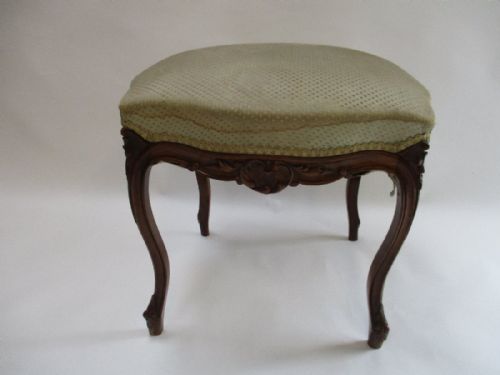
Timbers selected for these frames rely heavily on hardwoods, featuring walnut and beech chosen for their strength and responsiveness to carving. Craftsmen shaped these woods by hand, executing intricate floral motifs and flowing curves characteristic of provincial furniture.
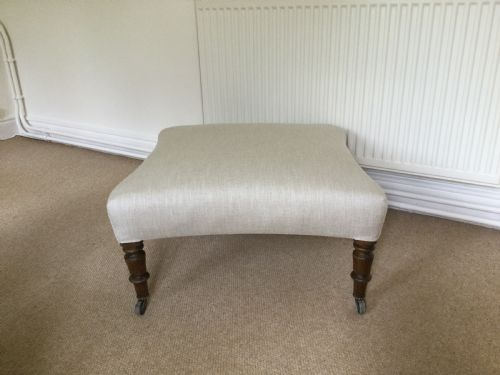
Surface treatments vary between painted wood, original paint finishes, and gilded accents that highlight the carved details. Upholstery utilises traditional textiles such as linen and tapestry seats, often supported by brass hardware where appropriate.
The listings here demonstrate periods spanning from eighteen fifty to nineteen thirty, utilising walnut, beech, and painted wood.
Assessing quality and execution
The distinction between standard examples and superior pieces rests in the crispness and depth of the hand carving on the wooden frame. Skilled execution shows in the fluid transition of cabriole legs and the harmonious proportions of the overall structure.
The integrity of the timber and the preservation of original paint or gilt surfaces heavily influence the standing of an individual stool. Pieces retaining their early upholstery or honest untouched surfaces command greater appreciation among collectors.
The French Provincial Footstool Glossary
- Louis XV Style
- A design movement characterised by asymmetrical curves, cabriole legs, and naturalistic scrollwork. This aesthetic heavily influences the curved frames seen on many provincial footstools.
- Duchesse Brisée
- A multi-part lounge chair comprising a chair and one or two footstools or benches that lock together. It provides extended seating for reclining.
- Cabriole Leg
- A furniture leg that curves outward and then tapers inward with a pad or scroll foot. It mimics the shape of an animal's leg in motion.
- Gilt
- A thin layer of gold leaf applied to the surface of wood. It enhances decorative elements on finer frames.
- Tapestry
- A heavy hand-woven or machine-woven textile featuring pictorial designs. It frequently appears as original seat covering on period stools.
French Provincial Footstool: Frequently Asked Questions
How do I use a footstool in a modern room?
Place a carved wooden stool beside an armchair to serve as an authentic footrest or casual seat. Its modest scale allows it to fit easily into corners or act as a decorative accent.
Alternatively, position a longer painted bench at the foot of a bed or beneath a window. The organic textures of wood and fabric soften contemporary interiors while adding practical utility.
What is the difference between Louis XV and Louis XVI styles?
Louis XV furniture relies on flowing curves, asymmetric shapes, and naturalistic floral carvings. The legs curve outward in characteristic cabriole forms.
Louis XVI design shifts toward neoclassical straight lines, symmetry, and geometric shapes. Legs on these pieces tend to be straight and fluted rather than curved.
How do I care for antique painted wood?
Dust the carved wooden surfaces regularly with a soft, dry cloth to prevent dirt accumulation. Avoid harsh chemical cleaners that can strip delicate finishes.
Keep wooden frames away from direct sunlight and strong heat sources to prevent the timber from drying out. Maintaining stable room humidity protects both the paint and the underlying structure.
Should I reupholster an antique stool?
Evaluate the condition of the existing fabric before deciding to replace it. If the current textile is sound and possesses historic character, retaining it preserves the object's integrity.
When fabric is severely damaged, select traditional materials like linen or heavy tapestry to maintain historical harmony. Professional upholstery ensures the internal stuffing and webbing remain secure.
How can I tell if a stool is nineteenth century?
Examine the construction joints and tool marks left on the underside of the wooden frame. Hand-cut joinery and signs of manual carving indicate older provincial work.
Look at the wear patterns on the timber and the patina of the painted or gilded surfaces. Natural ageing across the wood and finish provides clear clues to the piece's age.