
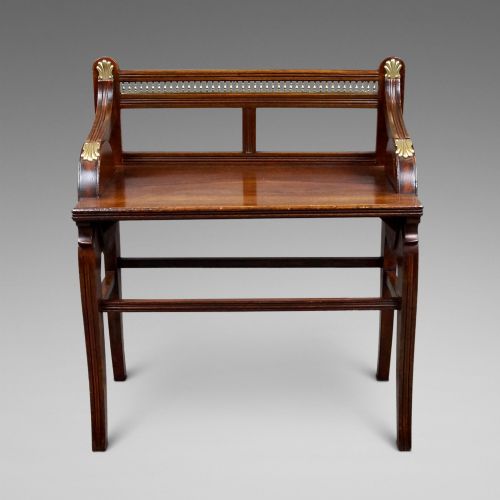
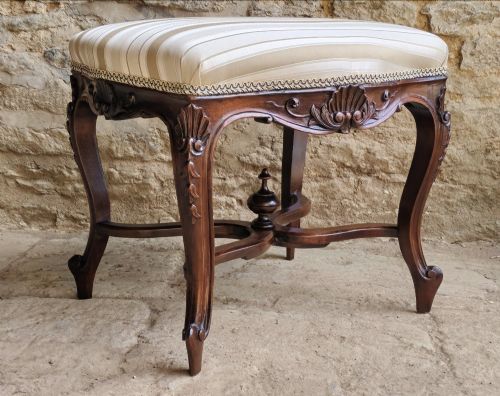


Victorian Carved Mahogany Stool
A victorian carved mahogany stool brings robust nineteenth-century timber and detailed handwork to piano seats, dressing tables, and firesides.
Victorian Carved Mahogany Stool
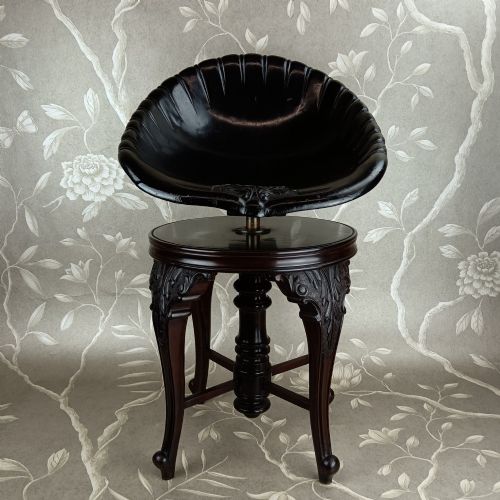
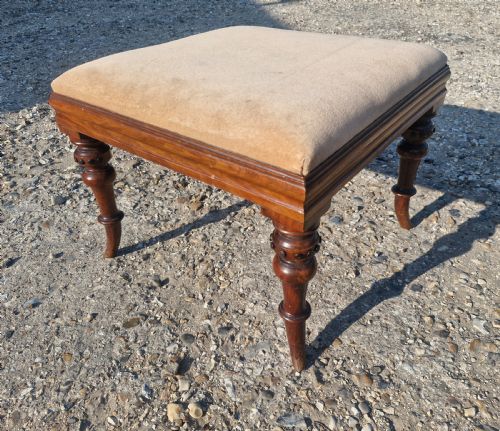
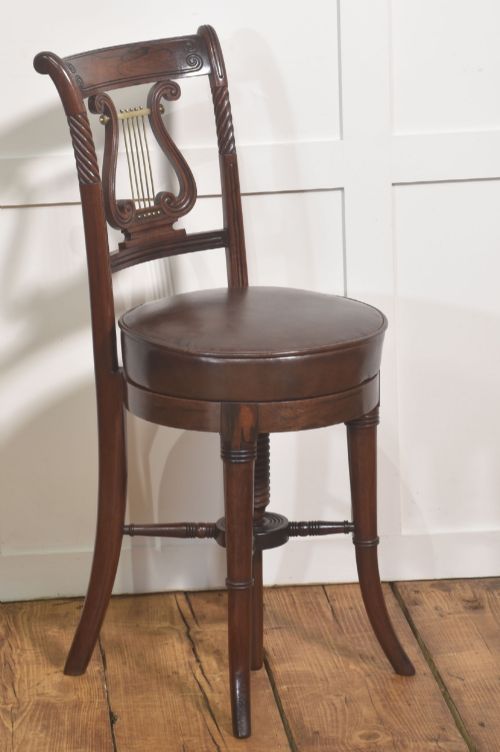
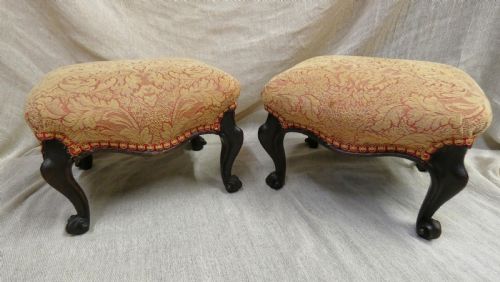
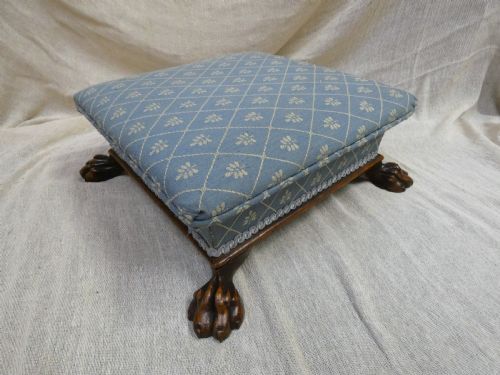
A victorian carved mahogany stool encompasses a wide variety of domestic seating, from low footstools and dressing table benches to revolving piano stools and library steps.
The pieces appearing on this page span the nineteenth century, including specific dates across the eighteen-forties, fifties, seventies, and eighties, alongside broader Victorian and Regency classifications.
Makers such as Jennens and Bettridge and Jas Shoolbred occasionally appear alongside unmarked pieces originating from English country houses and workshops.
Materials and Construction
Makers built these frames primarily from solid mahogany, sometimes incorporating brass hardware, ebonised details, or papier-mâché elements.
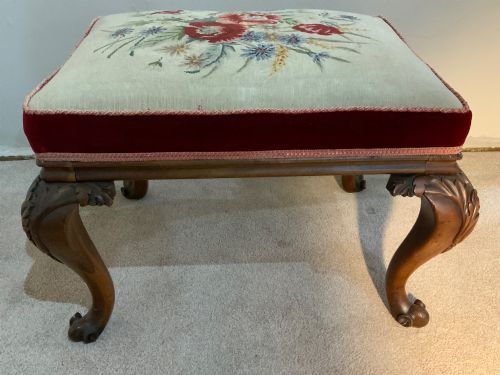
Upholstery forms a major component of the construction, utilising period textiles, leather, velvet, tapestry, needlepoint, and fabric over traditional stuffing.
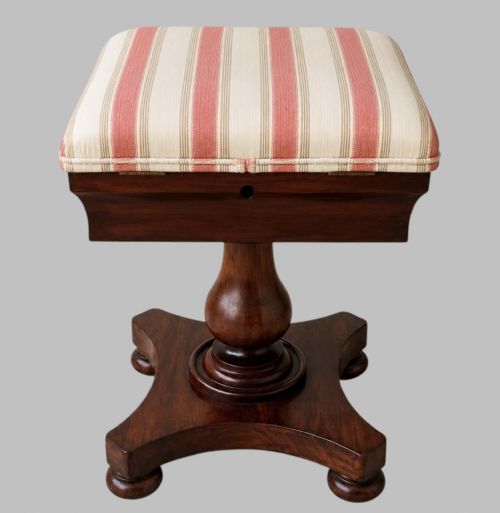
Some nineteenth-century makers doubled their seating utility by incorporating hidden sewing boxes and hinged compartments beneath the stool tops.
Judging Quality
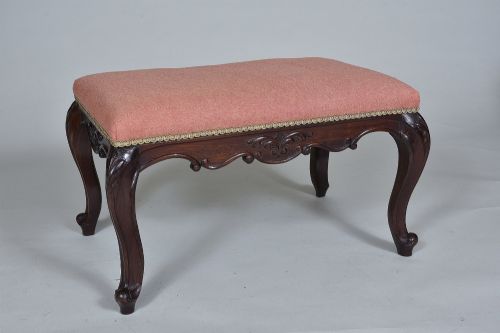
Depth and crispness of the hand-carved ornamentation separate standard utility seating from finer workshop productions.
The complexity of the mechanism, such as screw-top adjustable heights or revolving actions on piano stools, dictates the mechanical sophistication of the piece.
Jennens and Bettridge·Jas Shoolbred·Waring and Gillows
The Victorian Carved Mahogany Stool Glossary
- Mahogany
- A durable tropical hardwood favoured by nineteenth-century cabinetmakers for its rich dark grain and stability under carving.
- Cabriole leg
- A furniture leg that curves out and then in, resembling an animal's leg, commonly ending in carved scroll or pad feet.
- Revolving piano stool
- An adjustable seat mounted on a central threaded screw or wooden spindle that turns to raise or lower the height for musicians.
- Needlepoint
- Hand-stitched canvas work utilising wool yarn, frequently seen as the original upholstery covering on period footstools.
- X-frame
- A structural furniture base formed by intersecting diagonal timbers that cross to support the seat above.
Victorian Carved Mahogany Stool: Frequently Asked Questions
How do I adjust a revolving piano stool?
Many Victorian piano stools feature a screw-top mechanism allowing the seat to be rotated clockwise or anticlockwise.
Turning the top changes the height relative to the threaded central spindle fixed within the mahogany base.
Were these stools used only for pianos?
While many examples served musicians, makers produced numerous variants for different domestic rooms.
Surviving pieces function equally as dressing table seats, footstools, sewing box tables, and library steps.
How should I care for mahogany and upholstery?
Protect the solid mahogany timber from direct sunlight and excessive humidity changes to prevent wood movement.
Clean original fabrics and needlepoint gently with a soft brush, avoiding harsh chemical sprays that might damage historical textiles.
How can I tell an 1840 stool from a later Victorian one?
Early pieces from the eighteen-forties often display William IV influences with heavier scrollwork and robust proportions.
Later Victorian examples from the eighteen-eighties frequently incorporate lighter cabriole legs or distinct revival styling.