


Antique Velvet Footrest
An antique velvet footrest brings tactile warmth to a room, offering low-slung comfort crafted in rich woods and plush fabrics.
Antique Velvet Footrest
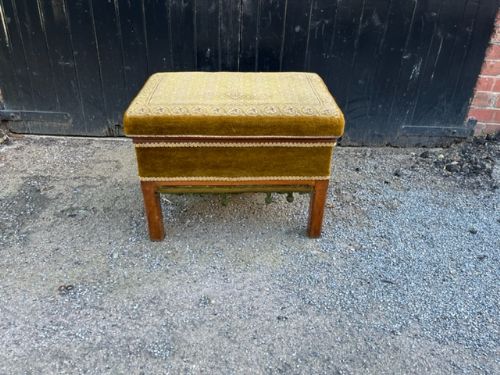
An antique velvet footrest spans compact footstools, gout stools, and larger ottomans designed to support the feet or provide low seating. Buyers searching for an antique velvet footrest will encounter pieces predominantly from the Victorian and Regency periods, alongside later nineteenth-century interpretations.
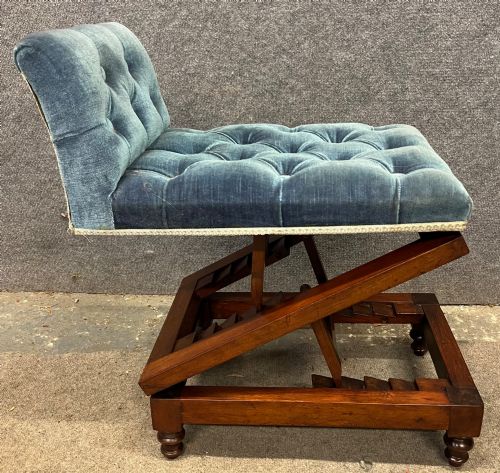
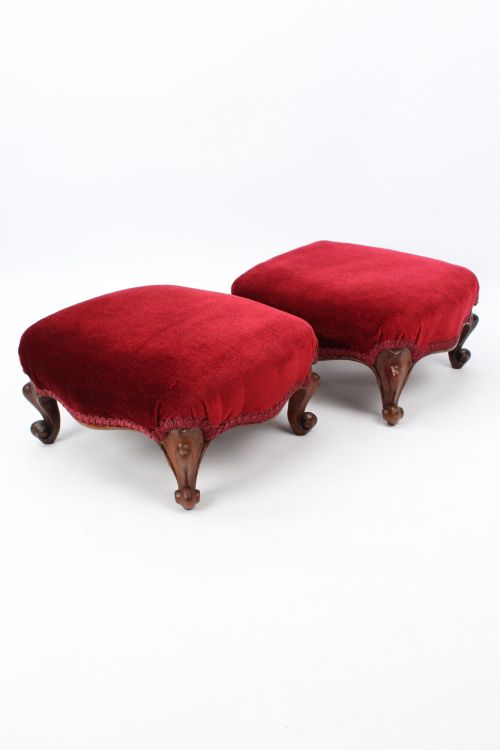
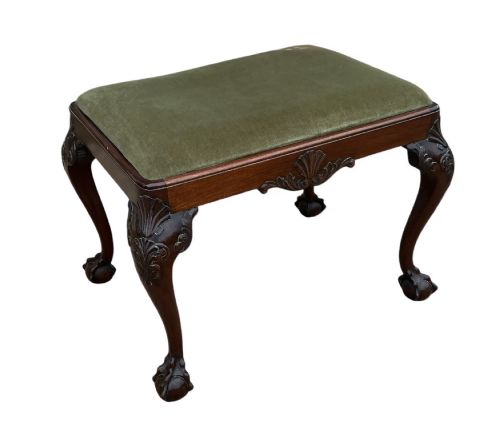
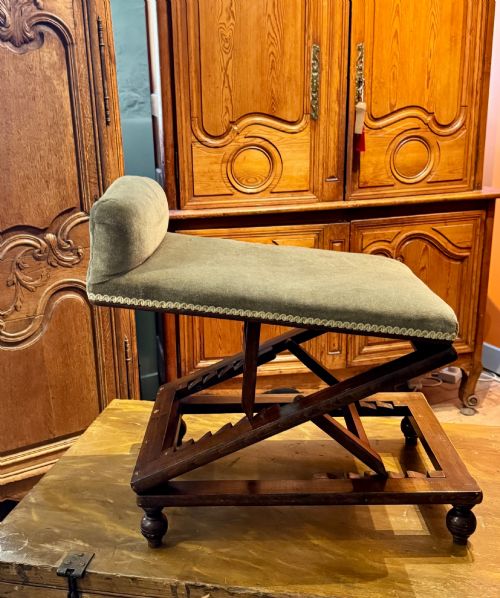
The forms range from simple pairs of walnut footstools to metamorphic gout stools and carved mahogany frames raised on cabriole or lions paw feet. Most examples combine dense timber frames with padded textile tops, reflecting the domestic comfort of the nineteenth century.
Originating in eras that prized upholstered luxury, these stools serve equally well beside a fireside armchair or as a freestanding centre stool. The selection draws on styles such as Rococo Revival, Chippendale Revival, and Gothic Revival to suit varied period interiors.
How they were made
Makers constructed the structural frames of an antique velvet footrest using hardwoods like mahogany, walnut, rosewood, and stained beech. These timbers were carved, turned, or shaped into X-frames, cabriole legs, and architectural supports.
Upholstery techniques involved stretching textile and velvet over padded foundations, frequently secured or accented with textile braid. Brass mechanisms occasionally appeared in adjustable designs intended for gout relief or varied seating heights.
Some nineteenth-century makers hid mechanical brass ratchets inside velvet cushions so gentlemen could tend to their gout in absolute secret.
What varies in quality
Quality in an antique velvet footrest rests on the integrity of the timber framing and the depth of the carving. Heavier, finely figured walnut and mahogany frames with crisp architectural detail indicate superior workshop execution.
The sophistication of the mechanism in adjustable or metamorphic pieces distinguishes standard utility items from finer examples. Proportion and the harmony between the wooden base and the textile top ultimately determine the standing of each piece.
The Antique Velvet Footrest Glossary
- Gout stool
- An adjustable footrest specifically designed to elevate and support the foot of a sufferer. These pieces often feature mechanical hinges to alter the angle.
- Metamorphic
- Describing furniture that transforms from one form into another, such as a footstool that alters its height or inclination.
- Cabriole leg
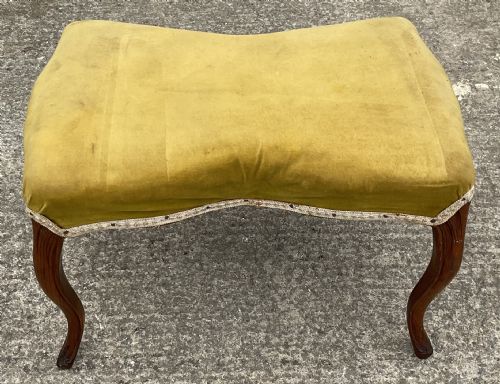
- A furniture leg that curves out and then in, resembling the leg of an animal. This form frequently appears on Victorian mahogany and walnut frames.
- X-framed
- Construction utilising crossed structural members forming an X shape when viewed from the side. This method provides robust support for low stools and ottomans.
- Centre stool
- A freestanding piece finished on all sides for placement in the middle of a room. These larger forms functioned as flexible seating.
Antique Velvet Footrest: Frequently Asked Questions
What is an antique velvet footrest used for?
These pieces primarily served to elevate the feet while sitting in a parlour or study during the nineteenth century. Today, they function as decorative low seating or functional footstools beside armchairs.
Their compact size allows them to fit easily into smaller spaces while adding a textural element through their velvet upholstery.
How do I date an antique velvet footrest?
Dating relies on identifying the underlying timber species, the turning or carving style of the legs, and structural cues. Victorian pieces often feature heavy mahogany or walnut with cabriole legs, while Regency examples lean towards classical lines and brass details.
Construction methods, such as hand-cut joinery versus later machine-made elements, also help narrow down the period of manufacture.
Are these footrests comfortable for daily use?
Most pieces provide firm support rather than deep modern cushioning, reflecting the upholstery standards of the nineteenth century. Many survive with their original padding or have been historically reupholstered.
Placing them in low-traffic areas helps preserve fragile vintage textiles while still allowing practical enjoyment.
What is a metamorphic gout stool?
A metamorphic gout stool includes a mechanical ratchet or screw mechanism that alters the incline of the foot platform. These were built to accommodate the specific medical needs of individuals requiring elevated rest.
The brass adjustments and hinged platforms demonstrate nineteenth-century ingenuity applied to domestic comfort.
How do I care for antique velvet?
Velvet upholstery requires gentle maintenance to protect the pile from crushing and dust accumulation. Light brushing with the grain and keeping the piece away from direct sunlight preserves the colour and texture.
Professional textile cleaning is recommended for deeper maintenance to avoid damaging the delicate pile and base fabric.