


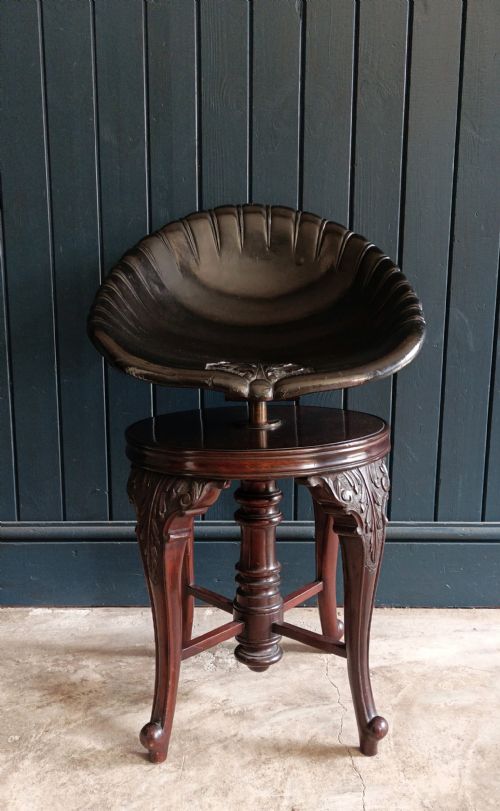

Mahogany Revolving Stool
A mahogany revolving stool brings functional elegance to any room, offering adjustable height and smooth rotation for musicians and dressing tables alike.
Mahogany Revolving Stool
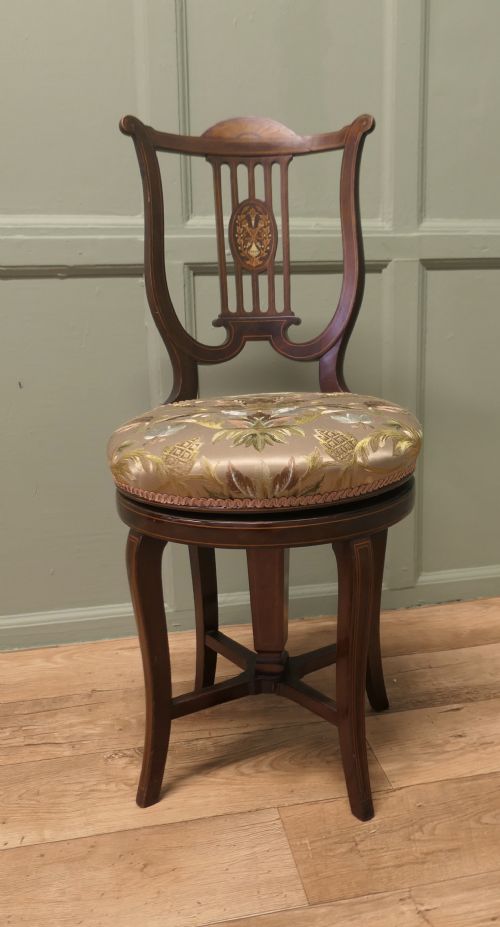
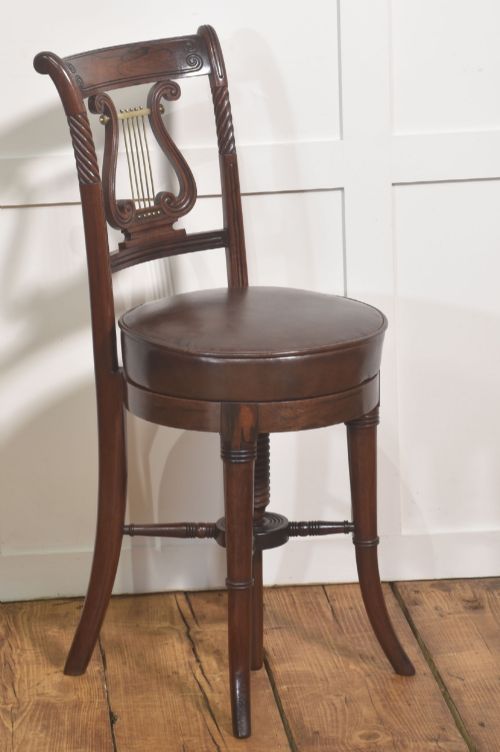
A mahogany revolving stool serves primarily as a music or piano seat, alongside roles as a dressing table chair or accent piece. These versatile seats appear across the nineteenth century, including Victorian, Regency, and William IV periods.
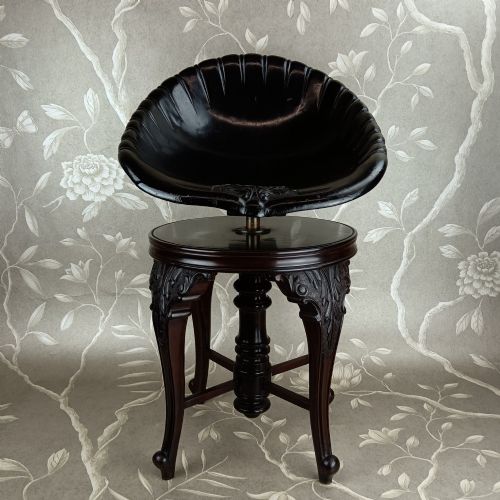
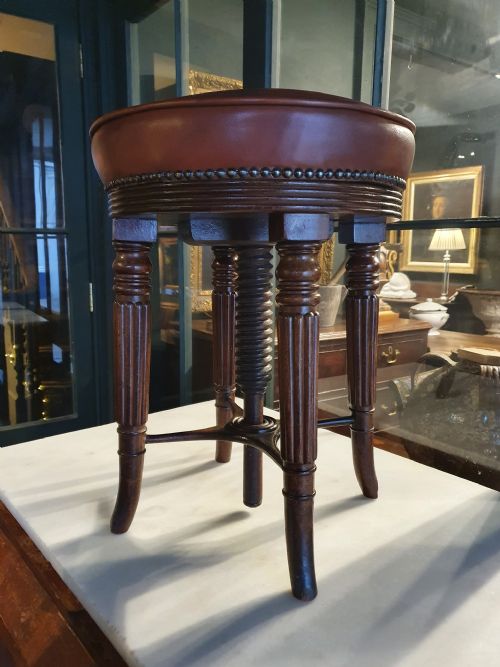
The most common form met here is the circular top piano stool, featuring a swivel mechanism that adjusts seating height. Examples range from simple tripod bases to elaborately carved pedestal designs.
Originating in domestic parlours and music rooms, these pieces combine solid timber construction with practical mechanics. Makers adapted the form for harpists, cellists, and pianists requiring mobility while seated.
Materials and Construction
Cabinet makers utilised dense mahogany for the primary structure, turning pedestals and carving cabriole or tripod legs. Brass details appear in mechanical screw adjustments and inlay work.
Upholstery materials include leather, velvet, fabric, and beadwork textiles, secured over padded tops. Metal components support the swivel action hidden within the central column.
Musicians relied on these revolving seats to execute rapid half-turns toward sheet music cabinets without missing a beat.
Judging Quality and Craftsmanship
The smoothness and stability of the revolving mechanism distinguish finer examples from standard production. Precision in the threaded wooden or metal screw determines how well the height adjustment functions over time.
Carving depth and timber selection separate workshop pieces from mass-manufactured items. Details such as brass inlay, ormolu mounts, and original textile seats indicate higher atelier standards.
Jennens and Bettridge·Gillows·James Shoolbred·H Brooks and Co
The Mahogany Revolving Stool Glossary
- Swivel top
- A rotating seat platform allowing the user to turn freely without moving the base. This mechanism often integrates with a height-adjustable screw shaft.
- Tripod base
- A three-legged support structure commonly found on pedestal stools. It provides stability on uneven nineteenth-century floorboards.
- Ormolu
- Gilded bronze or brass mounts applied for decorative effect. Makers used these metal ornaments on high-status Empire-style pieces.
- Cabriole leg
- A furniture leg that curves outward and then tapers inward. This style reflects popular design influences during the Victorian and Edwardian periods.
- Music chair
- A seated piece designed specifically for instrumentalists, often featuring an adjustable backrest or specialised arm design for freedom of movement.
Mahogany Revolving Stool: Frequently Asked Questions
How do I adjust the height on my stool?
Most pieces raise or lower by rotating the padded seat top clockwise or counter-clockwise on a central wooden or metal screw thread. Some designs utilise a side lever or pin mechanism to secure the selected height.
Ensure the mechanism is clean and lightly lubricated if the movement feels stiff, taking care not to force the screw past its natural stopping point.
Where were these stools placed in a home?
These seats found their primary homes beside pianos, harp stands, and cellos in Victorian and Regency drawing rooms. Secondary placements included dressing tables and boudoirs as adjustable vanity chairs.
Their compact footprint allowed them to tuck neatly beneath instruments or desks when not in use.
How do I care for the mahogany timber?
Maintain the polished mahogany surface by dusting regularly with a soft, dry cloth. Avoid placing the stool near direct heat sources or strong sunlight to prevent the timber from drying out.
Apply a quality beeswax polish occasionally to nourish the wood and preserve the natural sheen of the grain.
How do I distinguish a Regency period piece from a Victorian one?
Regency examples often display cleaner classical lines with restrained brass inlay and simpler geometric forms. Victorian pieces tend toward heavier carving, ornate pedestal bases, and more elaborate upholstery choices.
Examining the construction methods underneath the seat often reveals the transitional changes in manufacturing techniques between the early and late nineteenth century.