
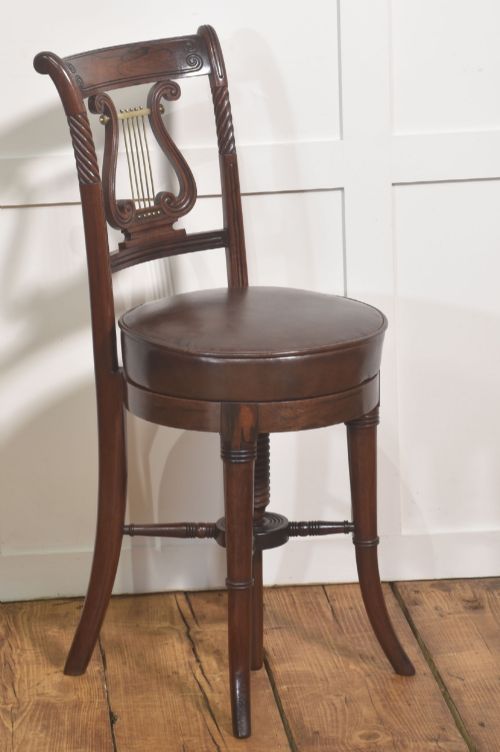
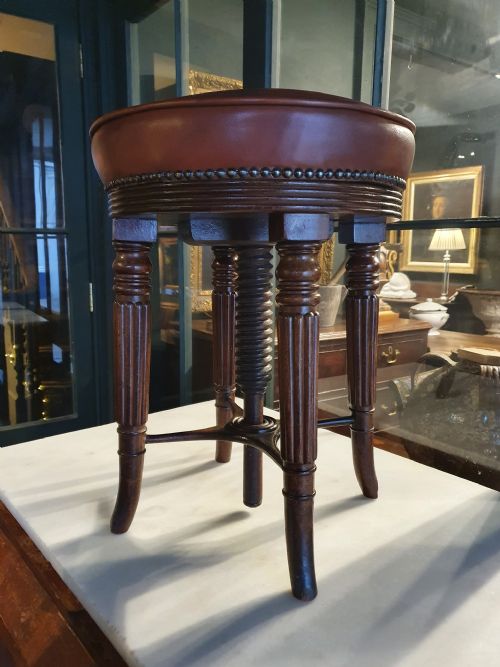


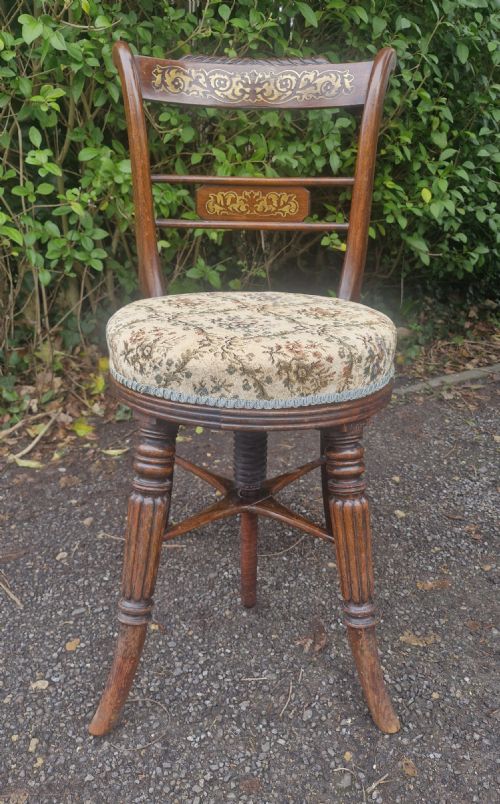


Regency Adjustable Stool
A regency adjustable stool brings mechanical ingenuity and refined timberwork to the music room or dressing table.
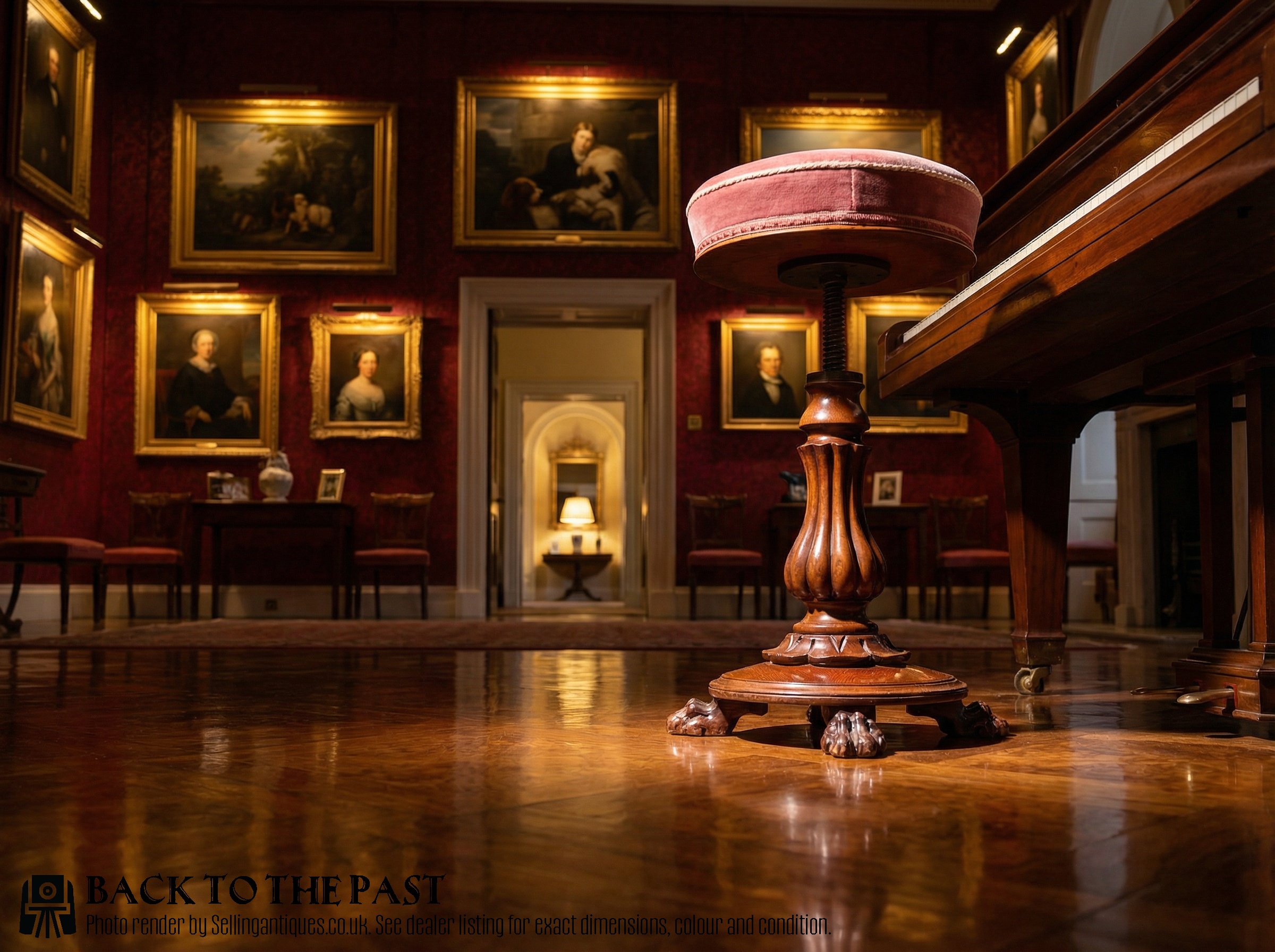
Regency Adjustable Stool
A regency adjustable stool serves primarily as a piano stool, music chair, or dressing table seat, designed with a mechanism to alter the height for the sitter. You will most frequently encounter mahogany and rosewood examples originating from the nineteenth century, Georgian era, and Regency period.
The physical forms include square top piano stools, revolving music chairs, dressing chairs, and occasional gout stools. Stylistic influences span across Regency, William IV, Grand Regency, Victorian, Sheraton Revival, and Empire designs.
How they were made
Cabinetmakers relied heavily on dense tropical hardwoods like mahogany and rosewood, often complemented by secondary timbers such as oak, walnut, or simulated rosewood finishes. Brass formed an integral part of the construction, appearing in intricate stringing, inlay, and the heavy screw mechanisms housed within the pillar.
Upholstery completed the pieces, utilising traditional stuff-over techniques finished in fabric, leather, velvet, tapestry, or needlepoint. Gilt painted highlights occasionally adorned empire style frames, adding a contrasting metallic sheen to the timber.
Listings feature brass inlay, needlepoint upholstery, and gilt painted finishes across nineteenth century forms.
What varies in quality
The sophistication of the mechanical adjustment action dictates much of the distinction between standard production and superior workshop output. Smooth travel on the wooden or brass screw mechanism indicates careful threading and alignment by the maker.
Timber selection and decorative embellishment set the finer pieces apart from plain utilitarian seating. Richly figured grain veneers, precise brass inlay work, and robust turning on the central column demonstrate the higher tier of period craftsmanship.
Gillows
The Regency Adjustable Stool Glossary
- Regency
- A stylistic period spanning the late eighteenth and early nineteenth centuries, characterised by classical restraint, proportion, and inspiration from ancient Greece and Rome. It emphasises clean lines alongside decorative brass work.
- William IV
- A transitional design phase during the 1830s that favours heavier proportions, robust scrolling, and substantial mahogany frames. Pieces from this era often feature wider seats and bolder turnings.
- Revolving
- A top construction allowing the seat to spin freely on a central threaded spindle or pivot. This permits the player to turn easily toward a music stand or companion.
- Needlepoint
- A hand-stitched canvas embroidery used widely for historical seat covers and upholstery panels. It introduces intricate multi-coloured botanical or geometric patterns to the top surface.
- Simulated rosewood
- A painted or grained finish applied to a lesser timber to mimic the dark, richly figured appearance of genuine rosewood. Craftsmen utilised this technique to achieve a luxury aesthetic with alternative woods.
Regency Adjustable Stool: Frequently Asked Questions
How do you adjust the height on these stools?
Most examples employ a central wooden or metal screw mechanism hidden beneath the seat, allowing the top to wind upwards or downwards when rotated.
Turning the seat clockwise or anticlockwise alters the vertical position, which players set to match their preferred playing posture.
Were these stools only used for pianos?
While primarily built as piano stools or music chairs, many served multiple domestic functions in the nineteenth-century interior.
Listing evidence notes their dual role as dressing table chairs and specialised seating such as gout stools alongside standard music rooms.
How can I tell a Regency stool from a William IV one?
Regency pieces generally exhibit lighter proportions, delicate brass inlay, and slender reeded legs reflecting classicism.
William IV examples shift toward heavier, bolder turnings, substantial scrolling, and sturdier mahogany frames typical of the 1830s.
What woods are most common?
Mahogany and rosewood dominate the surviving examples, prized for their strength, dark colour, and ability to take a high polish.
Some pieces also incorporate satinwood, walnut, oak, or painted surfaces finished to simulate exotic grains.