



Dark Wood Music Seat
A dark wood music seat provides a sturdy, adjustable perch for a musician, combining period craftsmanship with practical seating.
Dark Wood Music Seat
A dark wood music seat encompasses piano stools, revolving music chairs, and duet benches designed for keyboard and string players. The selection on this page draws primarily from the Victorian, Edwardian, and Georgian periods, alongside Regency and William IV eras.
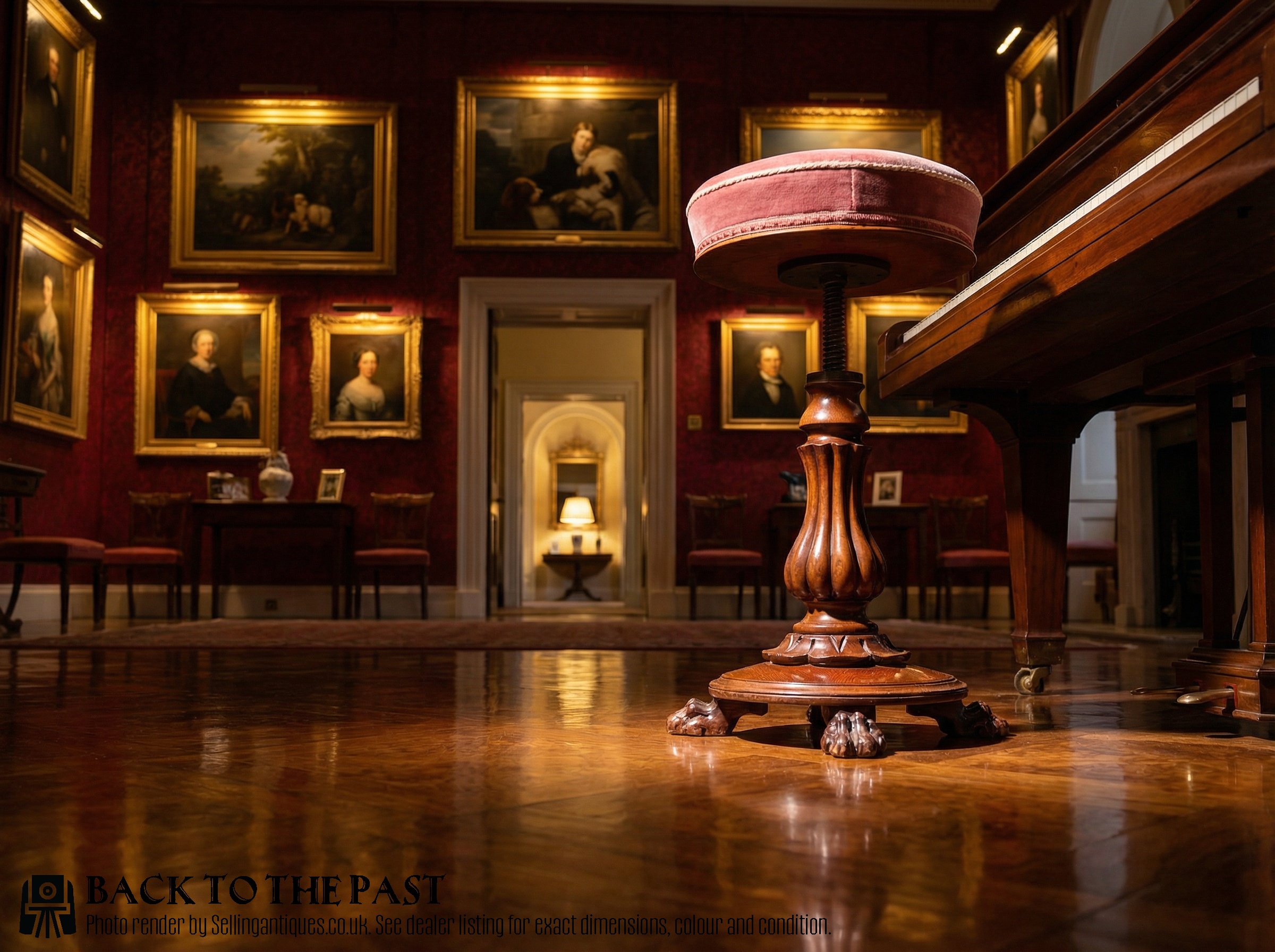
Buyers frequently encounter revolving swivel tops and adjustable height mechanisms intended to suit individual players at the instrument. Mahogany and rosewood form the core of these offerings, often paired with upholstered fabric, velvet, or brass details.
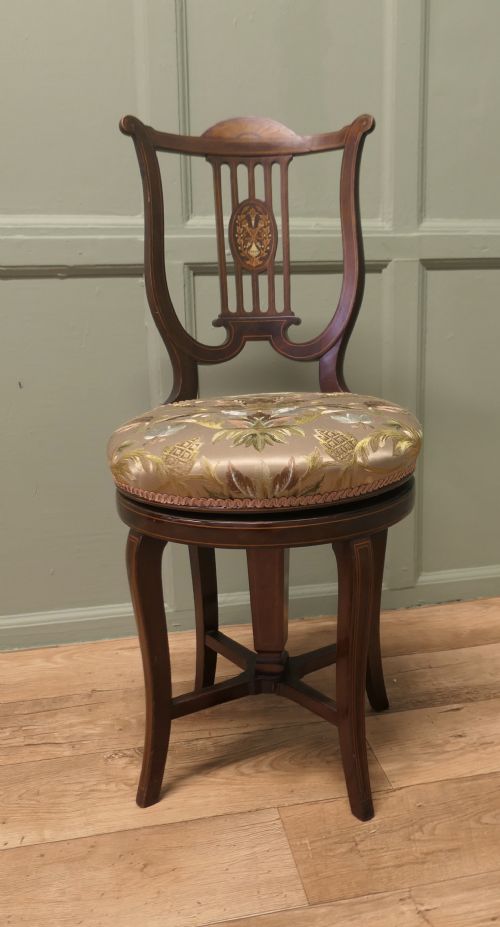
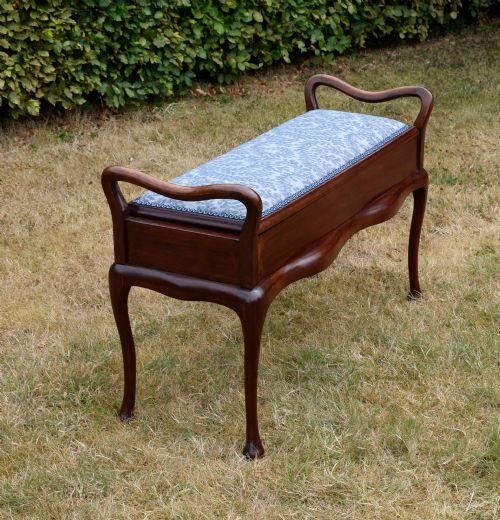
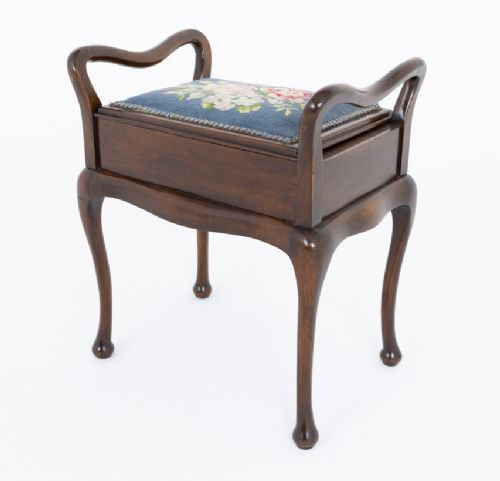
The objects range from single music chairs with lyre backs to longer duet stools featuring hinged seats for sheet music storage. Pieces originating from workshops like Gillows and Jennens & Bettridge represent the formal cabinet-making traditions found within the stock.
Craftsmanship and Mechanism
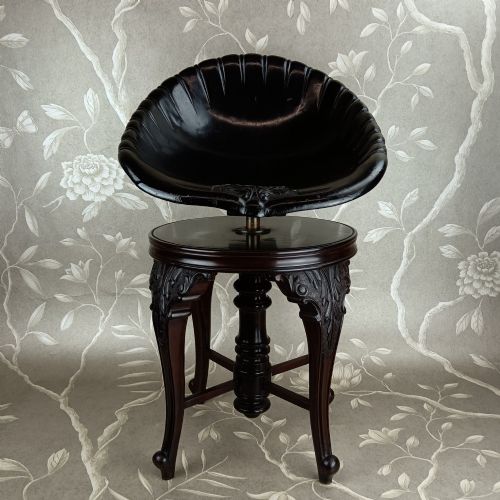
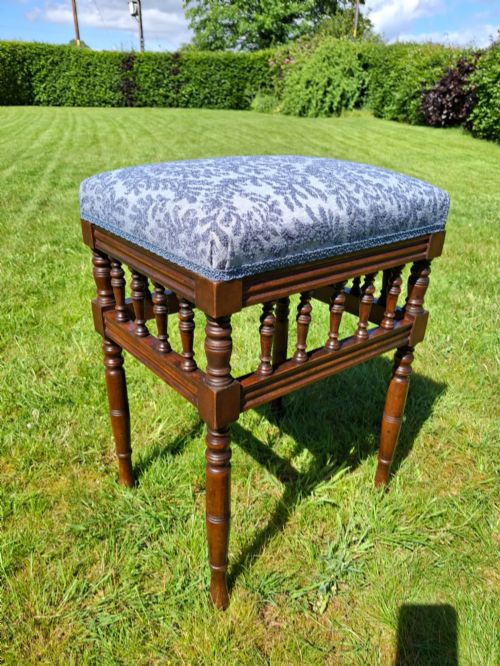
Superior examples of a dark wood music seat display crisp hand-carving on the cabriole legs or column supports, whereas simpler iterations rely on plain turned wood. The precision of the revolving screw mechanism dictates how steadily the seat rises without lateral wobble.
Makers identified by stamped signatures or maker's marks generally command higher regard for their documented workshop provenance. The retention of original upholstery fabrics and intact internal music compartments further elevates a piece above standard utilitarian seating.
Musicians once relied on papier-mâché tops to keep their sheet music stations remarkably light.
Jennens & Bettridge·Charles Nosotti·Gillows·Jas Shoolbred·H Brooks and Co
The Dark Wood Music Seat Glossary
- Revolving piano stool
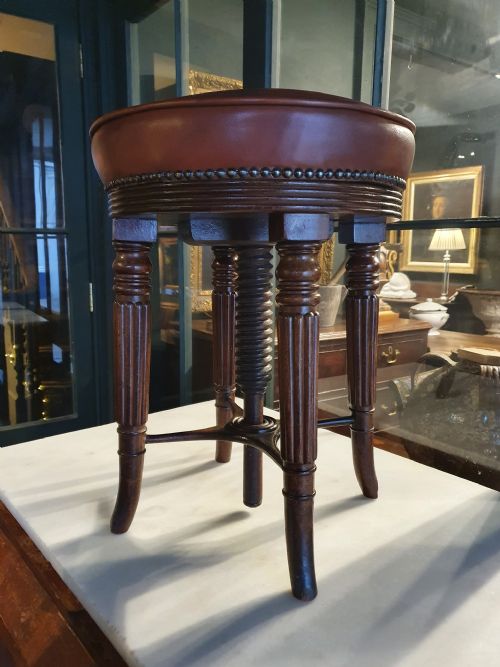
- A seat featuring a central screw mechanism that allows the top to turn and adjust in height. This design helped players find a comfortable posture relative to the keyboard.
- Duet stool
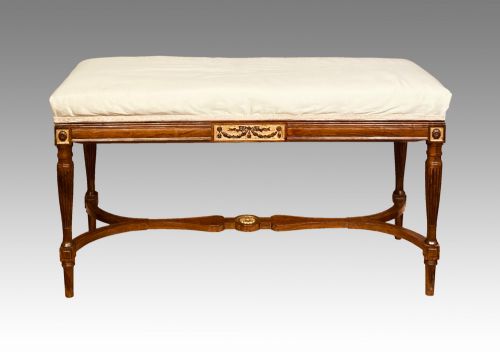
- A wider bench designed to accommodate two musicians sharing a piano or organ bench. These often include a hinged top revealing an internal compartment for holding sheet music.
- Lyre back
- A chair back shaped in the symmetrical outline of a classic stringed musical instrument. This motif appears frequently on nineteenth-century music chairs.
- Rise and fall
- An alternative description for an adjustable height mechanism operated by a hand crank or internal screw. It allowed precise vertical positioning.
- Marquetry
- The art of applying decorative veneer pieces in wood to form geometric or floral pictures. Swiss and English makers utilised this technique on select chair tops.
Dark Wood Music Seat: Frequently Asked Questions
How do I adjust the height on these seats?
Most revolving versions lift by simply turning the upholstered top clockwise or anticlockwise on its central wooden or metal screw thread.
Some Edwardian and Victorian designs utilise a concealed internal mechanism operated by turning the seat itself until the desired playing height is reached.
Were these seats only used for pianos?
While primarily built for keyboard players, specialised forms existed for cellists and harpists who required armless seating with stable foot placement.
Music chairs often featured low or open backs to allow performers unrestricted arm movement while playing string or wind instruments.
How can I tell a Victorian stool from a Georgian one?
Georgian examples tend to show restrained classical proportions with straight or tapering legs, often reflecting Neoclassical or Chippendale influences.
Victorian pieces frequently display heavier carved walnut or rosewood frames, bolder cabriole legs, and more complex mechanical screw adjustments.
Where was sheet music stored on these seats?
Duet benches frequently feature a hinged seat lid that opens upward to reveal a shallow wooden compartment lined for holding paper folios.
Single revolving stools rarely included storage space, focusing entirely on the adjustable seating mechanism and stable base support.