
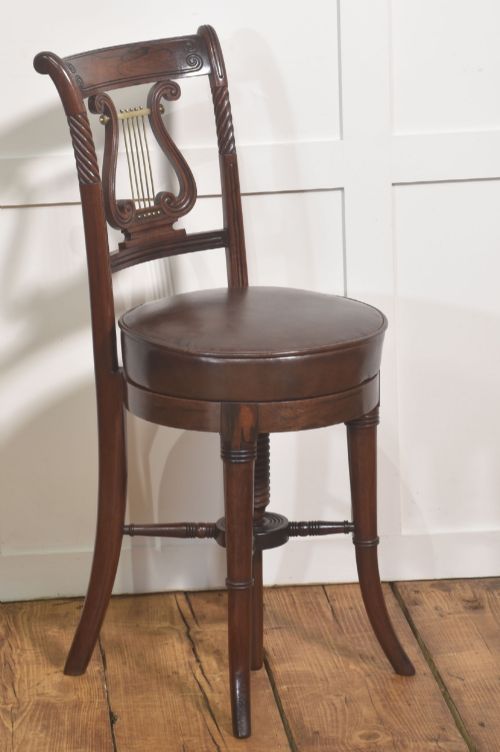
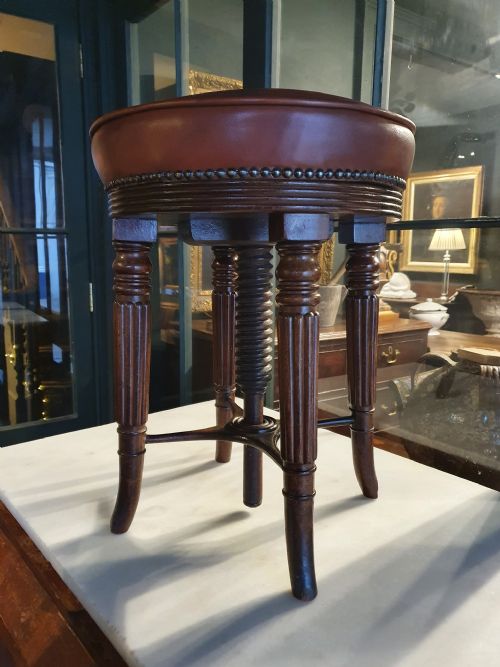
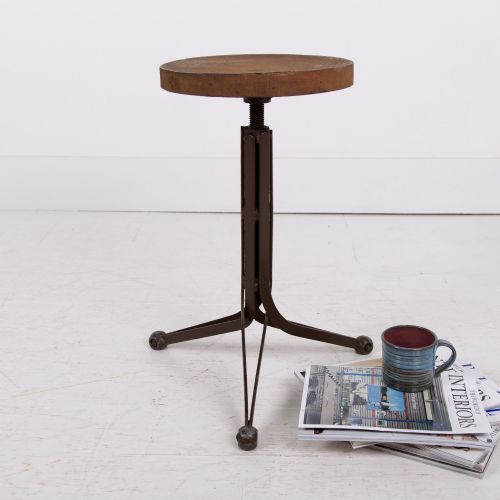


Vintage Height Adjustable Stool
A vintage height adjustable stool brings flexible seating and mechanical interest into a room, spanning grand mahogany piano seats to cast iron workshop pieces.
Vintage Height Adjustable Stool
A vintage height adjustable stool combines domestic comfort with mechanical utility, drawing from forms designed for musicians, dressing tables, and industrial workshops. These seats appear across diverse periods from the Georgian era through the early twentieth century, reflecting shifting domestic and working needs.
Buyers frequently meet piano stools and revolving workshop seats on this page, constructed in styles ranging from formal Victorian and Grand Regency to raw industrial cast iron. The selection bridges refined mahogany parlour seating and robust steel-framed work furniture.
Makers and manufacturers produced these items in wood and metal, employing screw mechanisms and swivelling tops to alter the seat level. Each piece serves as a functional item where mechanical adjustment defines the form.
How they were made
Cabinet makers and ironfounders utilised a mix of dense hardwoods, cast iron, and brass to build these adjustable frames. Mahogany, walnut, oak, and rosewood form the wooden chassis, while metal supports drive the screw mechanisms.
Upholstered pads in leather and fabric top many of the domestic piano stools, whereas industrial variants rely on solid wood or bare metal tops. Joinery methods combine traditional turning and carving with robust metal engineering.
Listings span the 19th Century, Regency, and 1930 periods, incorporating materials from cast iron and steel to mahogany, brass, and leather.
What varies in quality
The sophistication of the mechanical adjustment determines the upper tier of these pieces, distinguishing patent mechanisms and smooth screw threads from simpler pivots. Finer examples display precise carpentry in mahogany or walnut alongside quality brass fittings.
Industrial variants derive their standing from the integrity of the cast iron framework and original wooden tops, where honest workshop wear supersedes decorative carving. Overall distinction lies in the harmony between mechanical function and the original materials.
Gillows·James Shoolbred·Rubery Owen
The Vintage Height Adjustable Stool Glossary
- Revolving piano stool
- A seat designed for musicians featuring a top that turns on a central screw to alter the height. This form dominates domestic listings from the Regency and Victorian periods.
- Industrial workshop stool
- A robust seat utilising cast iron and steel components alongside solid wood, built for factories and work spaces. These examples often feature simple screw mechanisms for heavy daily use.
- Patent music chair
- An adjustable seating form incorporating registered mechanical designs for musicians. Such pieces reflect nineteenth century innovation in domestic comfort.
- Gillows
- A notable cabinet making firm producing high quality mahogany furniture. Pieces bearing this mark demonstrate superior joinery and materials.
Vintage Height Adjustable Stool: Frequently Asked Questions
How do these adjustment mechanisms work?
Many examples use a threaded screw post hidden beneath the seat, allowing the top to wind upwards or downwards when rotated. Other forms rely on side levers or simple friction pivots to alter the height.
Industrial variants generally expose the metal screw shaft directly, while domestic piano stools conceal the mechanism within a turned wooden column or skirt.
Were these stools made for homes or workshops?
The inventory splits between refined domestic seating and utilitarian work furniture. Piano stools and dressing chairs used polished mahogany, rosewood, and leather upholstery for parlours and bedrooms.
Workshop stools utilised cast iron, steel, and plain hardwood built to endure heavy factory tasks. Both types share the common trait of adjustable height.
How do I identify a Victorian piece?
Victorian examples often feature turned mahogany frames, carved walnut details, or heavy cast iron bases combined with wood. They reflect the eclectic revival styles of the nineteenth century.
Makers during this period frequently integrated patent screw mechanisms or revolving leather seats for domestic music rooms.
Can these stools support daily seating use?
Most pieces were built from durable hardwoods and strong metals intended for practical work or music practice. Their original construction ensures they handle standard daily seating.
Checking the stability of the central screw thread and joints ensures the mechanism remains secure during use.