


Antique Parlour Footstool
These antique parlour footstool examples offer charming domestic comfort, bringing period craftsmanship and useful low seating to any traditional room.
Antique Parlour Footstool
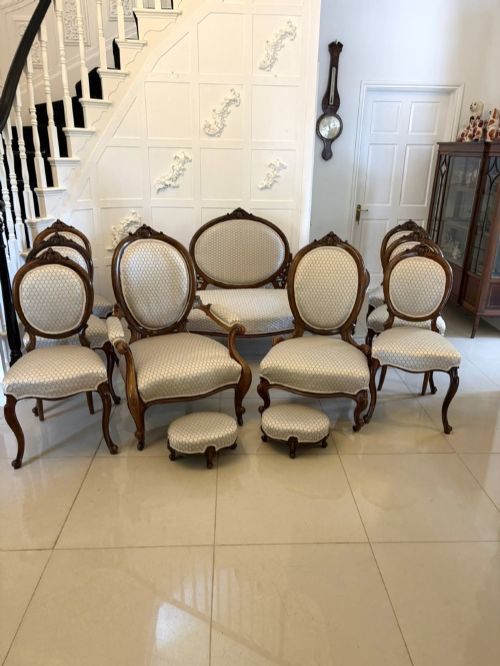
An antique parlour footstool provides low seating or leg support, appearing across various nineteenth-century forms including small round foot stools, centre stools, and larger salon suite elements. These domestic items survive in diverse configurations, ranging from individual freestanding examples to matched pairs.
The Victorian period dominates the available selections, frequently displaying rich timber frames and traditional upholstery. Pieces date broadly from the middle decades of the nineteenth century through to later Victorian years, occasionally connecting to earlier Georgian traditions.
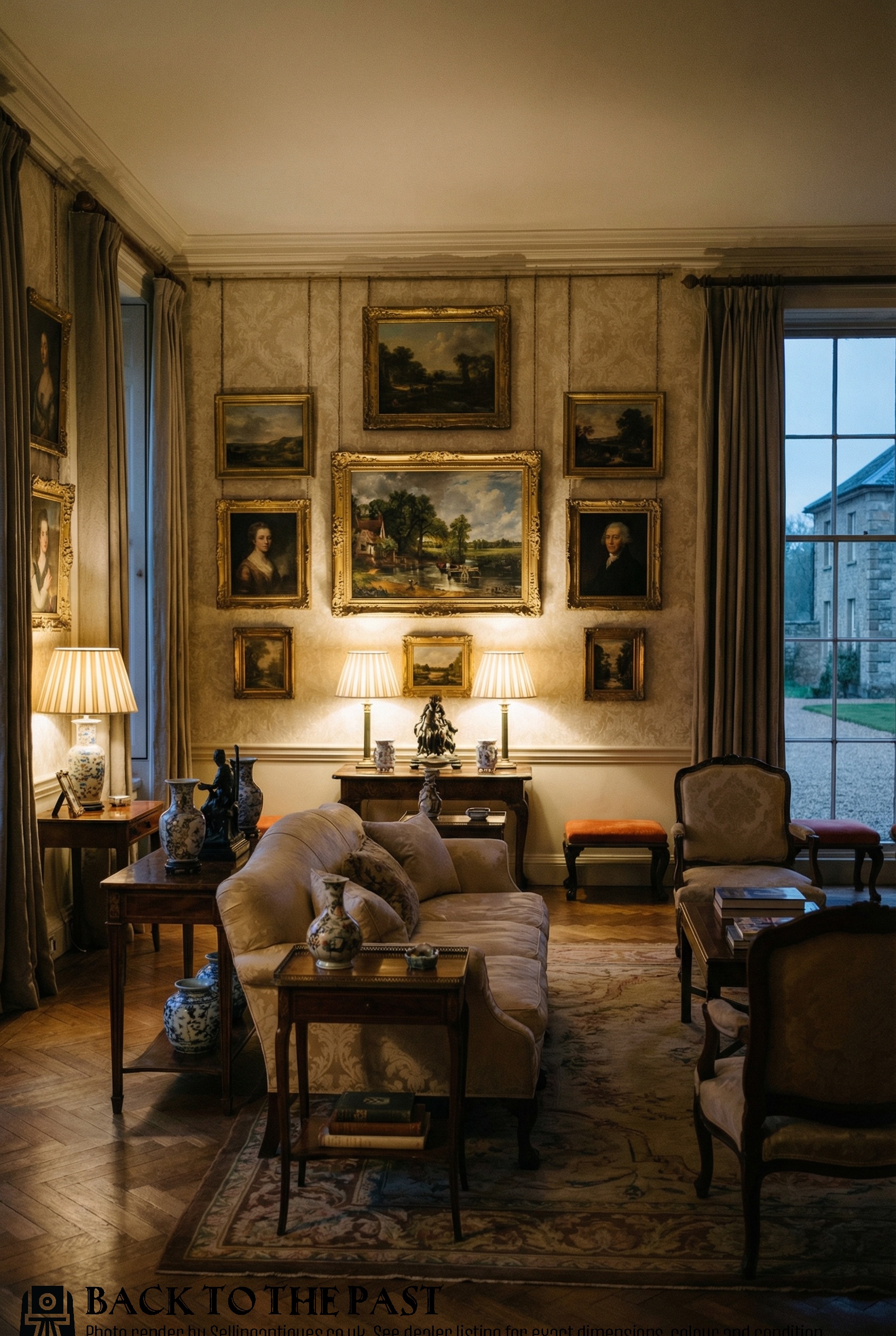
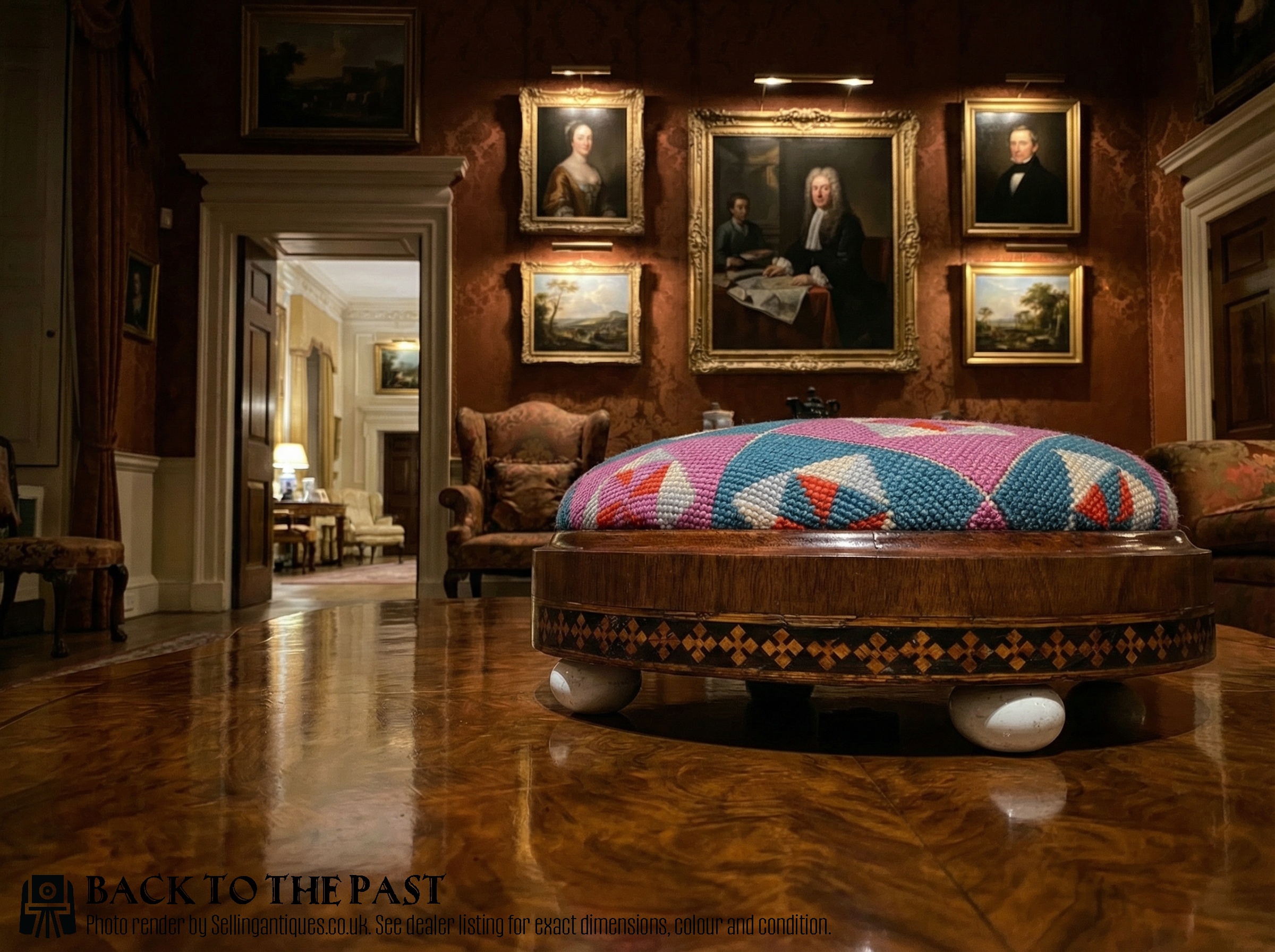
Makers designed these furnishings for formal drawing rooms and parlours, often pairing them with larger seating arrangements like sofas and armchairs. Buyers encounter everything from simple upholstered frames to intricate Tunbridge ware inlaid designs.
How they were made
Craftsmen built the structural frames using dense hardwoods such as rosewood, walnut, and mahogany. These timbers allowed for deep carving, intricate shaping, and stable joinery suited to daily drawing-room use.
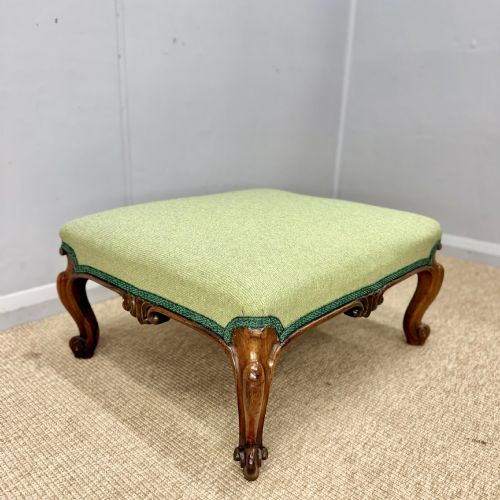
Surface decoration frequently involved detailed wood carving, particularly during the Victorian Rococo Revival phase. Workshops also incorporated decorative elements like Tunbridge ware inlay and geometric patterns into specific small round foot stool designs.
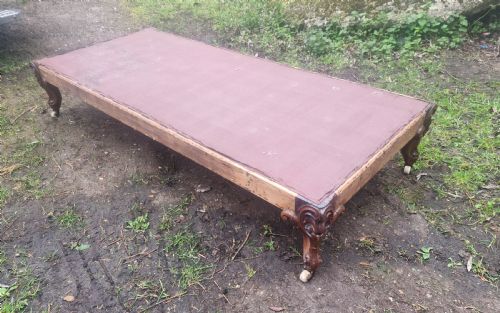
Upholstery formed an essential part of construction, utilising traditional textiles, needlepoint, and kilim tapestry. Many surviving pieces retain contemporary fabric or arrive ready for reupholstering to match modern interiors.
What varies in quality
The standard of timber selection and carving depth marks the primary division between ordinary pieces and superior examples. Fine execution shows in crisp relief work on walnut or rosewood frames rather than flat or purely functional shaping.
Intricacy of subsidiary decoration significantly elevates a piece, such as precise geometric Tunbridge ware inlay or sophisticated needlepoint and tapestry work. The integration of a stool into a broader salon or drawing-room suite also indicates higher original workshop investment.
The Antique Parlour Footstool Glossary
- Tunbridge Ware
- A type of woodworking featuring minute mosaic decoration made from differently coloured naturally occurring woods. It creates complex geometric patterns on small decorative items.
- Rococo Revival
- A nineteenth-century design style drawing inspiration from the French Rococo movement. It is characterised by curving lines, asymmetry, and elaborate naturalistic carvings.
- Needlepoint
- A form of canvas work embroidery executed with a yarn in a counted thread stitch. It frequently covers the upper surface of Victorian footstools and tapestries.
- Centre Stool
- A substantial freestanding piece designed to be viewed from all sides rather than placed against a wall. These often anchor the layout of a Victorian drawing room.
- Kilim Tapestry
- A flatwoven textile traditionally used for floor coverings and heavy furnishings. It provides durable and patterned upholstery for period seating.
Antique Parlour Footstool: Frequently Asked Questions
How were parlour footstools used?
These pieces served primarily as low seating or foot rests in formal nineteenth-century drawing rooms and parlours. They often formed part of larger salon suites alongside matching sofas and armchairs.
Occupants used them for resting feet while seated in armchairs or as convenient auxiliary seats during gatherings. Their portable nature allowed easy movement around the room as needed.
What woods were used for frames?
Cabinetmakers predominantly utilised rich hardwoods like rosewood, walnut, and mahogany for the structural frames. These dense timbers supported intricate carving and sustained heavy daily use.
Selected pieces featured contrasting decorative inlays such as Tunbridge ware set directly into the timber body. The choice of wood generally reflected the overall elegance of the parlour it inhabited.
Are original textiles common?
Surviving examples feature a mix of original or period-appropriate upholstery, including needlepoint, kilim tapestry, and traditional woven fabrics. Some pieces arrive ready for reupholstering to suit individual interior schemes.
Needlepoint and geometric tapestry work remain characteristic of nineteenth-century textile choices. Buyers often find frames preserved with later Victorian upholstery replacements.
How do I date a footstool?
Dating relies heavily on observing the timber, carving style, and construction methods characteristic of specific periods like the mid Victorian era or Georgian times. Stylistic markers such as Rococo Revival curves offer clear chronological clues.
Inlay techniques and upholstery styles further help narrow down the decade of manufacture. Comparing the piece to documented salon suites provides additional context for its age.
Can I use these in modern rooms?
These compact items integrate easily into contemporary spaces as accent seating or functional low footrests. Their diverse forms range from small round stools to larger ottoman styles suited for various room layouts.
Stools offered for reupholstering allow buyers to apply modern fabrics while retaining antique wooden frames. Their modest scale ensures they fit comfortably beside standard modern sofas.