






Brass Castor Ottoman
A brass castor ottoman brings low, movable seating and foot support to a room, combining timber frames with textile upholstery.

Brass Castor Ottoman
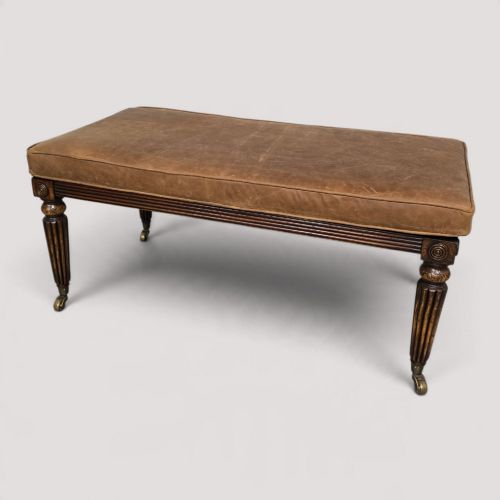
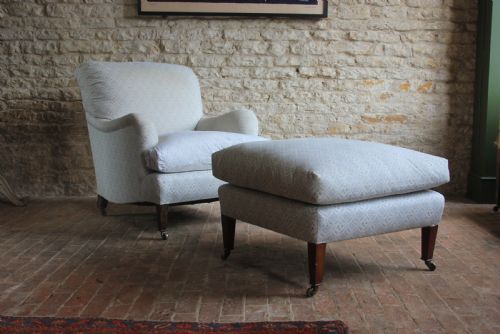
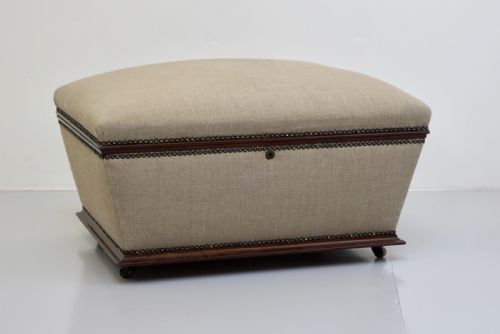
A brass castor ottoman is a low piece of seating or a footrest designed for the floor, moving easily on metal wheels set into the feet. These pieces appear in forms such as box ottomans, window seats, gout stools, and large footstools across Georgian, Regency, Victorian, and Edwardian periods.
The most frequent form on this page is the upholstered stool on castors, often framed in mahogany, walnut, or rosewood. Makers such as Howard and Sons and James Shoolbred produced versions that balance substantial timber frames with deep padding.
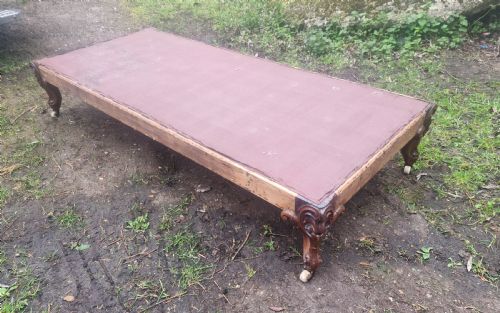
Makers utilised various timbers for the frames, including mahogany, walnut, rosewood, and general timber. Upholstery materials range from chenille and fabric to buttoned covers awaiting reupholstering.
How they were made
Makers constructed the foundations of these ottomans from solid timbers like mahogany, walnut, and rosewood, often shaping the wood with carved details. Frames were built to support substantial weight while remaining low to the floor.
Castors made of brass were fitted to the feet of the stools to allow smooth movement across carpets and wooden floors. Upholstery involved padding and fabrics such as chenille, secured over springs or webbing.
Brass Castor Ottoman Retail Price Guide 2026
Typical asking prices for brass castor ottoman among the pieces listed under this phrase on Sellingantiques today, from the lower quarter to the upper quarter. They describe what is for sale here now, not the wider market.
Listings feature items spanning the Georgian, Regency, Victorian, and Edwardian eras, constructed in mahogany, walnut, and rosewood.
What varies in quality
The refinement of the timber frame and the depth of the carving set examples apart, with some pieces showing plain mahogany boxes while others feature elaborately carved rosewood or walnut structures. Maker attribution also distinguishes the build quality, particularly pieces originating from workshops like Howard and Sons or James Shoolbred.
The proportion and scale of the piece dictate its presence in a room, ranging from large country house ottomans to compact gout stools. Original brass castors and the integrity of the underlying frame structure further define the standard of the piece.
Howard and Sons·James Shoolbred
The Brass Castor Ottoman Glossary
- Castor
- A small wheel mounted on a swivel attached to the foot of a piece of furniture for easy rolling. These are typically made of brass on nineteenth-century ottomans.
- Gout stool
- A specialised low footstool with an adjustable incline designed to support the foot of a person suffering from gout. These appear in mid-nineteenth-century walnut forms.
- Box ottoman
- A seated piece featuring a hinged lid that opens to reveal a storage compartment inside the base. They were produced in Regency and later nineteenth-century periods.
- Window seat
- A long, narrow form of stool designed to sit beneath a window, often made as a pair. These feature upholstered tops and wooden frames in Victorian and Regency styles.
Brass Castor Ottoman: Frequently Asked Questions
What is a brass castor ottoman used for?
These pieces function as footstools, seats, or low resting surfaces in living spaces and bedrooms. Their mobility allows them to be shifted easily around a room as needed.
Some variants, such as box ottomans, also provide internal storage space beneath the upholstered lid for blankets or small items.
How do I date a Victorian footstool?
Dating relies on observing the timber types, turning styles, and upholstery techniques characteristic of the nineteenth century. Victorian pieces often employ walnut or mahogany frames with deep buttoned padding.
Cabinetmaker stamps or labels can sometimes be found on the underside of the wooden frame or rails.
Are these ottomans comfortable to sit on?
The seating comfort depends on the condition of the internal padding, webbing, and springs beneath the fabric. Many period pieces retain supportive deep buttoning or firm horsehair stuffing.
Some examples are sold specifically for reupholstering, allowing a buyer to update the padding and textile to personal taste.
Can I use an antique stool on wooden floors?
The brass castors roll on hard floors, though the weight of the timber frame requires care to avoid marking delicate surfaces. Placing small cups or protection beneath the metal wheels helps prevent scuffs.
The original castors are designed to distribute the weight smoothly when the piece is moved.