





Buttoned Leather Ottoman
A buttoned leather ottoman is a low, padded seat upholstered in hide, prized for its generous proportions and tactile upholstery.
Buttoned Leather Ottoman
When you search for a buttoned leather ottoman, you encounter a range of low seating forms designed for drawing rooms, libraries and large reception spaces.
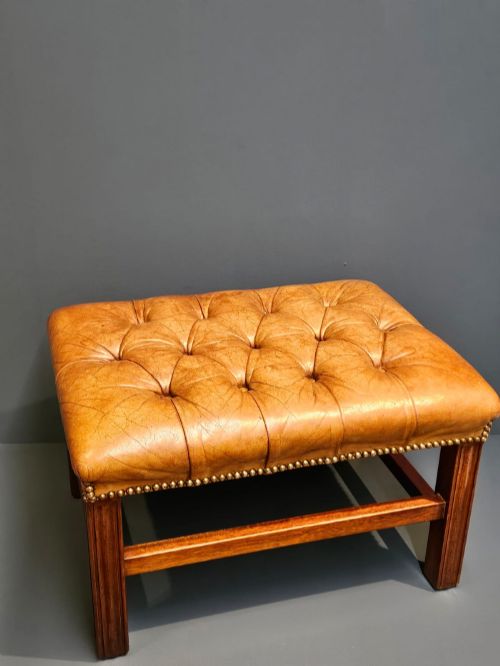
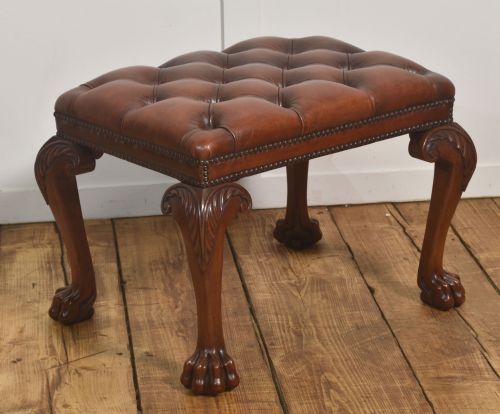
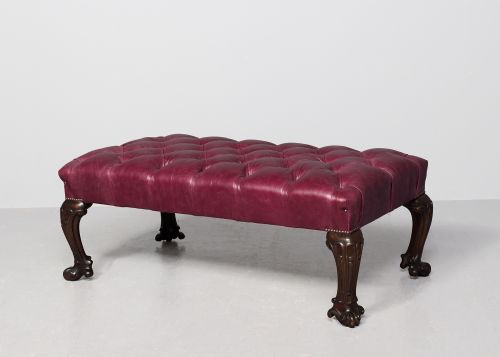
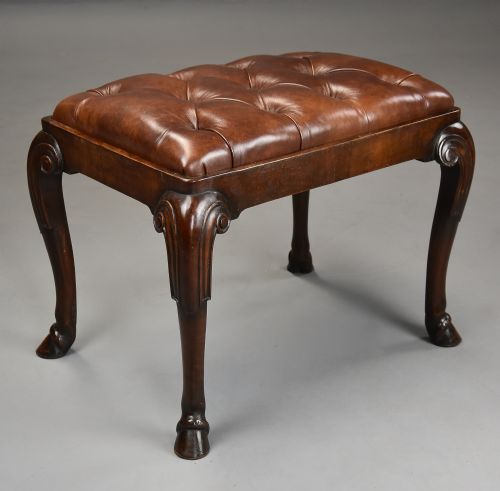
You are most likely to meet rectangular footstools and long centre stools featuring deep buttoning and brass studwork, executed in mahogany or walnut frames.
How they were made
Maker's hands combined sturdy hardwoods like mahogany, walnut, oak and rosewood to construct the structural frames of these ottomans.
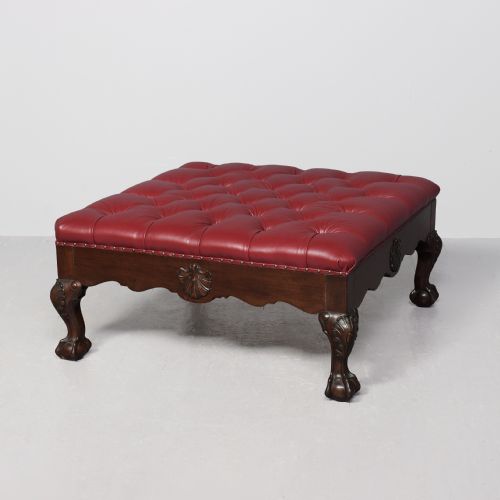
Upholstery techniques relied on hide, leather and red or burgundy hide secured with brass studs to create the characteristic buttoned surface.
Buttoned Leather Ottoman Retail Price Guide 2026
Typical asking prices for buttoned leather ottoman among the pieces listed under this phrase on Sellingantiques today, from the lower quarter to the upper quarter. They describe what is for sale here now, not the wider market.
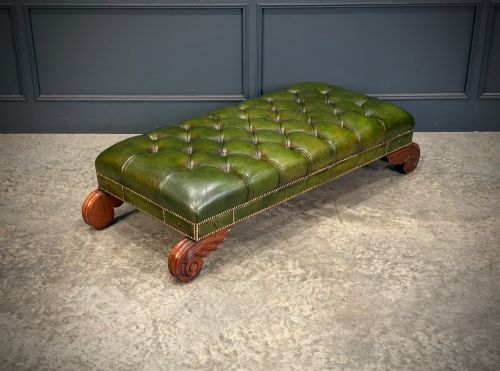
Some long benches arrive with fluted legs, ready to support tired feet after a long day in the library.
What varies in quality
The distinction between ordinary examples and superior pieces rests upon the timber selection and the depth and regularity of the buttoning.
Substantial proportions, robust hardwood framing and finely hand-dyed English leather set the more ambitious country house pieces apart from smaller utilitarian stools.
James Shoolbred
The Buttoned Leather Ottoman Glossary
- Buttoned
- A method of upholstery where twine is pulled through the padding and secured to create regular dimples across the surface. This technique keeps the internal stuffing firmly in place.
- Cabriole
- A furniture leg that curves outward at the knee and tapers inward to an ankle, inspired by animal limbs. It appears frequently on walnut and mahogany pieces from the Victorian era.
- Hide
- The natural skin of an animal, dressed and tanned for heavy upholstery. In these pieces, red, burgundy, tan and green hide provides a durable and tactile covering.
- Studwork
- The application of small decorative brass nails along the edge of the leather upholstery. This traditional detail conceals the tack edges while adding a metallic border.
Buttoned Leather Ottoman: Frequently Asked Questions
How were buttoned leather ottomans used originally?
These low seats served as footrests before armchairs or as centre stools in large libraries and drawing rooms where extra seating was required.
Their robust construction also allowed them to function as makeshift tables for books and papers in formal country houses.
Are these ottomans comfortable to sit on?
The dense padding and supportive internal webbing provide a firm yet comfortable surface for resting feet or sitting.
Over decades of use, the leather softens significantly while retaining its structural resilience.
How do I care for antique leather upholstery?
Regular dusting with a dry cloth prevents dirt from settling into the creases of the buttoning.
Occasional application of a suitable leather balsam preserves the suppleness of the hide without darkening the dye.
How do I identify a Victorian piece?
Victorian examples frequently utilise walnut or mahogany with carved cabriole legs and deep red or brown leather upholstery.
Heavier framing and generous dimensions also point toward nineteenth-century country house production.