



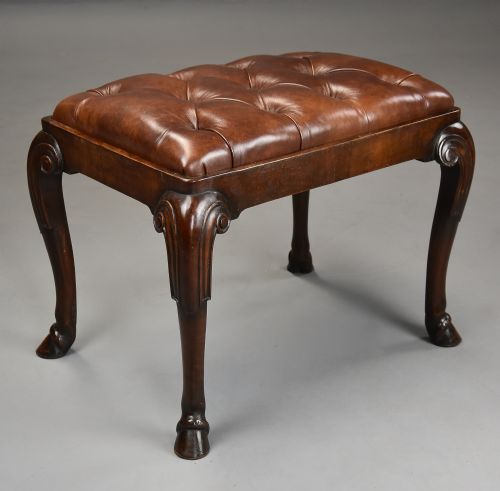


Tufted Leather Footstool
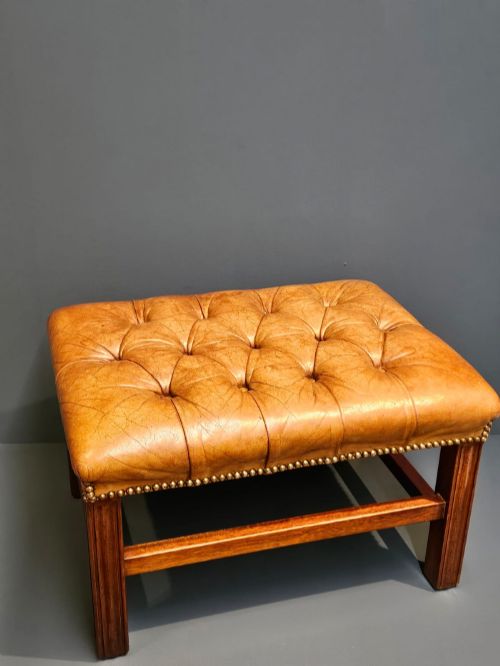
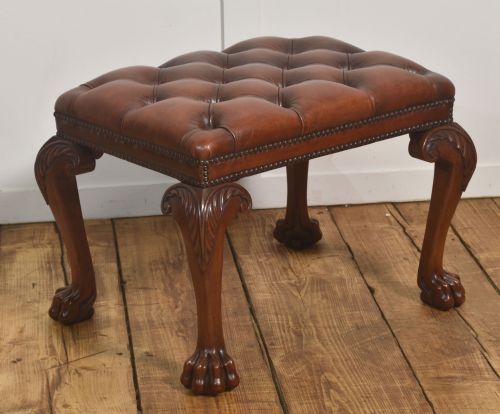
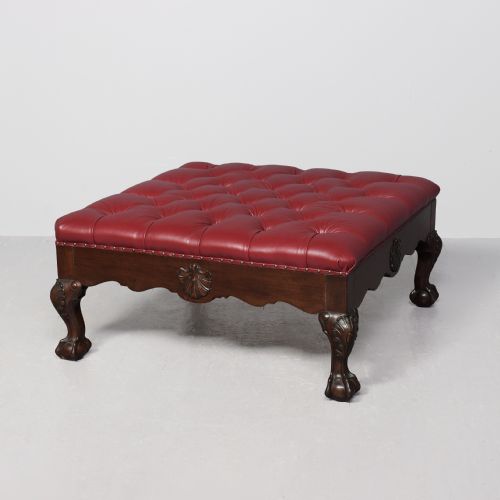
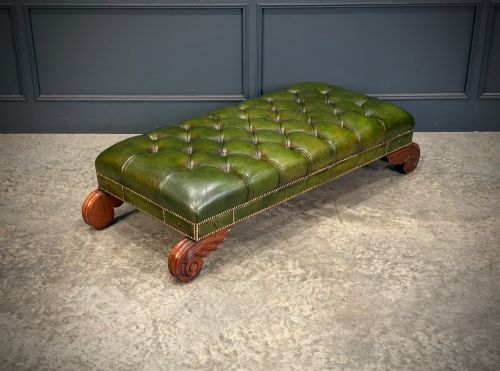
These tufted leather footstool examples combine deep-buttoned hides with sturdy timber frames, offering a practical seat or low table for traditional rooms.
Tufted Leather Footstool
A tufted leather footstool brings together traditional upholstery and robust timber framing, appearing in forms ranging from compact footstools to large ottomans and long window seats. Buyers seeking a tufted leather footstool will frequently encounter Victorian and nineteenth-century examples alongside Regency and Edwardian pieces.
The materials span mahogany, walnut, oak, rosewood, and hardwood, frequently paired with hand-dyed leather, buttoning, and brass studs. Many items bridge the gap between functional seating and low coffee tables, particularly within English country house settings.
Stools from this selection demonstrate diverse stylistic revivals, including Chippendale, Queen Anne, and George III designs. These pieces suit libraries, drawing rooms, and hallways where formal proportions and tactile materials matter.
What varies in quality
The distinction between standard examples and top-tier items rests upon the choice of timber and the precision of the frame construction, where dense hardwoods and refined carving elevate the piece. Superior items often display exceptional proportions and substantial scale, particularly among large country house ottomans and long library stools.
The treatment of the leather also defines the tier of the piece, with hand-dyed hides and careful buttoning preserving a rich texture over decades of use. Subtle details such as finely cast brass studs or well-executed cabriole legs separate ordinary workshop output from finer craftsmanship.
Tufted Leather Footstool Retail Price Guide 2026
Typical asking prices for tufted leather footstool among the pieces listed under this phrase on Sellingantiques today, from the lower quarter to the upper quarter. They describe what is for sale here now, not the wider market.
Some nineteenth-century occupants likely rested tired boots on these exact buttoned hides after muddy morning rides.
James Shoolbred
The Tufted Leather Footstool Glossary
- Cabriole leg
- A furniture leg that curves outward at the knee and tapers inward toward the foot, often ending in a pad or scroll. This form appears frequently on walnut and mahogany stools from the Victorian and Queen Anne revival periods.
- Buttoned leather
- An upholstery method where depressions are formed in the leather by pulling ties or threads through the padding to secure buttons at regular intervals. This technique creates the distinctive tufted surface seen on Chesterfield and country house seats.
- X-frame
- A structural base formed by two intersecting members shaped like the letter X, providing stability and support to the seat above. Nineteenth-century examples utilise this profile in walnut and other hardwoods.
- Ottoman
- A low, upholstered seat or footstool typically lacking arms and a back, designed for resting feet or serving as an occasional surface. These pieces often feature large proportions suitable for central placement in a room.
Tufted Leather Footstool: Frequently Asked Questions
How do I care for antique leather?
Maintain antique leather by keeping it away from direct heat sources and sunlight to prevent the hide from drying out over time.
Apply suitable leather conditioners sparingly to preserve the suppleness and hand-dyed depth of the upholstery without damaging the original surface.
Can these footstools double as coffee tables?
Large nineteenth-century ottomans and long stools provide a stable, cushioned surface that accommodates trays, books, and decorative objects easily.
Ensure the leather is protected with appropriate coasters or a tray if placing cups or glasses on the surface during daily use.
What defines a Victorian buttoned stool?
Victorian buttoned stools typically combine rich mahogany or walnut frames with deep-buttoned leather upholstery designed for comfort and durability.
These pieces often feature turned or cabriole legs that reflect the revival styles popular throughout the nineteenth century.
Where do long window seats fit best?
Long window seats suit narrow spaces such as hallways, gallery landings, or beneath wide window recesses in traditional interiors.
Their elongated proportions offer ample seating while maintaining a low profile that does not obstruct natural light.