
Upholstered Dressing Stool
An upholstered dressing stool offers a compact, decorative seat designed for the vanity, bringing period timber and textile work into daily domestic use.
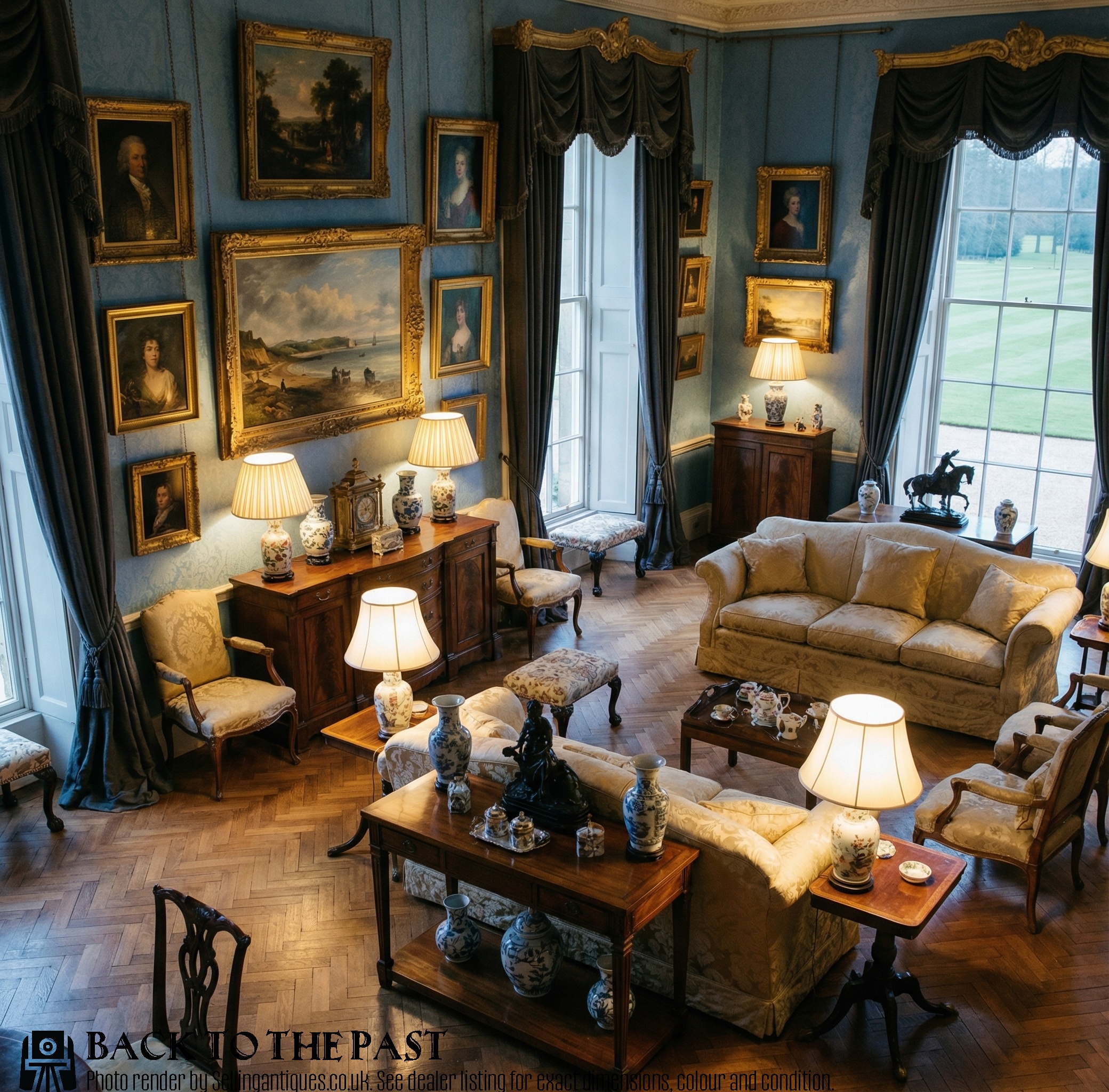
Identifying an upholstered dressing stool
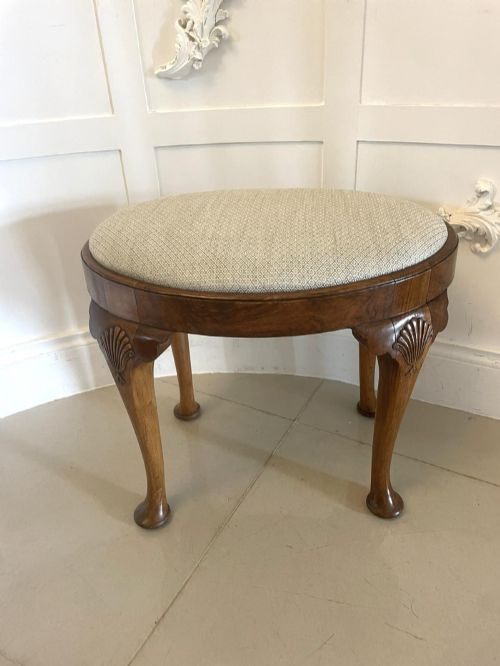
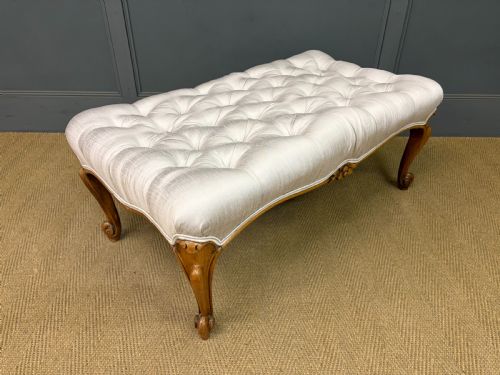
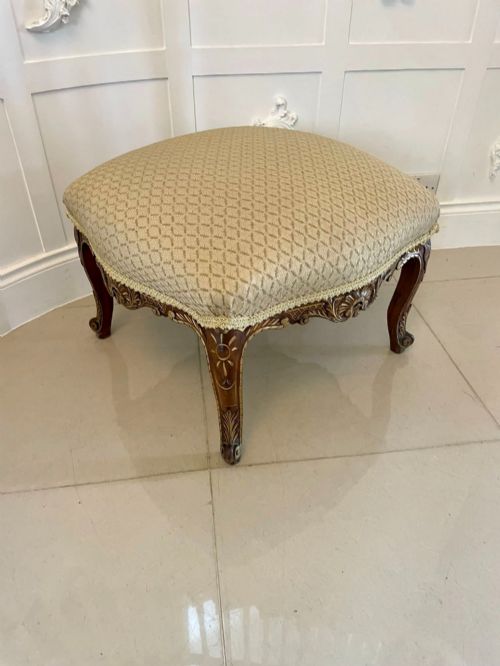
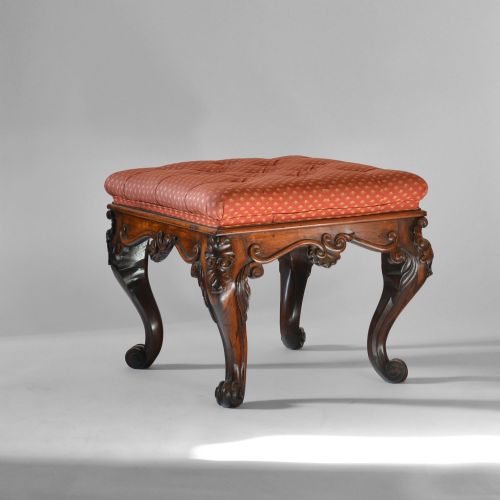
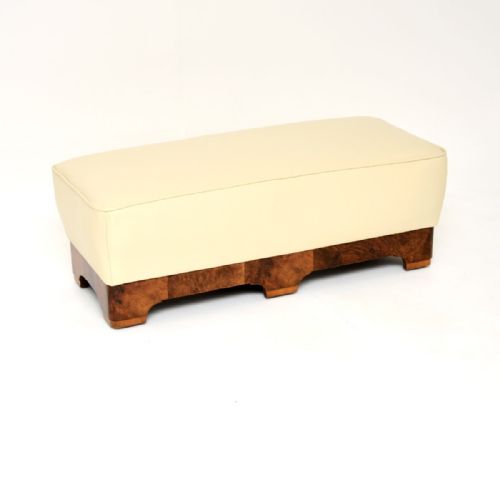
An upholstered dressing stool combines a supportive wooden frame with a padded seat, designed specifically for use at a dressing table or vanity. These pieces emerge in various forms across the nineteenth century and the early twentieth century, drawing on earlier design revivals including Georgian, French Rococo, and Carolean styles.
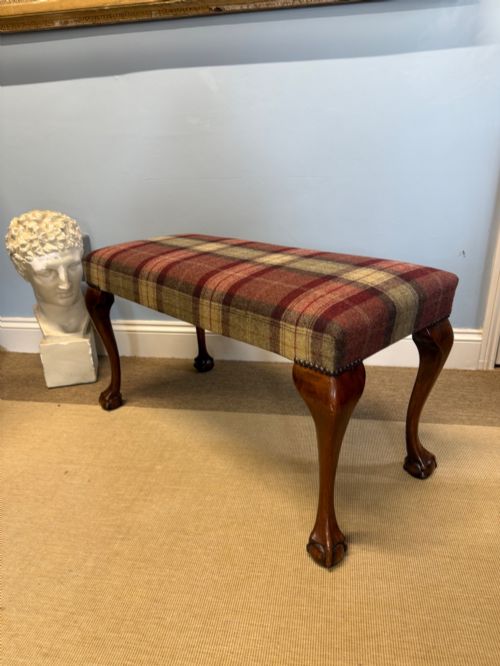
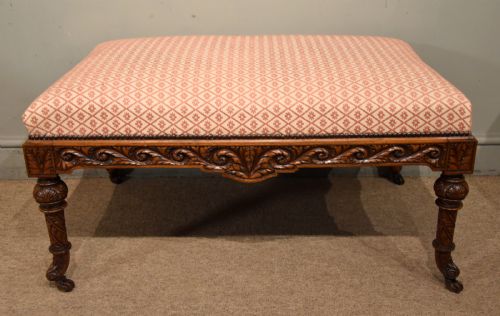
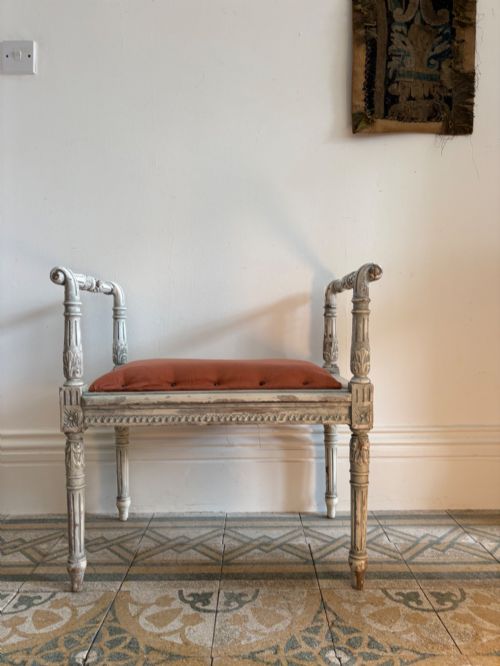
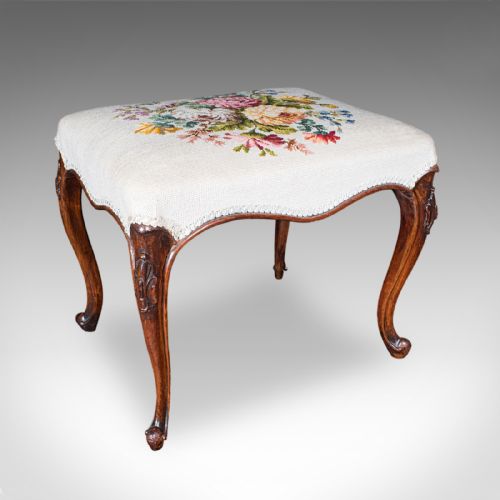
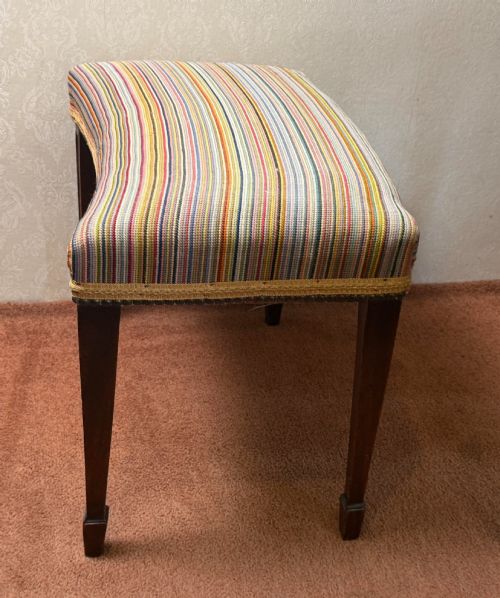
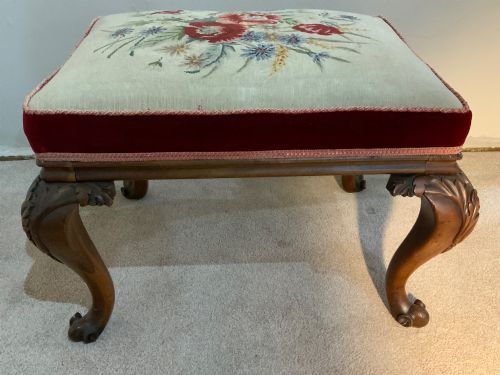
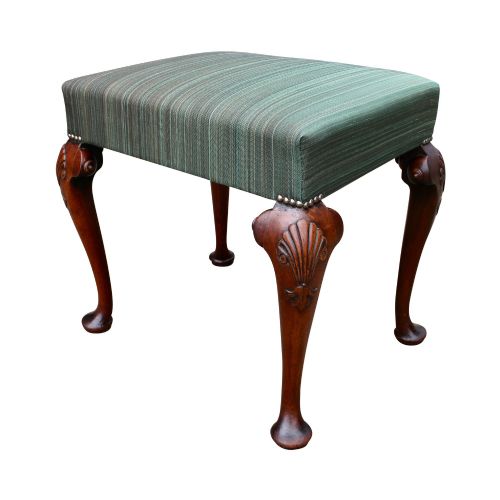
The most common examples encountered on this page feature mahogany or walnut frames, often standing on cabriole legs or turned supports. They frequently bridge the gap between a dressing stool, a piano stool, and a small footstool, serving multiple domestic functions within the bedroom or boudoir.
Materials and construction
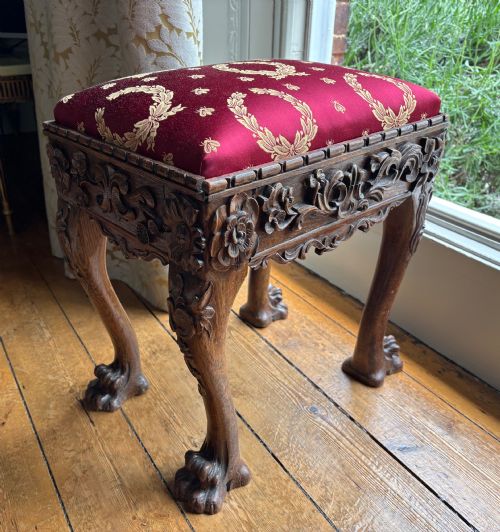
Frames rely upon traditional cabinet timbers such as mahogany, walnut, oak, beech, and rosewood, occasionally finished with giltwood or brass accents. Carved ornamentation adorns the wooden structures, ranging from restrained linear mouldings to elaborate scrollwork and cabriole legs.
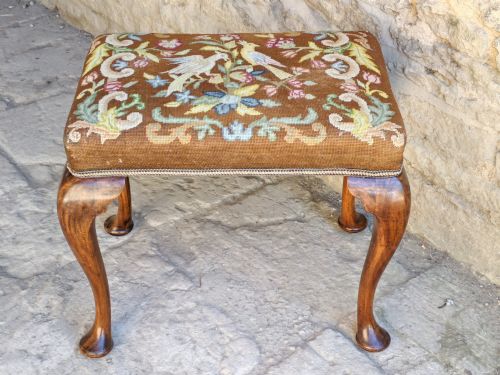
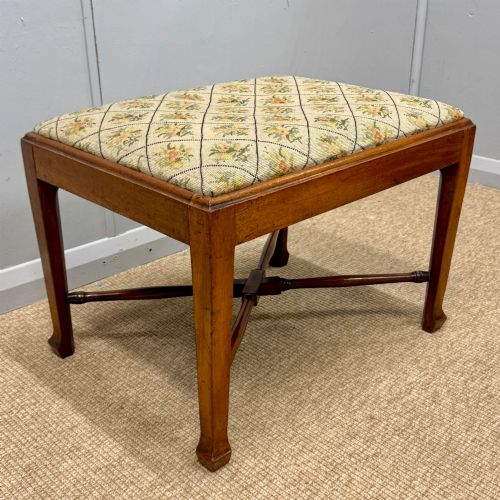
Seats are upholstered over a padded foundation using diverse textiles like wool, linen, and decorative needlepoint. Craftsmen secure these coverings over traditional stuffing, completing pieces that unite solid joinery with soft surface textures.
Retail Price Guide 2026
Typical UK retail prices for upholstered dressing stool, calculated from the Sellingantiques database of over a million retail prices indexed since 2003. This retail price guide relies exclusively on Sellingantiques data; no external sources or auction records are used, so the figures do not describe the wider market.
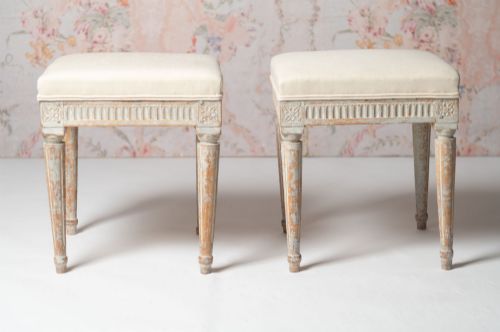
One French giltwood stool bears the faint stamp of Parisian makers Loidrault Freres, having travelled across the channel to hold nineteenth-century vanity powders.
Evaluating craftsmanship
Quality rests primarily in the crispness of the woodwork and the structural integrity of the frame joints. Superior pieces exhibit deeply carved details and robust timber frames that remain steady under weight.
The sophistication of the textile work and the fidelity of the period revival style further distinguish finer examples from standard production. Maker stamps and documented French or English provenance elevate specific pieces above unmarked domestic items.
Loidrault Freres Paris
The Upholstered Dressing Stool Glossary
- Cabriole leg
- A furniture leg that curves outward at the knee and tapers inward toward the ankle, ending in a pad or scroll foot. This form appears frequently on eighteenth-century and revival seating.
- Giltwood
- Wood that has been coated with a thin layer of gold leaf or gesso and gold paint. It provides a bright, reflective surface seen on French revival furniture.
- Needlepoint
- A type of canvas work embroidery executed with wool yarn, often utilised for durable historic seat covers. It brings patterned colour and texture to the top of the stool.
- Cross frame
- A structural base formed by intersecting diagonal members, sometimes styled as an X-frame. This configuration provides sturdy support for square or rectangular upholstered seats.
Frequently Asked Questions
How do I date an upholstered dressing stool?
Dating relies upon timber choice, leg profiles, and upholstery techniques visible beneath the frame. Nineteenth-century examples often combine machine-prepared elements with hand-carved cabriole legs.
Later pieces from around 1900 frequently emulate earlier Georgian or Queen Anne styles, using darker walnut or mahogany frames with modern textile covers.
Were these always used for dressing tables?
These versatile pieces served multiple functions in nineteenth-century homes, acting as piano stools, footstools, and occasional hall seats. Their compact dimensions made them easy to move between rooms as needed.
Makers often built them with adaptable heights suitable for both vanity seating and low footrest duties.
What woods are most common?
Mahogany and walnut dominate the surviving examples, reflecting prevailing Victorian and Edwardian cabinetmaking preferences. Oak and beech also appear regularly on provincial or revival pieces.
More ornate frames occasionally incorporate giltwood or rosewood to match high-end bedroom suites.
How do I care for the upholstery?
Preserving the fabric requires gentle vacuuming with a soft brush attachment to remove dust without snagging historic threads. Direct sunlight should be avoided to prevent the fading of wool and linen textiles.
Checking the stability of the inner padding helps maintain the original shape and comfort of the seat.