


Long Upholstered Stool
A long upholstered stool is a generous seat or footrest that bridges the gap between furniture and textile art.
What a long upholstered stool is
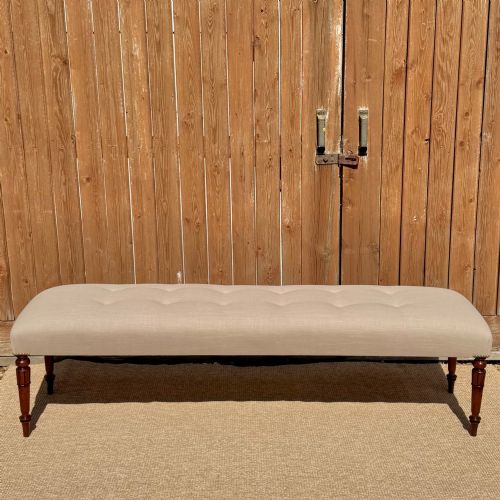
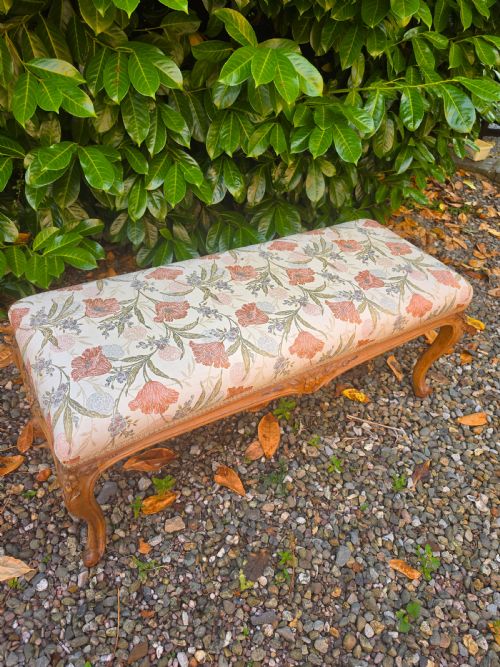
A long upholstered stool is a substantial piece of seating furniture designed for firesides, bedrooms, and drawing rooms across multiple centuries. These pieces appear in forms ranging from low hearth benches to elevated window seats and long footstools.
The versions most commonly met on this page span the eighteenth, nineteenth, and early twentieth centuries. They combine sturdy timber frames with textiles that often receive contemporary reupholstery in fabrics, wools, and ticking.
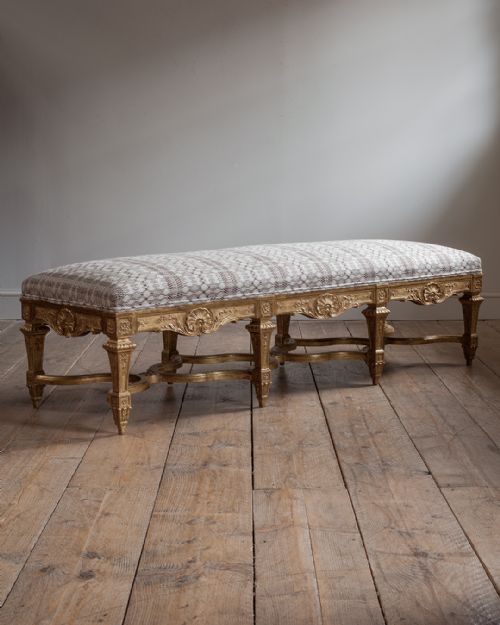
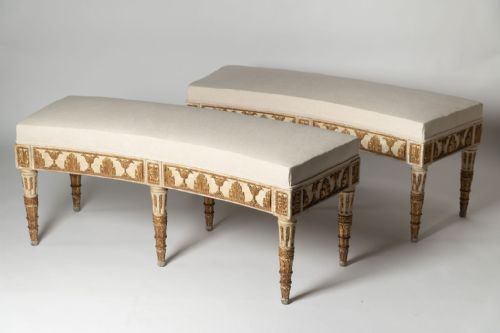
Makers historically tailored these long proportions to fit beneath windows or along extended hearths for warming feet. Surviving examples reflect shifts in taste from Georgian proportion and Adam neoclassical symmetry to exuberant Louis XIV and Italian Baroque revivals.
How they were made
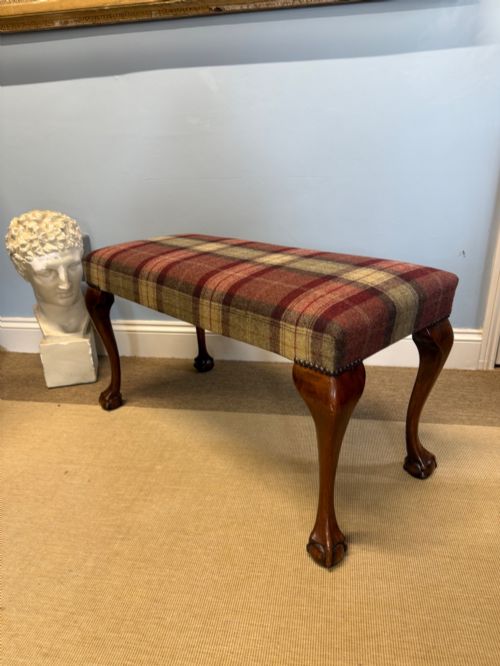
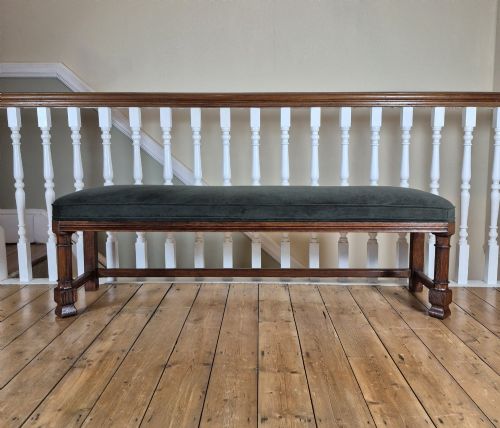
Cabinetmakers constructed the supportive frames using traditional timbers such as mahogany, walnut, oak, and giltwood. These wooden structures frequently showcase carved details, ranging from leaf motifs to structural cabriole legs.
Upholstery techniques applied over the centuries involve durable textiles like wool, heavy fabric, and ticking. Artisans secured these materials over internal padding, occasionally incorporating buttoning or specialised frames that sometimes conceal storage cupboards below.
Retail Price Guide 2026
Typical UK retail prices for long upholstered stool, calculated from the Sellingantiques database of over a million retail prices indexed since 2003. This retail price guide relies exclusively on Sellingantiques data; no external sources or auction records are used, so the figures do not describe the wider market.
Some nineteenth-century examples include hidden cupboards below, proving that even a resting foot has historically desired secret storage.
What varies in quality
The distinction between ordinary and exceptional examples rests in the architecture of the timber frame and the ambition of its carving. Superior pieces display crisp hand-carved details, whether in the flowing lines of a giltwood revival frame or the balanced geometry of a Georgian window seat.
Proportion and scale also dictate value, as exceptionally long or low benches require precise joinery to prevent sagging across the span. The integration of high-grade historical or sympathetic modern textiles completes the distinction.
The Long Upholstered Stool Glossary
- Giltwood
- Timber treated with a thin layer of gold leaf. This finish defines decorative revival pieces designed for formal reception rooms.
- Window seat
- A long stool designed specifically to fit the architectural recess of a window. These pieces often feature raised ends or arm supports.
- Hearth stool
- A low bench positioned near a fireplace. Their proportions keep feet close to the warmth of the fire.
- Ticking
- A tightly woven cotton or linen fabric traditionally used to contain feather or down stuffing. Modern restorations frequently utilise this textile for a clean finish.
Frequently Asked Questions
Where do you put a long upholstered stool?
These pieces traditionally sit at the foot of a bed, beneath a large window, or stretched along an open hearth. Their elongated shape allows multiple people to use them as seating or provides a full-length rest for tired feet.
In modern rooms, they also function as low coffee tables when topped with a solid tray, or serve as convenient hallway benches for pulling on shoes.
Are these stools comfortable to sit on?
Most surviving examples offer firm support derived from traditional upholstery methods. Many pieces receive fresh padding and fabric during restoration to ensure they provide a comfortable seat for daily use.
Thicker cushions and buttoned surfaces generally deliver a softer feel, while firmer, low-profile frames lean closer to bench seating.
How do I date an antique wooden stool?
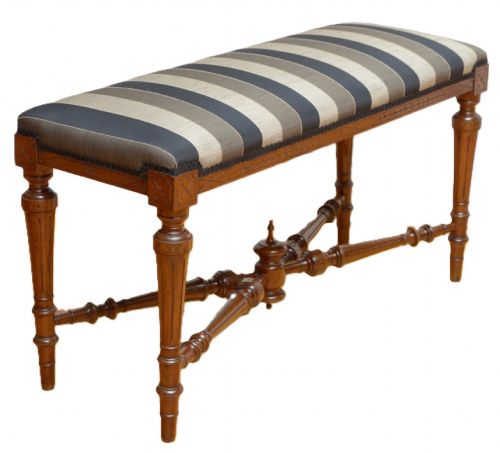
Dating relies on observing the timber species, joinery methods, and stylistic cues carved into the frame. Georgian and Adam pieces display classical symmetry, whereas Victorian and Edwardian examples often feature heavier walnut or mahogany turnings.
Upholstery fabrics frequently represent modern renewals, so the structural wood beneath remains the primary indicator of age.
What is the difference between a stool and a bench?
Stools generally lack backs and arms, relying entirely on their upholstered top and wooden legs for support. Window seats and long benches occasionally incorporate low ends or carved timber rails.
In historical terminology, long footstools and low hearth benches are often used interchangeably due to their similar low-profile dimensions.