
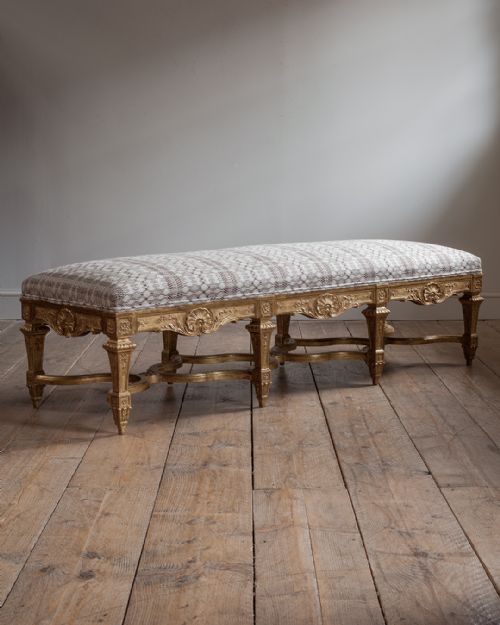
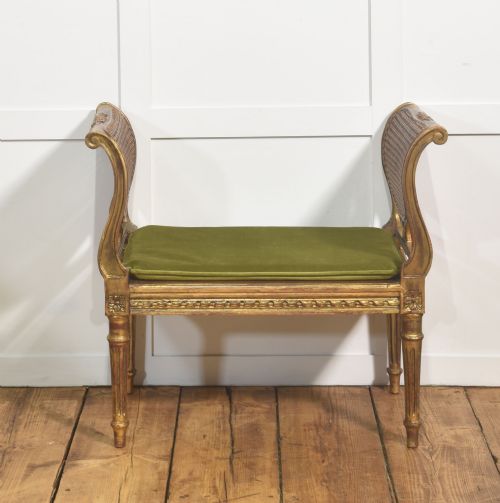
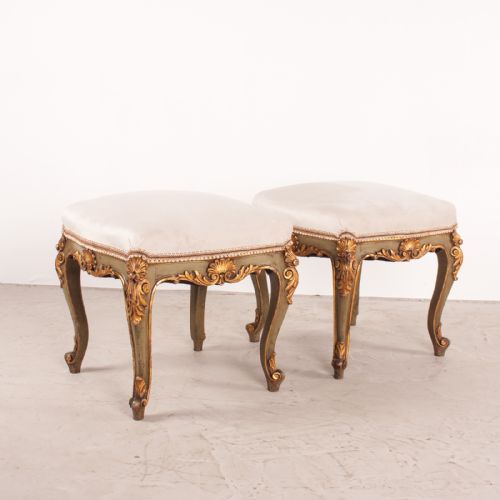
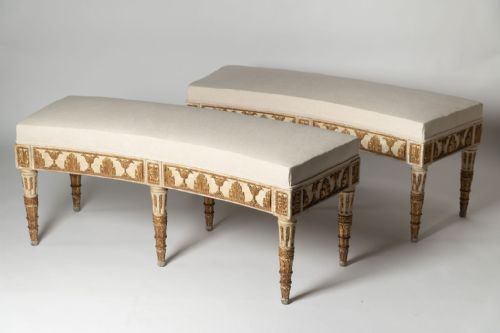




Gilded Upholstered Stool
A gilded upholstered stool brings a touch of classical grandeur to a room, offering both versatile seating and ornamental brilliance.
Gilded Upholstered Stool
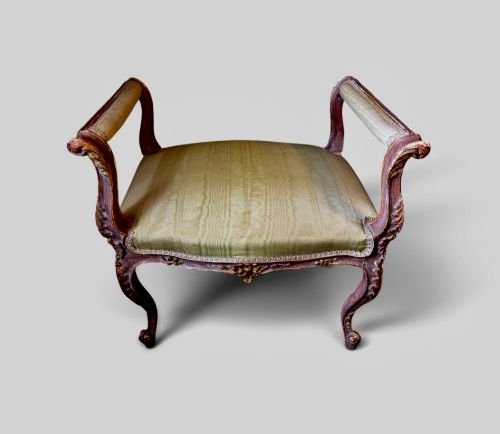
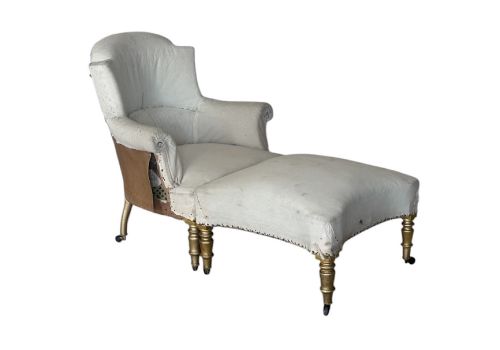
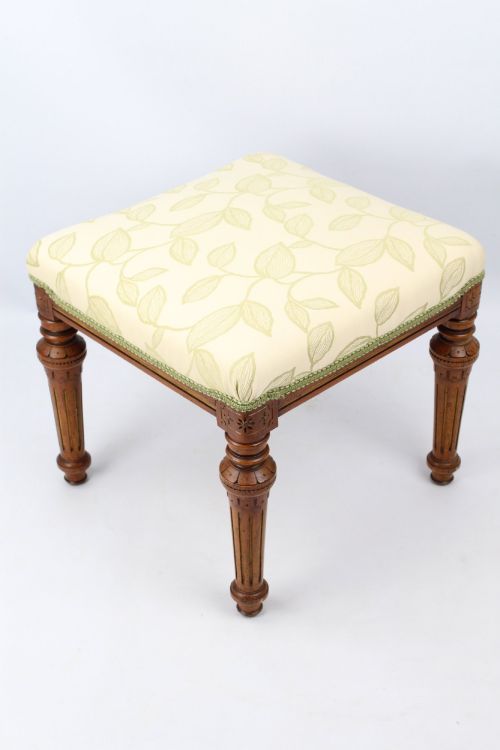
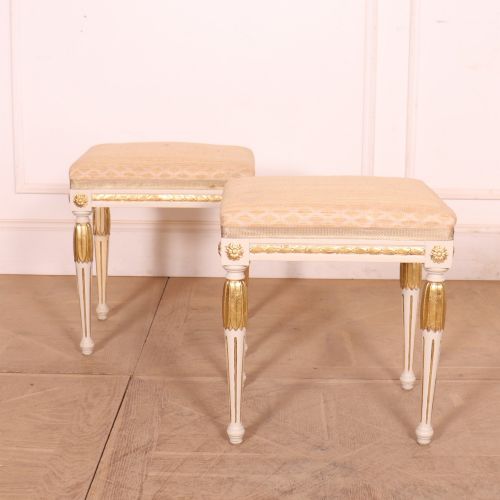
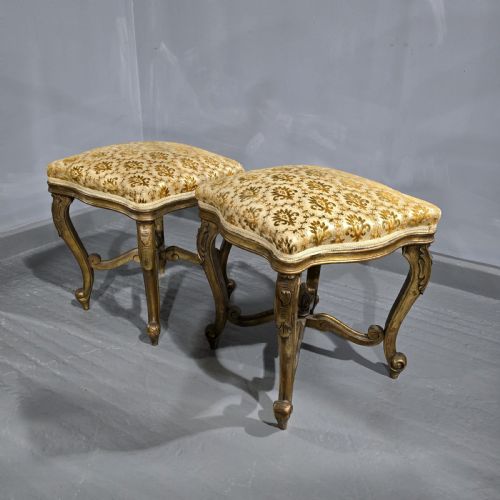
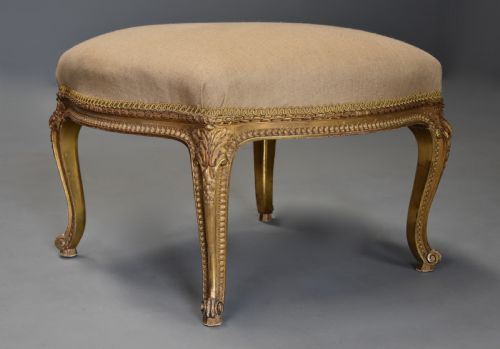
A gilded upholstered stool represents a fusion of decorative woodwork and soft textile seating, designed for both practical use and formal display. When exploring this selection, buyers encounter forms ranging from compact footstools and piano benches to expansive window seats and duet stools.
The pieces on this page span the nineteenth century into the early twentieth century, drawing heavily on French and Regency design vocabularies. Styles such as Louis XVI, Rococo Revival, and Empire dominate the selection, often appearing as matched pairs or individual accent pieces.
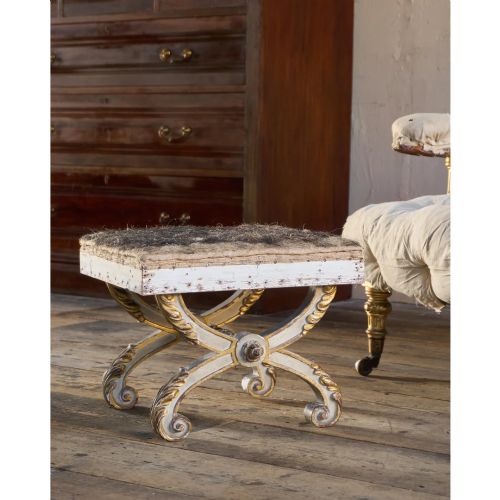
Origin points across the current inventory include English, French, Italian, and Swedish workshops, demonstrating a broad European appreciation for gilded seating. Forms vary from simple rectangular frames to sophisticated X-frame curule structures and carved window seats.
Materials and Construction
The foundational structure relies on timber, typically carved oak, walnut, mahogany, or painted wood, which provides the necessary rigidity for weight-bearing seating. Artisans applied thin sheets of metal leaf over a prepared ground to achieve the characteristic shimmering surface finish.
Upholstery completed the piece, utilising traditional textiles including silk, velvet, fabric, and cane work to ensure comfort and visual texture. Structural integrity was further enhanced through specialised elements like brass hardware and adjustable screw mechanisms found on specific piano stools.
Gilded Upholstered Stool Retail Price Guide 2026
Typical asking prices for gilded upholstered stool among the pieces listed under this phrase on Sellingantiques today, from the lower quarter to the upper quarter. They describe what is for sale here now, not the wider market.
Several pieces feature adjustable screw mechanisms, allowing eighteenth-century pianists to fine-tune their seating height with mechanical precision.
Assessing Quality and Craftsmanship
Quality rests primarily in the crispness of the wood carving and the depth of the gilding application, where hand-carved details outshine mass-produced alternatives. Maker attribution and original stamps also elevate a piece, distinguishing workshop-produced items from generic domestic furniture.
The preservation of original textile upholstery or high-period fabric choices contributes significantly to the overall integrity and visual cohesion of the seating. Balance in proportion and the rigidity of the joined frame dictate whether a stool remains functional or serves purely as a decorative object.
Miles & Edwards·John Tesch
The Gilded Upholstered Stool Glossary
- Giltwood
- Timber coated with gold leaf or a gold-coloured metallic finish. This surface treatment was favoured for formal interior furnishings throughout the nineteenth century.
- Curule stool
- An ancient X-frame chair or stool design revived during the Regency and Empire periods. The intersecting legs create a distinctive folding appearance associated with classical authority.
- Duet stool
- An elongated seat built to accommodate two keyboard players simultaneously. These pieces often feature extended rectangular proportions and upholstered top panels.
- Window seat
- A long, bench-like stool designed specifically to fit within a window recess. They frequently incorporate arms or scrolled ends for added comfort.
- Chinoiserie
- European decorative style inspired by Chinese artistic traditions, characterised by lacquered surfaces and painted motifs. This aesthetic appears on select Edwardian accent pieces.
Gilded Upholstered Stool: Frequently Asked Questions
Where should I place a gilded upholstered stool?
These pieces function exceptionally well at the foot of a bed, beside a fireplace, or positioned in a hallway as an accent seat.
Window seats fit naturally beneath sills, while smaller footstools complement armchairs and dressing tables.
How do I identify a Regency period stool?
Regency pieces often display classical architectural influences, including X-frame curule structures and mahogany scroll tops.
Look for restrained carving and proportions inspired by ancient Greek and Roman design.
Are these stools suitable for daily seating?
Most antique stools retain strong wooden frames that support everyday use when placed correctly within a room.
Delicate gilt surfaces and historic silk or velvet upholstery, however, benefit from gentle care and moderate usage.