


Antique Bedroom Bench
An antique bedroom bench brings practical luxury to the foot of a bed, offering a firm seat or luggage support.

Antique Bedroom Bench
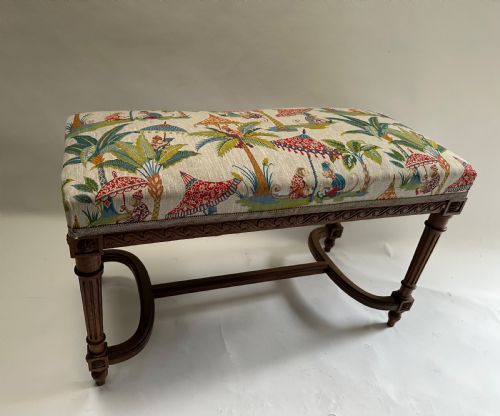
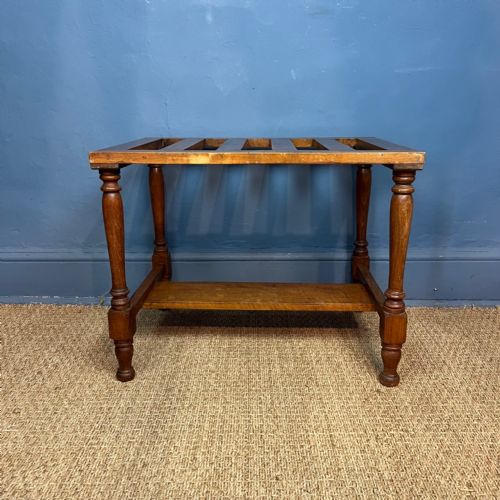
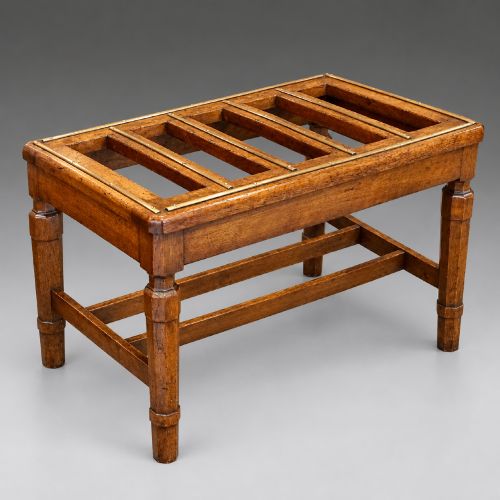
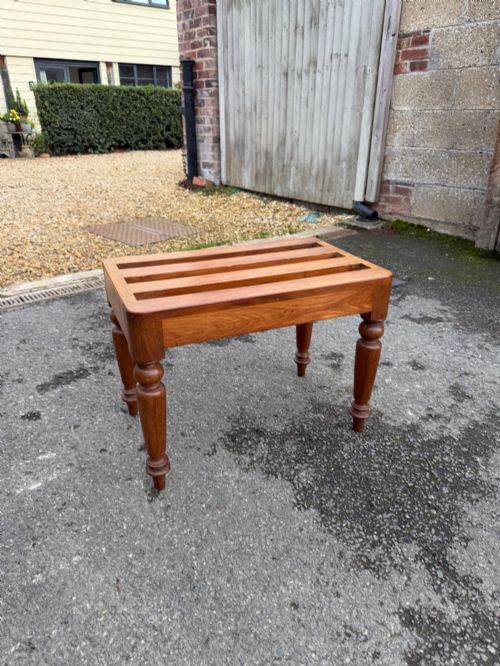
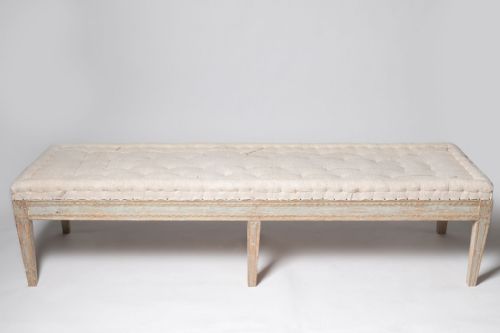
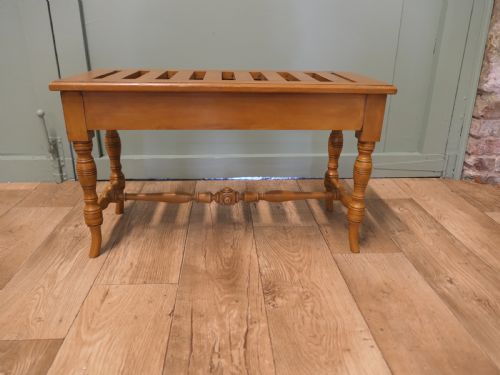
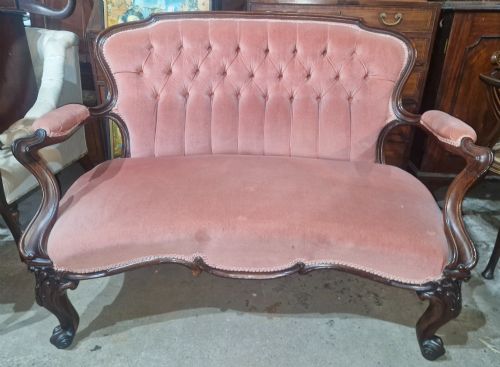
An antique bedroom bench encompasses several practical seating forms designed for private quarters, including window seats, dressing stools, luggage stands, and small end-of-bed sofas. These pieces serve functional roles at the foot of a bed or beneath a window, combining utility with decorative presence.
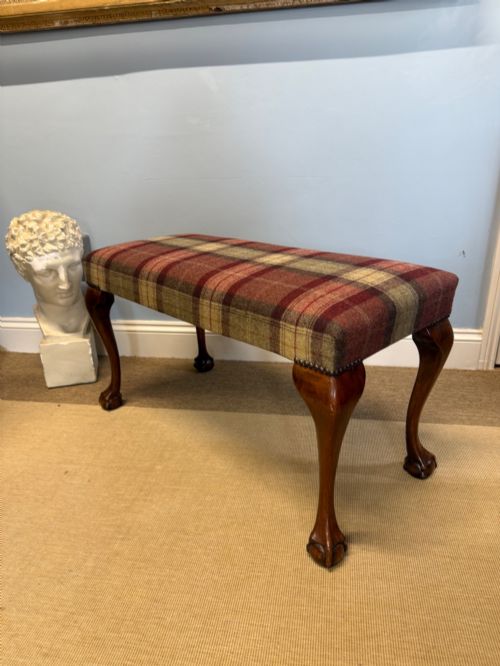
The most common versions encountered on this page span from the Victorian and Edwardian eras, with mahogany, walnut, and oak forming the structural framework of the surviving pieces. Makers often integrated supportive cross stretchers, cabriole legs, or raised upstands to ensure stability in daily use.
Lighter luggage stands and folding or slatted racks appear alongside fully upholstered window seats and duet stools covered in velvet, linen, or needlepoint. This variety reflects the diverse domestic requirements of nineteenth and early twentieth-century bedrooms.
Materials and construction
Cabinetmakers relied on hardwoods such as mahogany, walnut, oak, and satin birch to construct the frames, utilising traditional joinery to withstand heavy daily use. Giltwood and ebonised finishes appear on more formal window seats designed for prominent display.
Upholstery techniques combined webbed or sprung bases with traditional stuffing materials, frequently finished with decorative textiles like velvet, linen, or needlepoint. Canework panels also feature on lighter frames, providing resilient seating surfaces.
Antique Bedroom Bench Retail Price Guide 2026
Typical asking prices for bedroom bench among the pieces listed under this phrase on Sellingantiques today, from the lower quarter to the upper quarter. They describe what is for sale here now, not the wider market.
Several luggage stands proudly retain hotel provenance labels, proving that some guests historically packed more than they could manage.
Assessing quality in bedroom seating
Quality rests in the crispness of the carved detail on the wooden frame and the structural integrity of the joints, particularly on pieces subjected to weight like luggage stands and duet stools. Superior examples display carefully chosen timber grains, such as figured walnut or satinwood, matched evenly across visible surfaces.
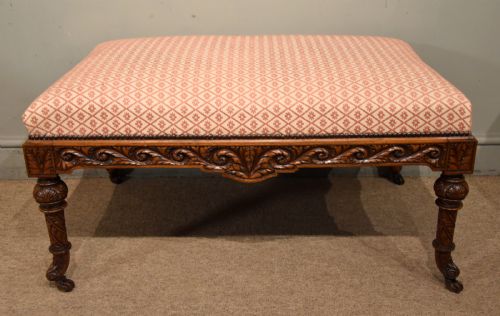
The standard of upholstery work dictates longevity, with traditional hand-stitched internal layering separating utilitarian pieces from high-end commissions. Original elements, such as turned wooden legs, twisted rope supports, or intact canework, elevate the integrity of the piece.
The Antique Bedroom Bench Glossary
- Luggage stand
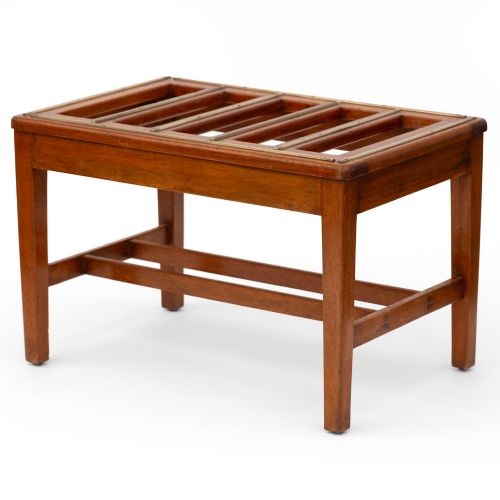
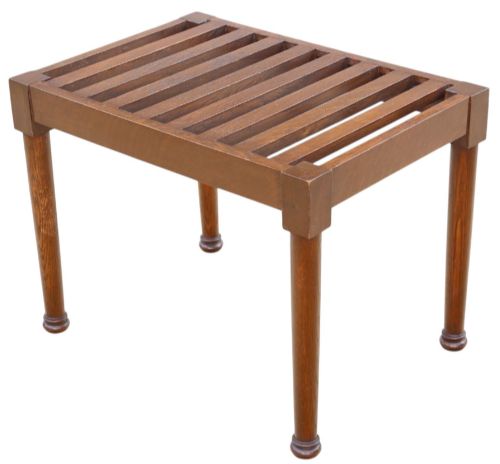
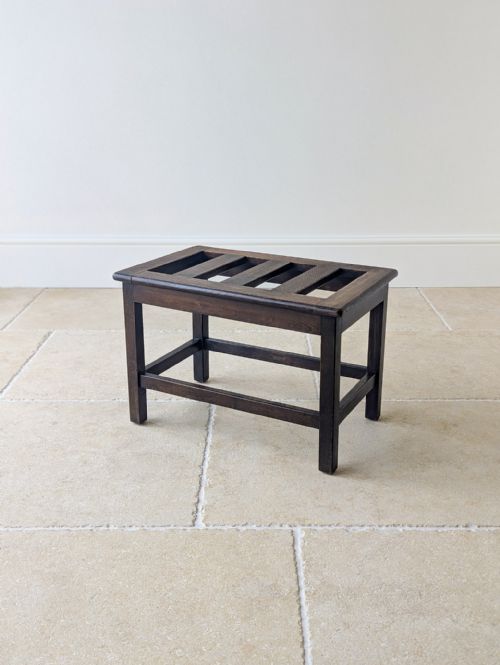
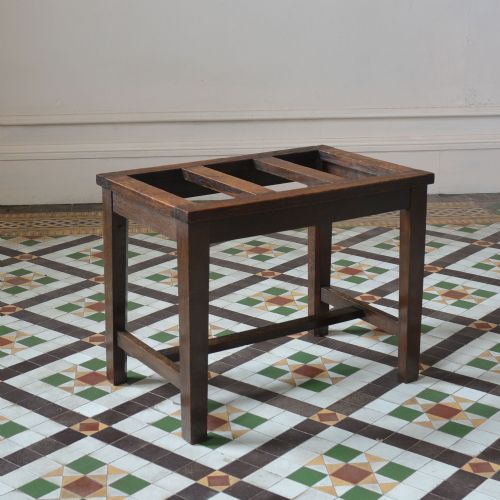
- A low wooden frame with a slatted or webbed top, originally designed to hold guest suitcases at a convenient height in a bedroom.
- Window seat
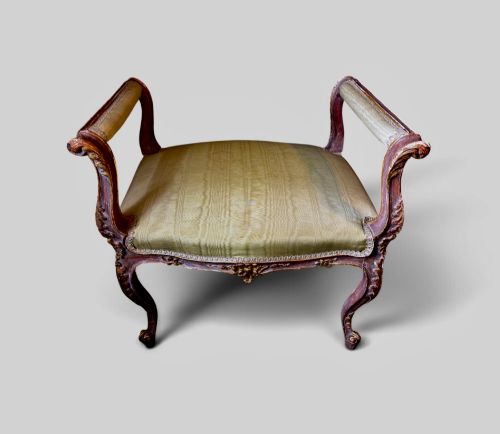
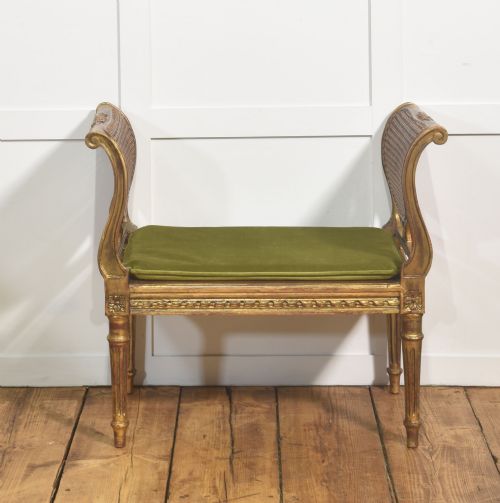
- An elongated stool or small bench designed to fit within the architectural recess of a window, often featuring upholstered ends or backs.
- Duet stool
- An extra-wide seating form created to accommodate two people, commonly placed at the foot of a bed or in front of a dressing table.
- Cabriole leg
- A furniture leg that curves outward in a convex arc and then bends inward in a concave arc, terminating in a pad or scroll foot.
Antique Bedroom Bench: Frequently Asked Questions
Where should I place an antique bedroom bench?
These pieces sit naturally at the foot of a double bed, providing a convenient surface for laying out clothing or sitting while dressing. They also function effectively beneath bedroom windows or along hallway walls.
Lighter luggage stands work well in guest rooms for holding bags, while upholstered window seats create quiet spots for reading or resting.
How do I identify a Victorian bedroom bench?
Victorian examples typically feature dense timbers like walnut or rosewood, often accented with deep carving, cabriole legs, or turned wooden supports. The joinery is robust, designed to endure heavy domestic service.
Upholstered versions from this period frequently rely on traditional stuffing and heavy textile coverings, reflecting the Victorian preference for comfort and solid construction.
What is the difference between a window seat and a luggage stand?
A window seat is primarily a piece of upholstered furniture designed for sitting, featuring decorative woodwork, fabric covers, and sometimes arms or backs. It prioritises aesthetic comfort within the room.
A luggage stand consists of an open wooden frame with slats, straps, or webbing intended to support heavy bags without damaging the furniture surface.
Can I use an antique bench in a modern interior?
These benches integrate smoothly into contemporary spaces by adding warmth through natural wood grains and textured fabrics like linen or velvet. Their compact proportions make them adaptable for modern bedrooms and dressing rooms.
Mixing period woodwork with clean-walled modern settings creates a practical focal point that grounds contemporary decor.