

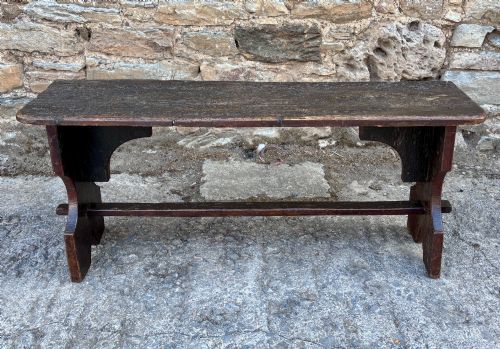
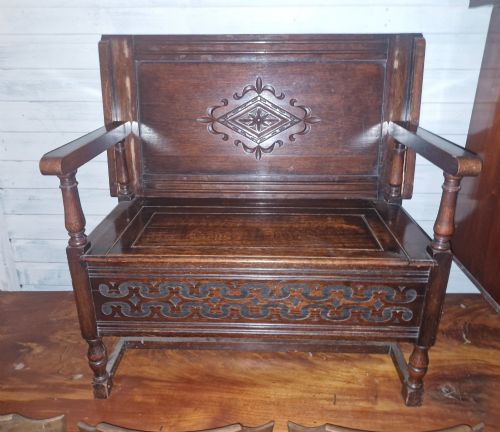
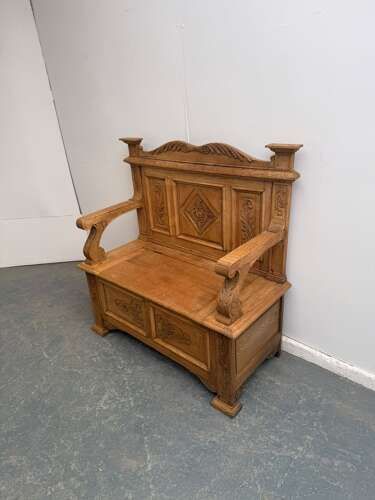
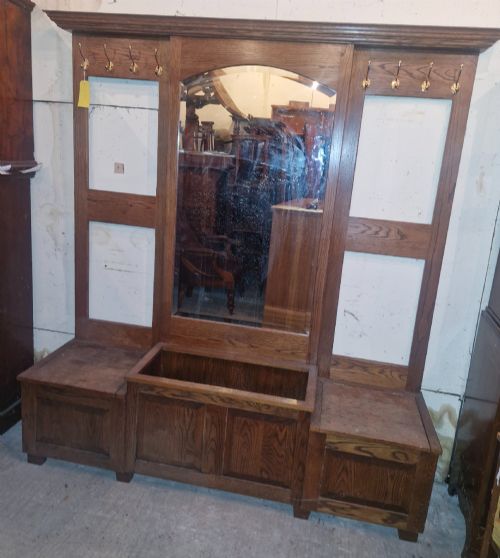
Traditional Hallway Bench
A traditional hallway bench organises an entrance hall while offering practical seating fashioned from pine, oak, mahogany, elm and timber.
Traditional Hallway Bench
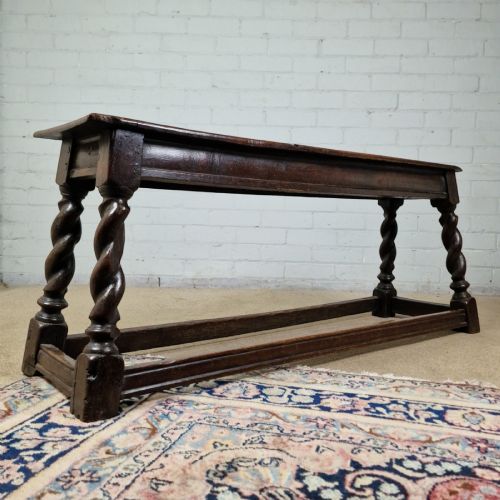
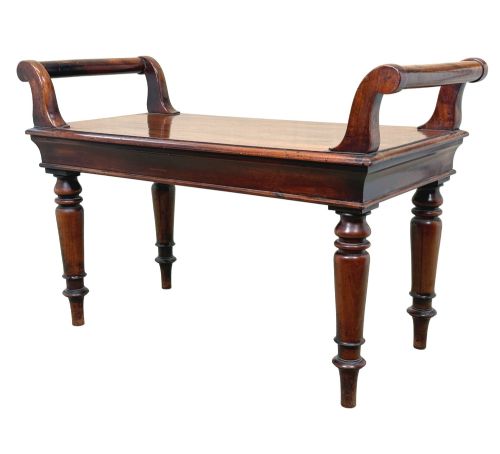
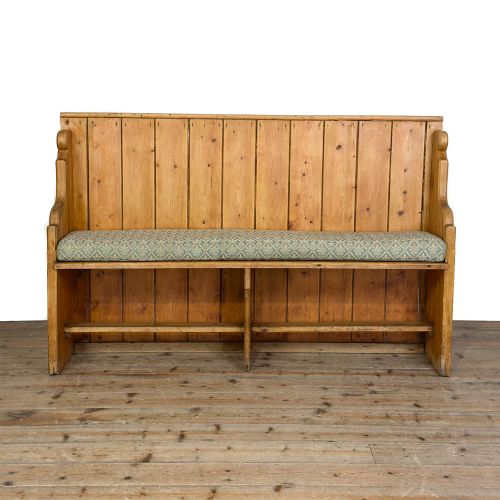
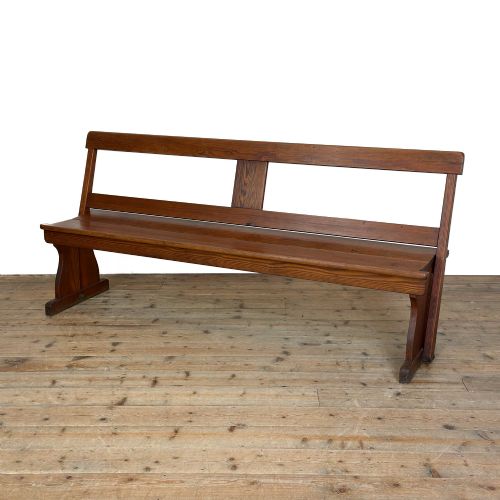
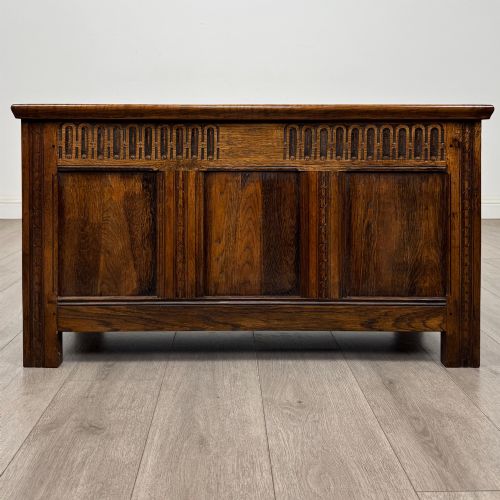
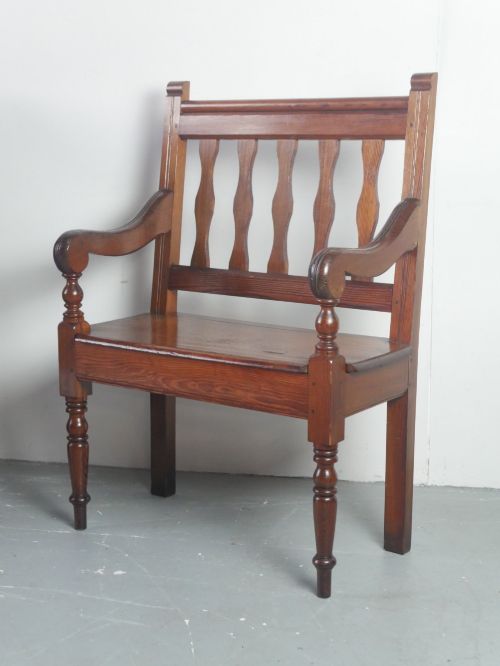
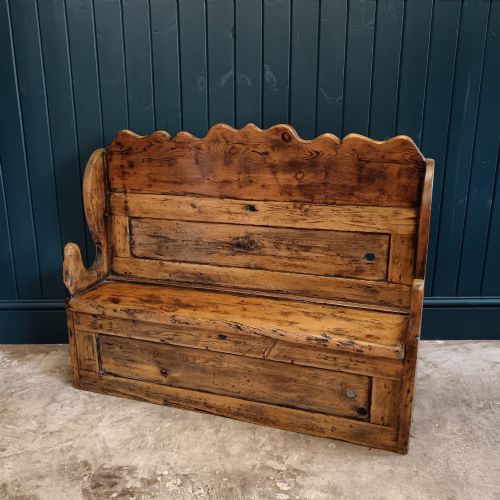
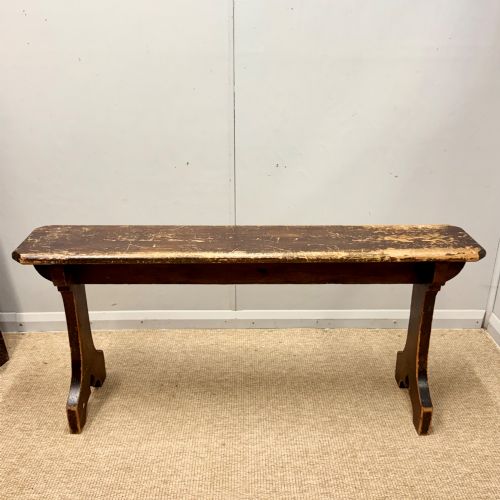
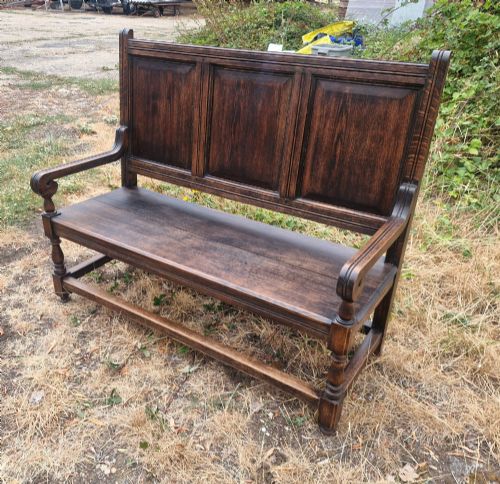
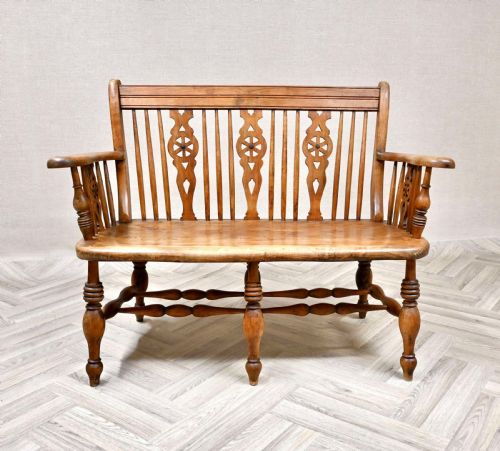
A traditional hallway bench serves as a seating and storage piece within an entrance hall or corridor, drawing from centuries of domestic furniture design. These items appear in various forms across this selection, including standard benches, settles, window seats, and box settles with lift-up lids or storage compartments.
The periods represented stretch from the 18th century through the Georgian, Victorian, and Edwardian eras up to the 20th century. Buyers frequently encounter pine and oak pieces finished in waxed timber or original paintwork, reflecting English and continental country traditions.
How they were made
Carpenters constructed these benches using solid timbers such as pine, oak, elm, and mahogany, often joining panels with traditional mortise and tenon joints to ensure stability. Elm and pine provided reliable, sturdy boards for country pews and settles, while mahogany suited more formal window seats.
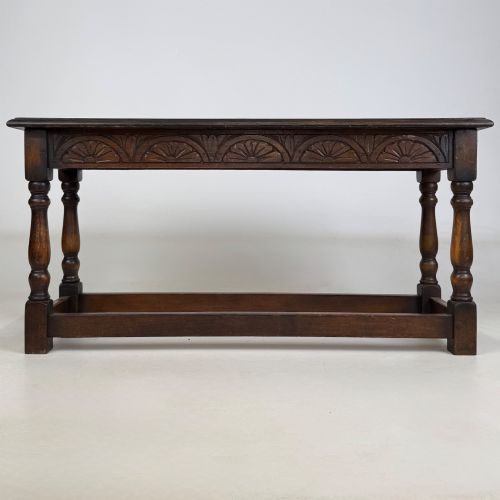
Surface treatments varied from clear wax finishes that preserved the natural grain to historic painted surfaces in blue, grey, or black. Carved details appeared on Edwardian and Victorian oak examples, whilst simpler country pieces relied on plain turned spindles and pegged joints.
Listings feature timbers including pine, oak, mahogany, and elm, spanning periods from the 18th century to the Edwardian era.
What varies in quality
Construction methods and the retention of original components determine the standing of an individual bench. Pieces retaining their initial hinges, lift-up lids, and unaltered timber boards command greater regard among collectors.
The depth of the patina on waxed pine or oak, alongside the originality of painted finishes, distinguishes standard utility items from finer domestic examples. Proportion and timber selection also play a decisive role, particularly in smaller window seats and carved box settles.
The Traditional Hallway Bench Glossary
- Settle
- A wooden bench with a high back, solid arms, and often a box seat for storage. These pieces sheltered occupants from draughts in hallways and firesides.
- Window Seat
- A low bench designed to fit within a window recess. They often share proportions with hallway seats and feature upholstered or plain wooden tops.
- Box Settle
- A bench incorporating a hinged seat that lifts to reveal a compartment beneath. This built-in storage suited the containment of boots and heavy textiles.
- Patina
- The surface sheen and colour developed by timber through age, handling, and regular waxing. A desirable finish shows genuine wear without harsh restoration.
- Pew
- A long wooden bench originally designed for seating in churches or chapels. Domestic adaptations utilise these narrow forms in corridors and boot rooms.
Traditional Hallway Bench: Frequently Asked Questions
What is a traditional hallway bench used for?
These pieces provide a designated seat near the entrance of a home while frequently incorporating storage compartments beneath the lid. Households utilise them for sitting whilst removing footwear and for storing boots or accessories.
Their narrow profile ensures they fit neatly into corridors without obstructing movement. Historical examples range from simple church pews to carved oak settles designed specifically for domestic halls.
How do I identify the period of a bench?
Examining the timber, construction joints, and surface wear helps indicate the age of a piece. Georgian and 18th-century examples often feature pegged oak construction and deeper patination.
Victorian and Edwardian pieces frequently display pine, turned spindles, or applied carved decoration. Comparing the form and hardware to dated examples clarifies the era of origin.
Will a pine bench fit in a modern hallway?
Pine benches come in various lengths and depths, including slim configurations designed for tight spaces. Measuring the available corridor width against the listed dimensions ensures proper clearance for doors and walkways.
Many antique country pews and settles offer compact footprints despite their high backs. Lighter waxed finishes also prevent smaller hallways from feeling overcrowded.
Are painted finishes on old benches original?
Original painted surfaces display genuine wear, craquelure, and layers consistent with the age of the timber. Hungarian and English country pieces frequently retain early blue, grey, or black paint.
Inspect the paint under natural light to check for recent overpainting or modern intervention. Untouched surfaces exhibit a soft integration into the underlying wood.