
Georgian Style Stool
A georgian style stool brings eighteenth-century proportion and sturdy seating into a room without demanding a museum environment.
What a georgian style stool is
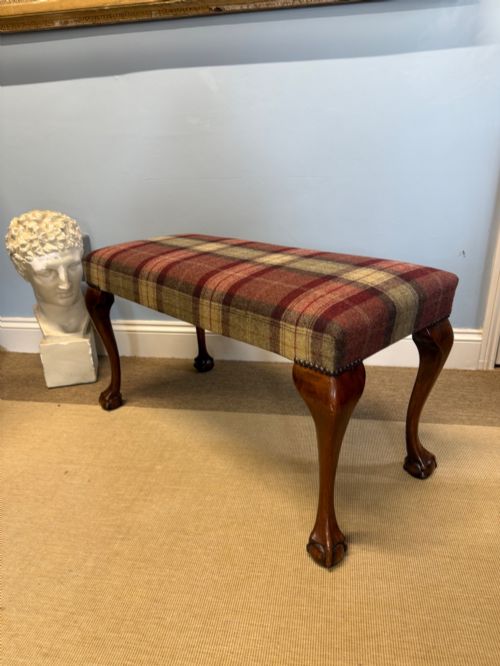
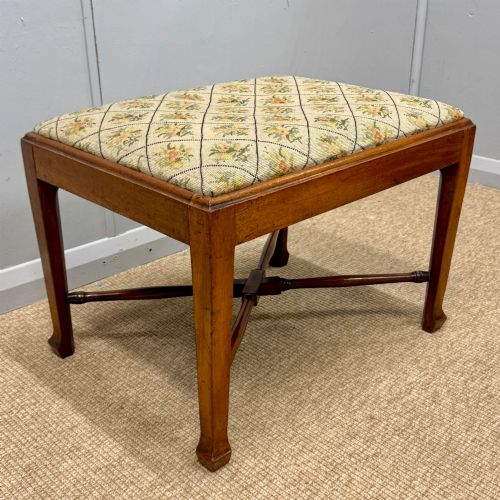
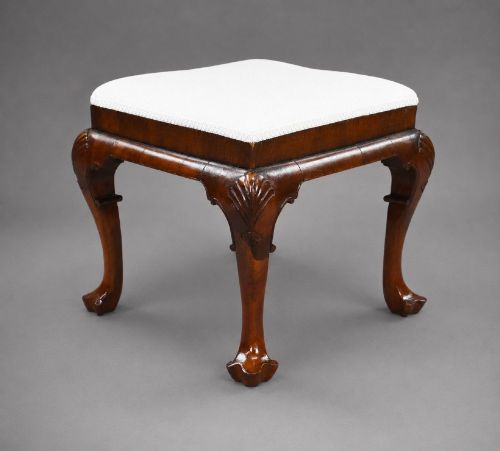
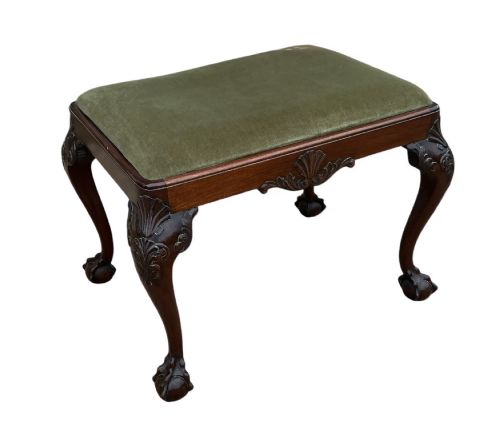
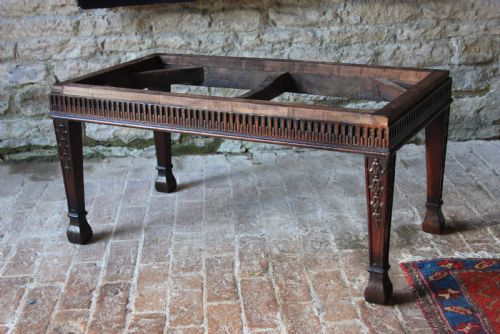
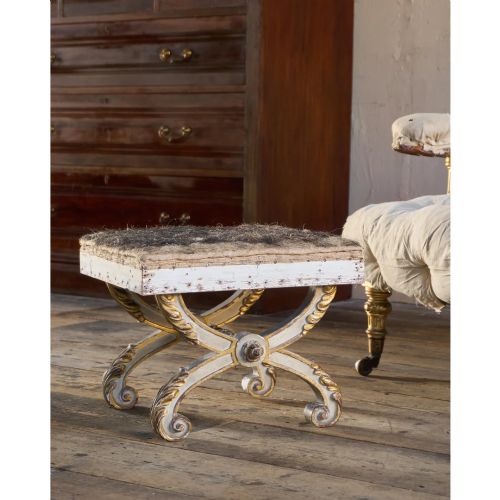
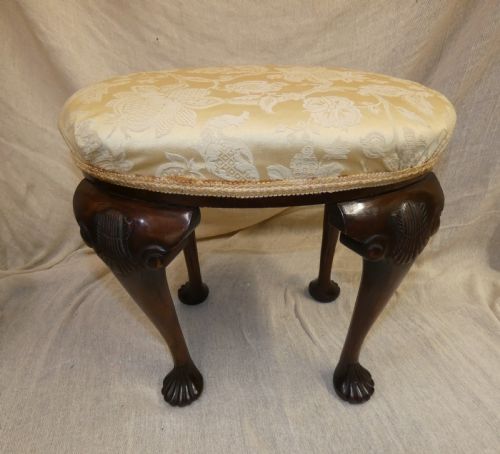
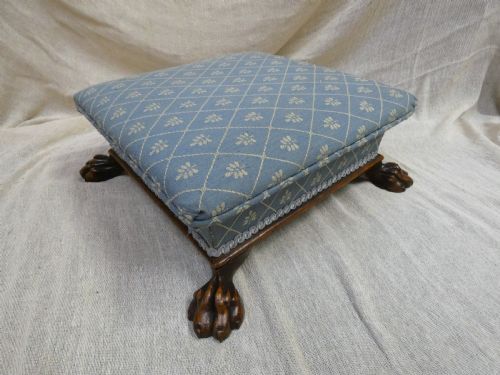
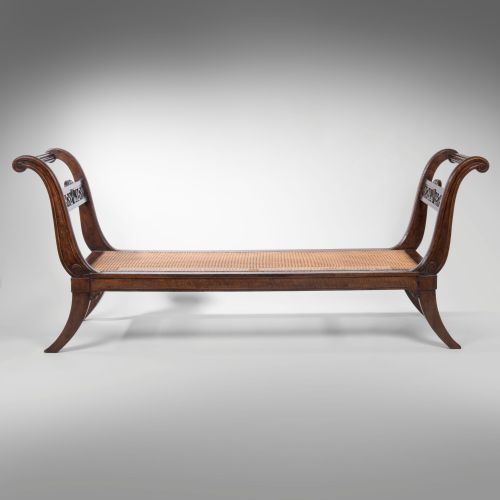
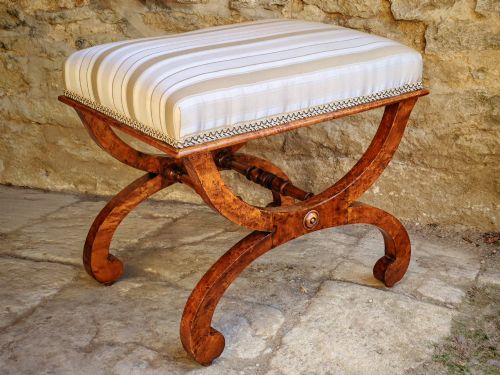
When you search for a georgian style stool, you encounter seating forms ranging from dressing and piano stools to low footstools and long benches. The pieces appearing here span the eighteenth, nineteenth, and early twentieth centuries, capturing revivals as well as earlier execution.
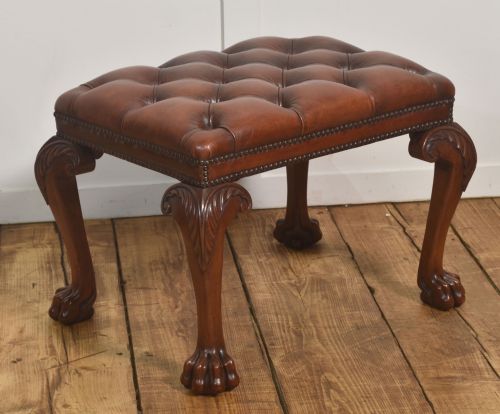
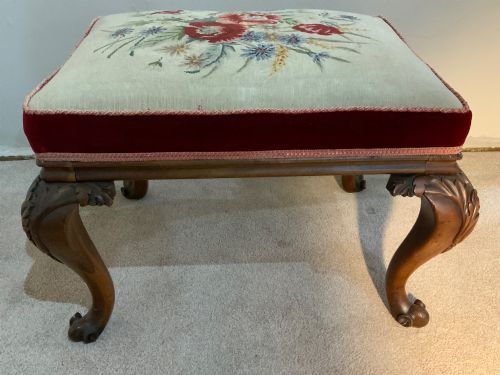
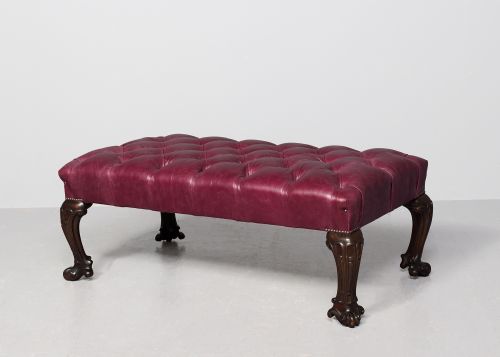
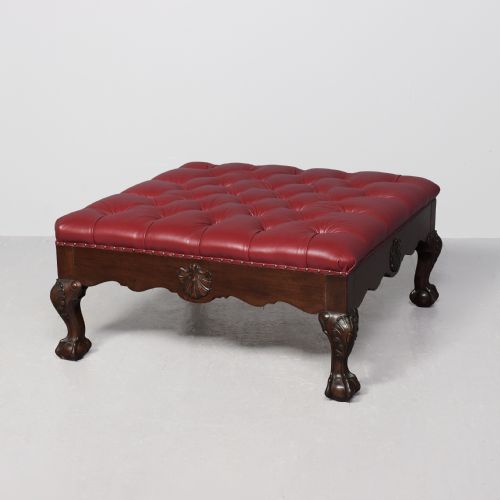
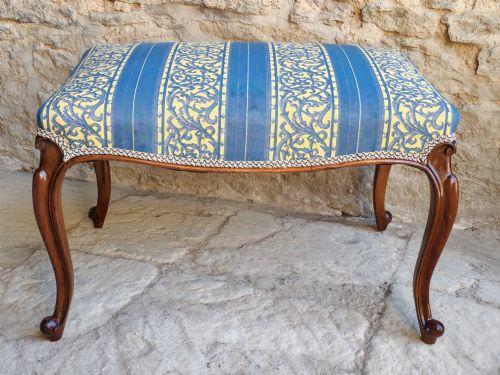
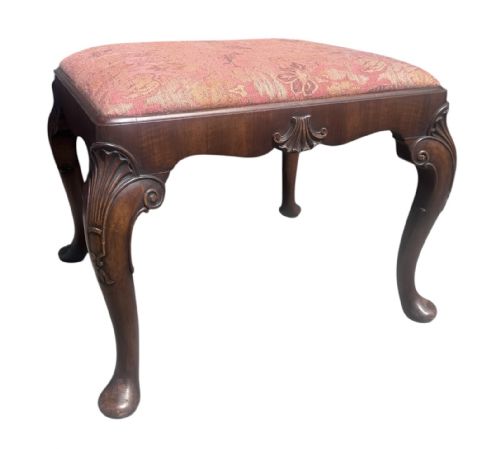
Mahogany and walnut predominate among the surviving timbers, paired with upholstery that includes leather, tapestry, wool, and damask fabric. Forms incorporate carved detail and specific foot treatments like claw and ball, reflecting the enduring influence of cabinetmakers from the seventeen-fifties onward.
The version most commonly met on this page is the nineteenth-century revival or early twentieth-century piece built in mahogany or walnut. These later iterations borrow the cabriole legs, jointed construction, and upholstered tops of the mid-eighteenth century for domestic utility.
How they were made
Cabinetmakers constructed these stools primarily in mahogany and walnut, occasionally utilising oak for jointed frame versions. Timber selection determined the degree of crispness achievable in carved elements like cabriole legs and claw and ball feet.
Upholstery methods tied directly to function, incorporating textile, wool, damask, tapestry, or leather secured over padding. Brass tacks frequently finished the perimeters of leather-topped examples, adding a structural boundary to the hide.
Retail Price Guide 2026
Typical UK retail prices for georgian style stool, calculated from the Sellingantiques database of over a million retail prices indexed since 2003. This retail price guide relies exclusively on Sellingantiques data; no external sources or auction records are used, so the figures do not describe the wider market.
The archive records pieces dated from seventeen-fifty through the early twentieth century, encompassing Queen Anne and Chippendale revivals.
What varies in quality
The distinction between standard commercial output and superior craftsmanship lies in the depth of timber carving and the integrity of the frame joints. Hand-carved mahogany or walnut displays crisp lines on knees and feet rather than softened, cast definition.
Proportion and wood selection set the better pieces apart, particularly where figured walnut or dense mahogany supports heavier upholstery schemes. Superior examples maintain balanced weight distribution across cabriole or straight legs without relying on excessive secondary reinforcement.
The Georgian Style Stool Glossary
- Cabriole leg
- A furniture leg that curves out at the knee and tapers inward to an ankle, mimicking an animal's limb. This form appeared widely on eighteenth-century seating and subsequent revivals.
- Joint stool
- A sturdy wooden stool constructed with mortise and tenon joints rather than turned legs glued into a seat. Oak examples often reflect this traditional framing method.
- Damask fabric
- A reversible figured textile woven on a jacquard loom, frequently utilised for formal upholstery. The pattern contrasts flat and satin weaves to create tonal designs.
- Tapestry
- A heavy hand-woven or needlepoint textile depicting pictorial or geometric scenes. These textiles often cover the tops of footstools and dressing benches.
Frequently Asked Questions
How do I spot a true period piece from a revival?
Distinguishing an eighteenth-century original from a nineteenth or twentieth-century revival requires examining the timber ageing, tool marks, and construction joints. Later pieces often display machine-cut elements and secondary woods consistent with Victorian or Edwardian workshops.
Revival furniture built in the georgian style still exhibits high levels of craftsmanship, making the distinction one of date rather than utility.
Where were these stools used in the home?
Stools served multiple domestic functions, operating as dressing table seats, piano benches, footrests, or movable seating in reception rooms. Long benches and duet stools accommodated more than one occupant near keyboard instruments.
Their compact footprint allowed them to sit easily beneath tables or beside upholstery when not actively required.
How do I care for leather upholstery?
Leather-topped stools require occasional conditioning to prevent the hide from drying and cracking over time. Gentle cleaning with a soft cloth removes surface dust without damaging the original grain or brass tack attachments.
Avoid placing leather furniture in direct sunlight or near heat sources that accelerate moisture loss in the material.
What wood types should I expect?
Mahogany and walnut form the vast majority of frames across these listings, providing stable support and rich grain patterns. Oak appears specifically in joint stool formats associated with earlier vernacular traditions.
Both mahogany and walnut take hand-carving cleanly, which explains their dominance in revival pieces featuring elaborate legs.