



Mahogany Cabriole Footstool
A mahogany cabriole footstool brings solid timber frames and curved supports to a seating form found across multiple centuries.
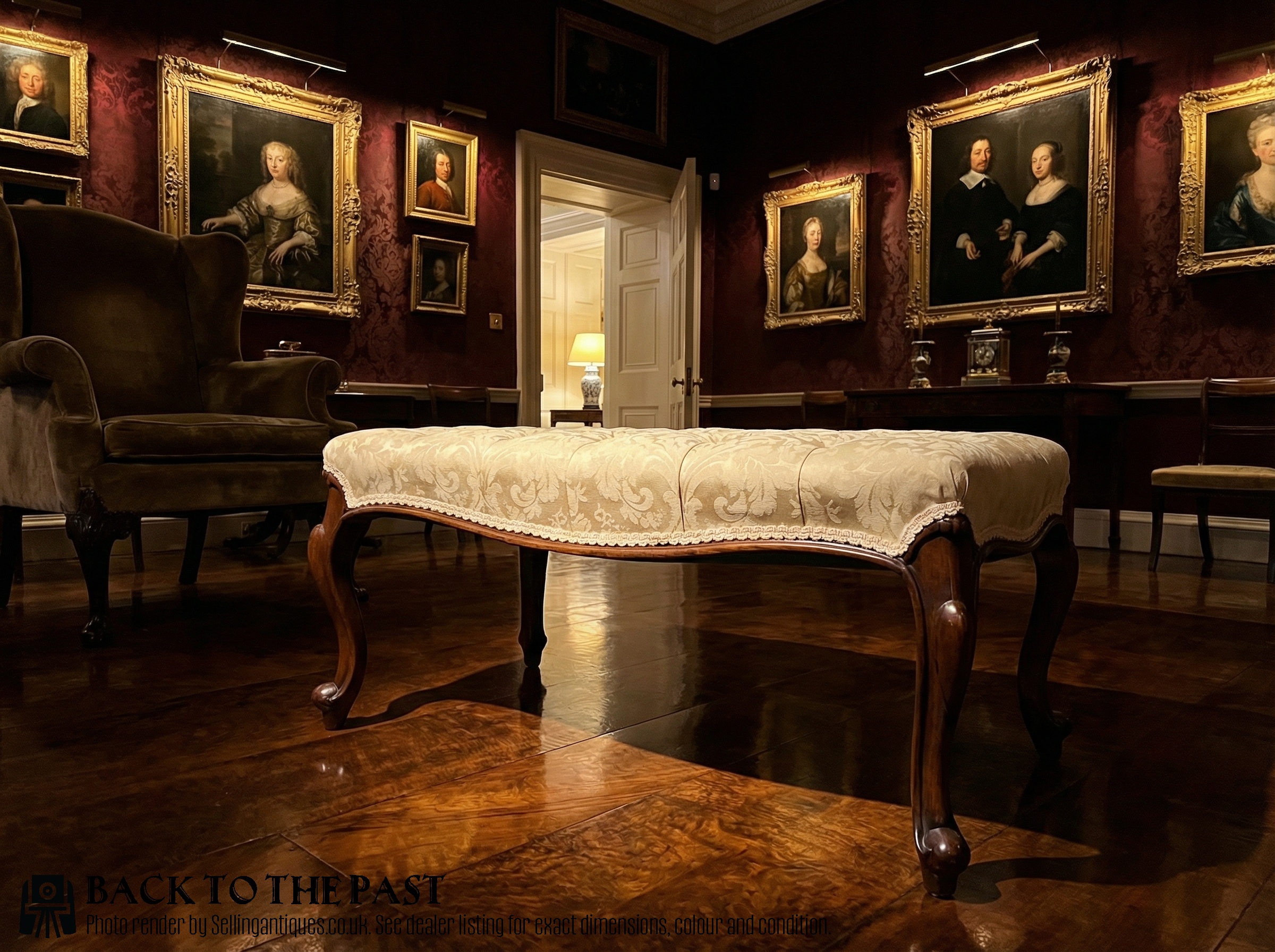
Mahogany Cabriole Footstool
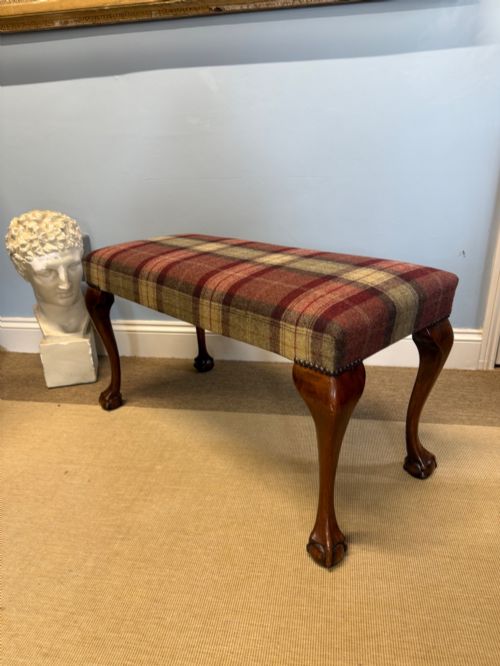
When you search for a mahogany cabriole footstool, you encounter low timber seating designed for support and resting the feet, frequently constructed from dense tropical hardwood and mounted on curving legs. These pieces appear in forms ranging from compact single-seat footstools to long benches, dressing stools, and piano stools.
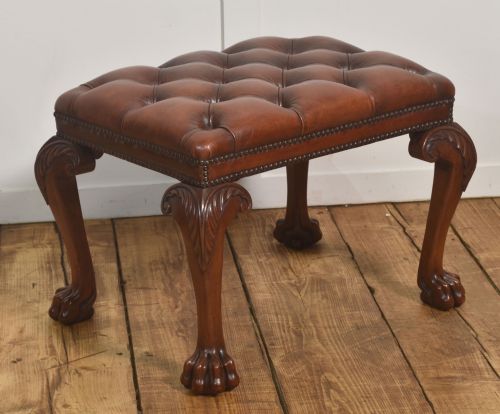
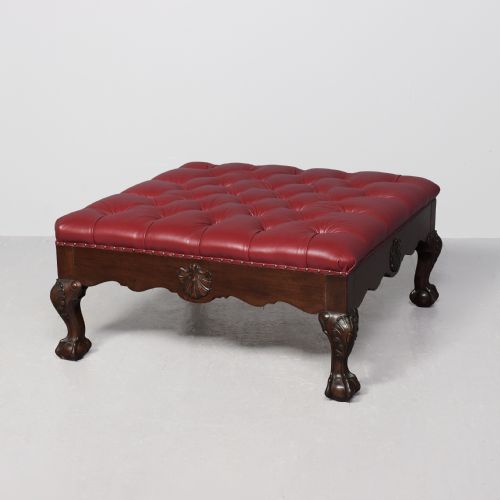
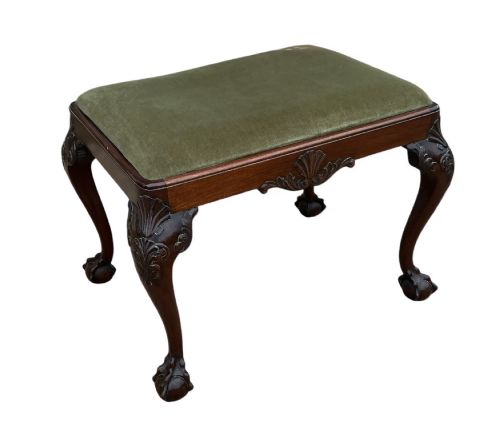
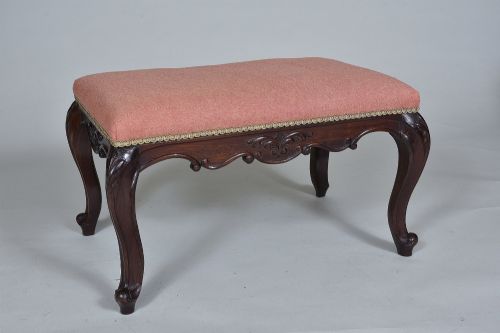
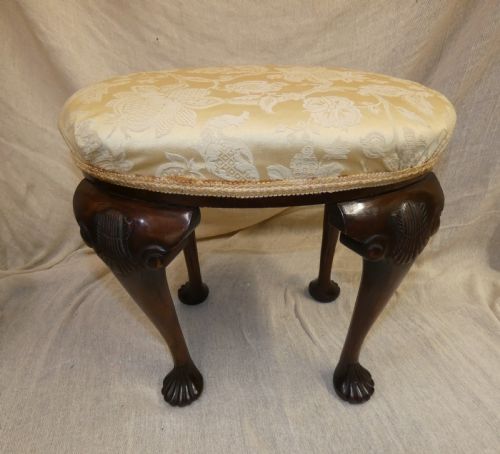
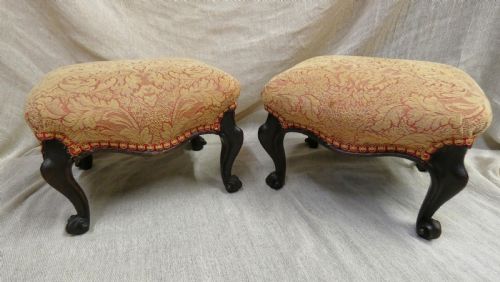
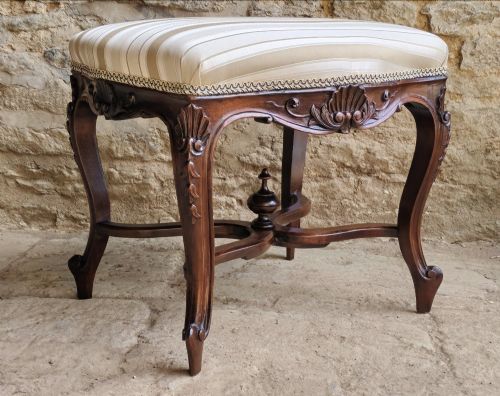
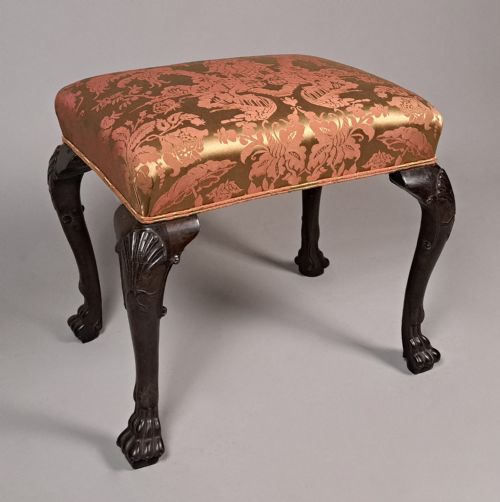
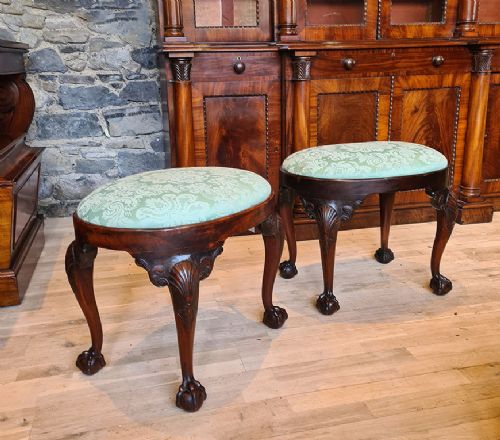
The pieces on this page span the eighteenth century through to the Edwardian period and the 1920s, drawing heavily on revival aesthetics such as Chippendale and Queen Anne styles alongside Victorian interpretations. You meet examples featuring plain frames, carved shell motifs, ball and claw details, and serpentine shapes.
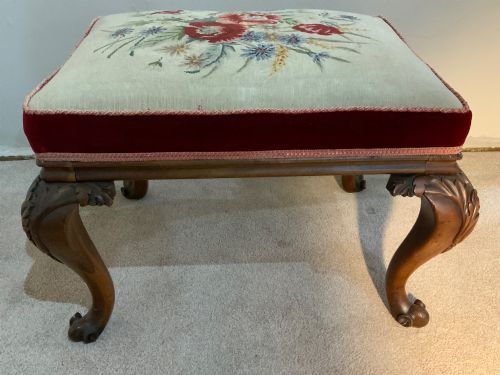
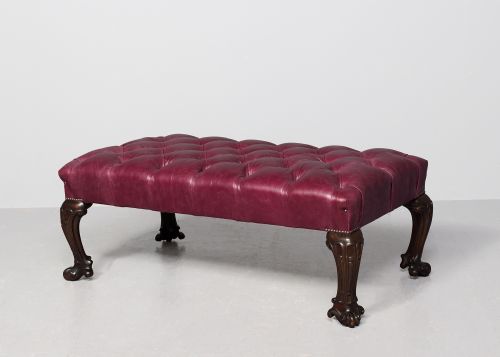
Victorian and nineteenth-century examples sit alongside earlier Georgian-style pieces and twentieth-century interpretations, showing how makers continually returned to cabriole supports. Upholstery formats vary from buttoned red hide and leather to needlepoint, tapestry, velvet, and textile covers.
What varies in quality
The quality of a piece rests in the crispness of the timber carving on the cabriole legs and the weight and density of the mahogany frame. Superior examples display fluid, hand-shaped curves where the leg meets the seat rail, alongside substantial timber scantlings that avoid any feeling of lightness.
Upholstery execution and the selection of covering materials also separate standard production from finer examples, particularly where buttoned hide, original needlepoint, or specialist textile finishes are employed. The integration of carved details such as ball and claw feet distinguishes more ambitious cabinet work from plainer vernacular items.
Mahogany Cabriole Footstool Retail Price Guide 2026
Typical asking prices for mahogany cabriole footstool among the pieces listed under this phrase on Sellingantiques today, from the lower quarter to the upper quarter. They describe what is for sale here now, not the wider market.
Listings feature mahogany, fabric, brass, wool, velvet, tapestry, and leather across pieces dating from the eighteenth century to the 1920s.
The Mahogany Cabriole Footstool Glossary
- Cabriole leg
- A furniture leg that curves outward at the top and inward at the bottom, mimicking the shape of an animal's leg. This form became a defining feature of eighteenth-century and revival seating.
- Chippendale style
- A decorative style inspired by the designs of Thomas Chippendale, characterised by carved mahogany frames, cabriole legs, and often incorporating ball and claw feet.
- Needlepoint
- A type of canvas work embroidery used historically to cover seat tops and footstools. It provides a textured, durable surface executed with wool or silk yarn.
- Serpentine shape
- A line or edge that curves outward in the centre and inward at the sides. This contour appears on the rails of finer stools.
- Hide
- Untanned or tanned animal skin used as a durable upholstery covering. Red hide and burgundy leather frequently appear on nineteenth-century footstools.
- Pad foot
- A simple rounded foot at the base of a cabriole leg where the timber swells slightly before resting on the floor.
Mahogany Cabriole Footstool: Frequently Asked Questions
What periods do these footstools come from?
The pieces span the eighteenth century, the Victorian era, the Edwardian period, and the 1920s. Many nineteenth-century and early twentieth-century examples adopt earlier Georgian and Queen Anne revival styles.
This overlapping timeline means older aesthetic conventions persisted long after their initial eighteenth-century genesis, reappearing in various revival movements across subsequent generations.
What types of upholstery were used?
Original and replacement coverings include buttoned leather, red hide, wool, velvet, tapestry, and hand-worked needlepoint. Some examples feature specific textile houses or traditional fabric weaves.
The underlying padding uses period stuffing methods, occasionally secured with brass tacks or finished with decorative trimming around the seat frame.
Where were these stools placed originally?
These low pieces served multiple domestic functions, operating as footstools by firesides, dressing stools in bedrooms, and dedicated piano seating in parlours. Long variants functioned as benches or window seats.
Their compact scale allowed them to sit easily beneath tables or beside larger armchairs within nineteenth-century and Georgian reception rooms.
How do I tell an original Georgian piece from a revival?
Distinguishing eighteenth-century pieces from later revivals involves examining the timber ageing, internal construction marks, and tool methods used on the mahogany frame. Revival pieces from the Victorian era and the 1920s reflect nineteenth and twentieth-century workshop practices.
Both categories utilise solid mahogany and cabriole supports, but the handling of the carved details and the secondary woods reveal the era of manufacture.