


Deep Buttoned Ottoman
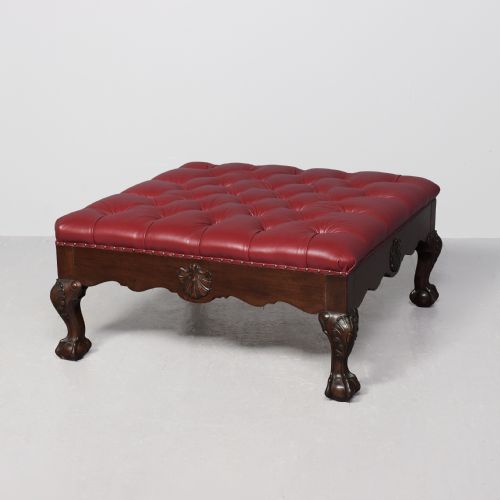
A deep buttoned ottoman brings substantial comfort and classic presence to a room, offering a generous surface upholstered in rich hide or fabric.
What They Are
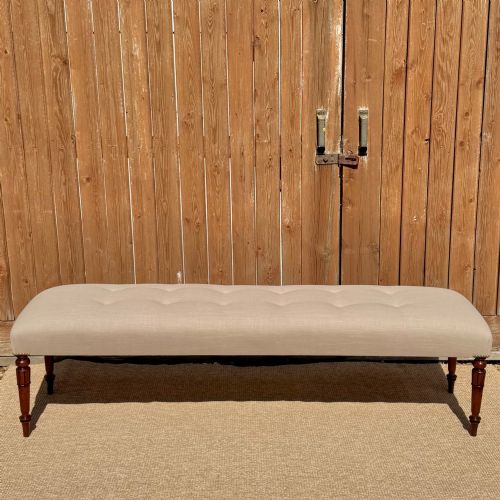
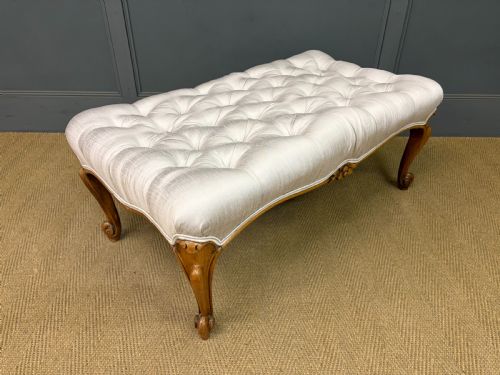
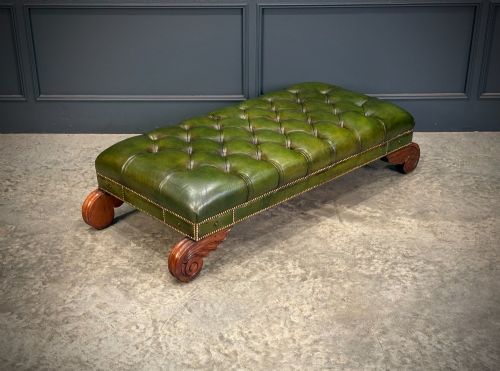
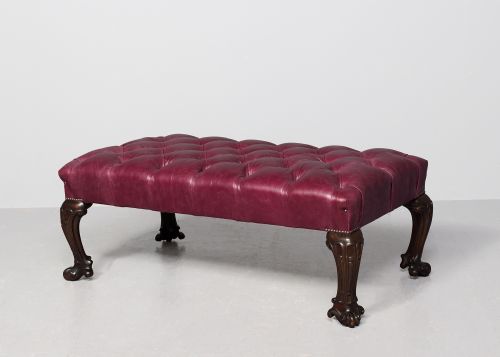
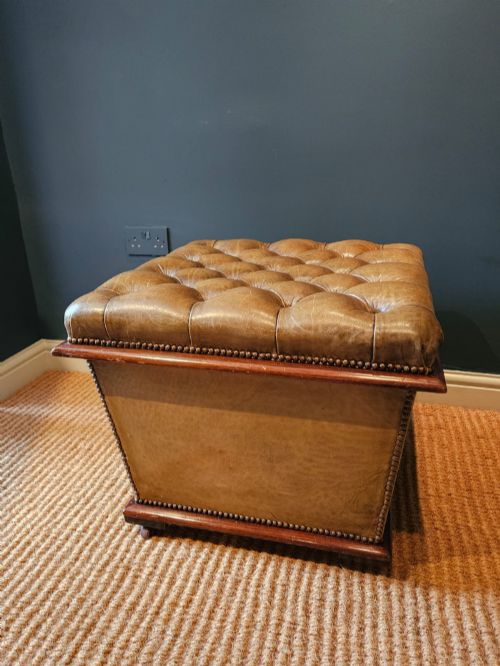
A deep buttoned ottoman provides a substantial seating or resting place, often built on a timber frame and finished with distinctive tufted upholstery. These pieces appear in forms ranging from large footstools to grand scale parlour ottomans.
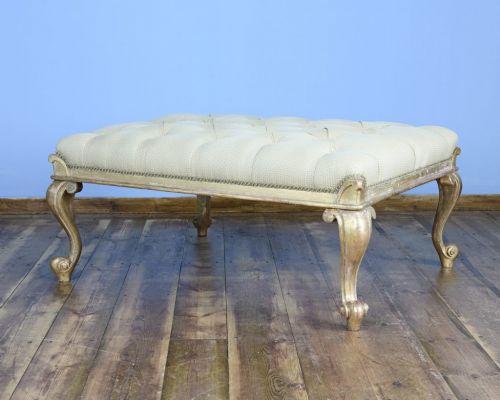
The selections recorded on this page span several distinct periods and stylistic revivals, including Georgian style pieces, William IV examples, and Victorian designs. Makers utilised mahogany, hardwood, and giltwood to build sturdy foundations for these versatile items.
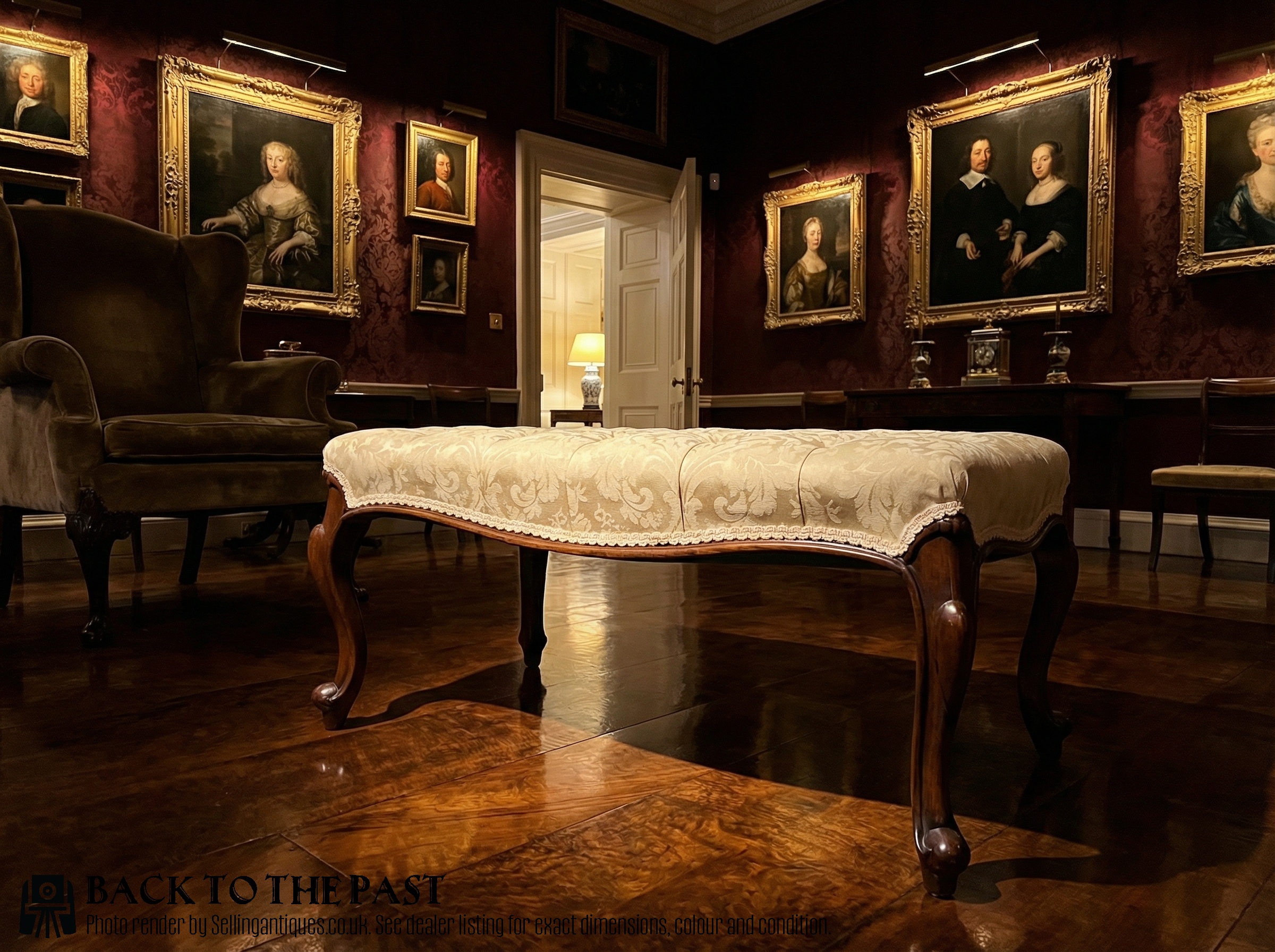
Surfaces typically feature hand dyed leather, red hide, or damask upholstery secured with traditional buttoning techniques. Buyers encounter both compact footstools and large antique ottomans intended for central placement in a room.
How They Were Made
Craftsmen built the structural frames using solid mahogany and hardwood, ensuring the load bearing base could support daily use. Joinery techniques of the period involved traditional framing to maintain stability across large expanses.
Upholstery work relied on deep buttoning, a method where fabric or leather is pulled tight and secured with tufts to create distinctive geometric indentations. Materials such as leather, red hide, and damask were stretched over padded foundations.
Decorative elements included parcel gilt finishes on timber frames, alongside detailed wood carving seen in Georgian style and William IV pieces. Brass elements sometimes added structural reinforcement or subtle surface detailing.
Retail Price Guide 2026
Typical UK retail prices for deep buttoned ottoman, calculated from the Sellingantiques database of over a million retail prices indexed since 2003. This retail price guide relies exclusively on Sellingantiques data; no external sources or auction records are used, so the figures do not describe the wider market.
Some nineteenth century makers stuffed these grand frames with horsehair, creating a resilient bounce that outlasts modern foam.
What Varies in Quality
The distinction between standard examples and finer pieces lies in the ambition of the timber frame and the precision of the upholstery work. Heavier mahogany structures and parcels gilt detailing indicate greater workshop investment.
The treatment of the leather or fabric surface dictates visual impact, with hand dyed hides offering a richer patina than standard coverings. Deep buttoning executed with exact symmetry demonstrates superior hand skill.
The Deep Buttoned Ottoman Glossary
- Mahogany
- A durable hardwood prized for its deep reddish brown colour and stability in furniture construction. It forms the primary structural timber for many traditional frames.
- Buttoning
- An upholstery technique involving deep tufts secured by thread or twine to create a padded, quilted surface. This method holds the internal stuffing firmly in place.
- Damask
- A reversible patterned fabric traditionally woven on a jacquard loom with silk, wool, or linen. It provides a textured, decorative alternative to leather upholstery.
- Parcel gilt
- A decorative treatment where specific carved areas of a wooden frame receive a thin layer of gold leaf. This technique highlights particular ornamental details against the darker timber.
- Red hide
- A heavy cattle skin tanned and dyed to a distinct red tone, frequently used for durable traditional upholstery. It develops a soft sheen and character through age.
Frequently Asked Questions
Where should an ottoman go?
These pieces traditionally sit in the centre of a reception room or before a large sofa to serve as a footrest or auxiliary seat.
Their substantial scale allows them to function as a focal point, anchoring the surrounding seating arrangement.
How do I clean leather upholstery?
Leather surfaces benefit from regular dusting with a soft cloth and occasional treatment with appropriate conditioning balms to prevent drying.
Harsh chemical cleaners should be avoided to preserve the natural patina and hand dyed finish of the hide.
What is the difference between an ottoman and a footstool?
The terms often overlap, though ottomans generally describe larger upholstered pieces designed for sitting or resting the feet.
Footstools can encompass smaller standalone frames, whereas these listings frequently combine both designations for large padded forms.
How do I identify a Victorian ottoman?
Victorian examples frequently display generous proportions and deep buttoned upholstery combined with dark hardwood frames.
Archival records for this style show a strong emphasis on comfort and heavy padding characteristic of nineteenth century seating.