


Buttoned Leather Footstool
A buttoned leather footstool brings deep tufted comfort and traditional timber frames to a room, grounding your seating arrangement with period character.
Buttoned Leather Footstool
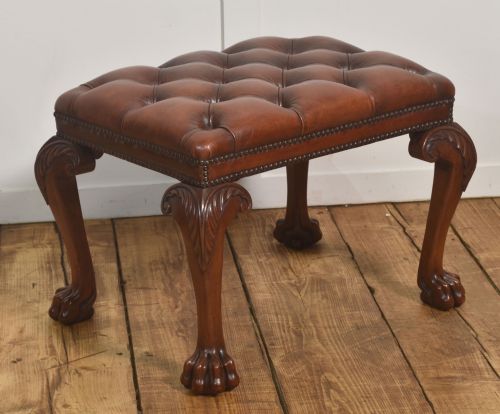
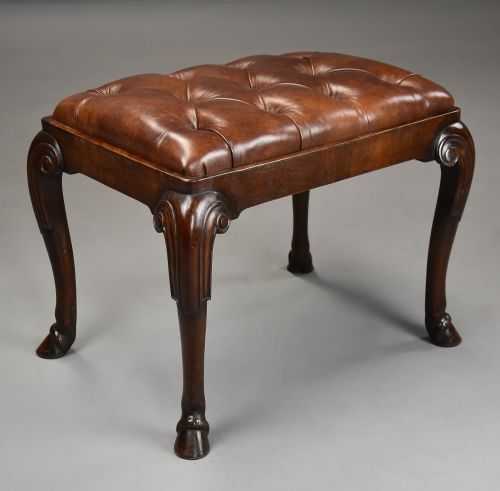
A buttoned leather footstool is a low seating piece or ottoman featuring a padded top secured with deep tufting and upholstered in hide. These items appear across multiple nineteenth-century and revival periods, including Victorian, Regency, and George III styles.
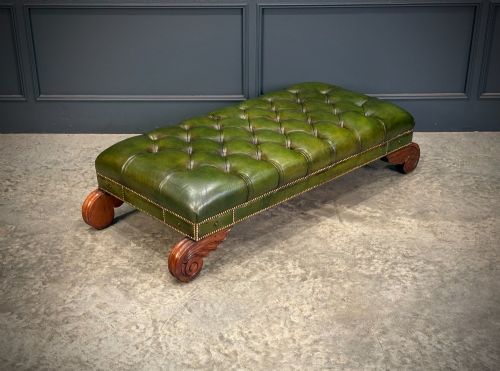
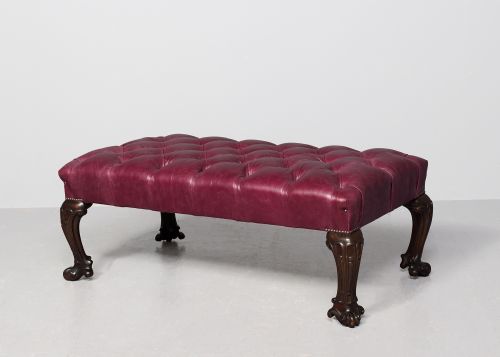
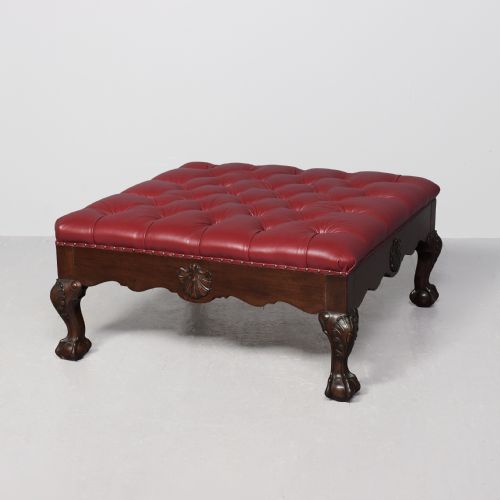
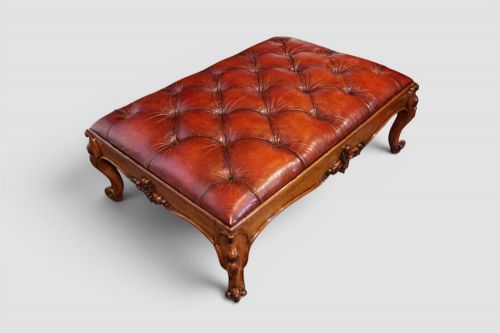
You will most commonly meet mahogany, walnut, or rosewood frames supporting red, burgundy, or brown hand-dyed leather upholstery. The forms range from compact footstools to large country house centre stools and long window seats.
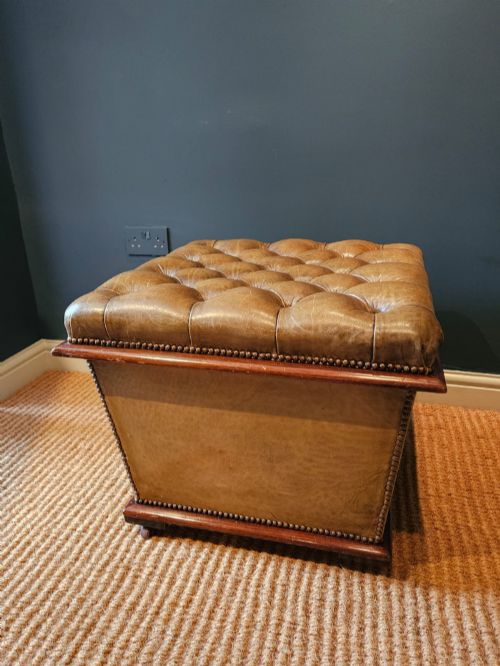
Makers often applied brass studding along the borders, finishing the frames with cabriole legs, straight mahogany supports, or X-frame configurations. The pieces function equally well as traditional footrests or as low coffee tables in contemporary interiors.
How they were made
Craftsmen built the structural frames using solid timbers such as mahogany, walnut, oak, and rosewood, frequently shaping the wood into cabriole or straight legs. They joined these wooden foundations with traditional joinery methods to ensure stability under daily use.
The upholstery process involved layering padding beneath durable leather hides, then pulling the material tight with deep buttons to create the characteristic tufted surface. Artisans frequently added rows of brass studs along the edges to secure the leather and finish the borders.
Buttoned Leather Footstool Retail Price Guide 2026
Typical asking prices for buttoned leather footstool among the pieces listed under this phrase on Sellingantiques today, from the lower quarter to the upper quarter. They describe what is for sale here now, not the wider market.
Listings feature woods including mahogany, walnut, oak, and rosewood, spanning Victorian, Regency, and George III stylistic periods.
What varies in quality
The distinction between standard examples and the finest items rests in the selection of timber and the depth of the hand-dyed leather. Superior pieces display substantial frames of figured mahogany or walnut paired with richly patinated hide.
Execution of the deep buttoning and the precision of the brass-studded detailing indicate the level of workshop care. Finely carved leg forms and robust internal construction separate grand country house ottomans from simpler domestic footstools.
James Shoolbred
The Buttoned Leather Footstool Glossary
- Buttoned
- Upholstery secured with deep indentations formed by sewn-through buttons, creating a tufted geometric pattern across the leather surface. This technique keeps the internal padding evenly distributed.
- Cabriole leg
- A furniture leg that curves outward in a convex arc at the knee and tapers inward in a concave arc toward the foot. This stylistic element often terminates in a pad or scroll.
- Ottoman
- A low, upholstered seat or footstool without a back or arms, designed for resting feet or sitting. Larger versions frequently double as central tables in living spaces.
- Hide
- The natural animal skin used for upholstery, valued for its durability and capacity to develop a rich patina over decades of handling. Hand-dyed variations show tonal depth across the surface.
- X-frame
- A furniture base constructed from intersecting diagonal timbers forming an X shape when viewed from the side. This structural format supports long or square seats with architectural stability.
Buttoned Leather Footstool: Frequently Asked Questions
How do I use a buttoned leather footstool?
These pieces serve primarily as low footrests before armchairs or sofas, but their generous proportions make them suitable as central coffee tables.
Place a large tray on top of the leather surface to hold books or glassware while retaining the option to use the item for seating when guests visit.
How do I clean antique leather?
Maintain the surface by dusting regularly with a soft, dry cloth and applying appropriate leather balms to preserve the suppleness of the hide.
Avoid placing the footstool in direct sunlight or near heat sources, which can dry out the nineteenth-century leather and cause cracking.
How can I tell a Victorian stool from a Regency one?
Victorian examples frequently display heavier walnut or mahogany frames with cabriole legs and deep red or brown hand-dyed leather upholstery.
Regency pieces often lean toward cleaner classical lines, sometimes utilising rosewood or mahogany with understated supports and brass studding.
What is a country house centre stool?
A centre stool is an oversized ottoman designed to sit in the middle of a spacious room rather than against a wall.
These substantial pieces typically feature extensive buttoning and robust timber frames constructed to endure heavy daily use in large reception rooms.