


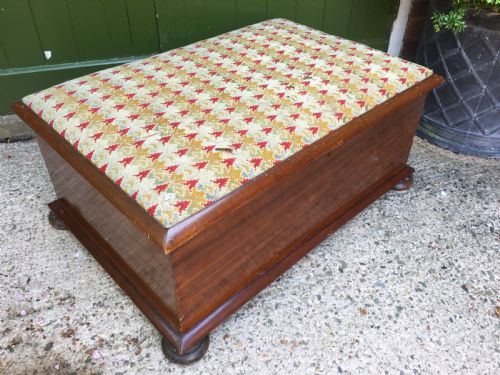
Tapestry Top Stool
These tapestry top stool examples bring period textiles and solid timber together, offering practical seating with historical needlework.
Tapestry Top Stool
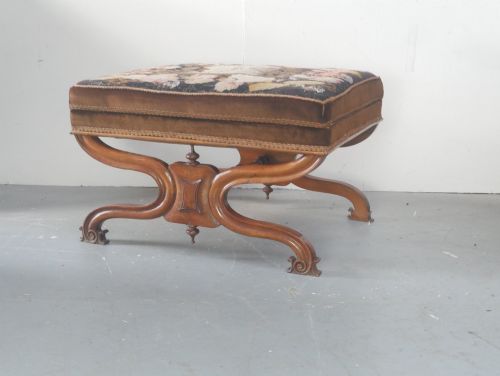
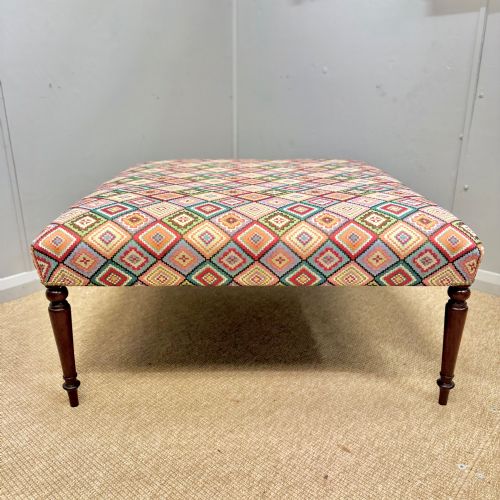
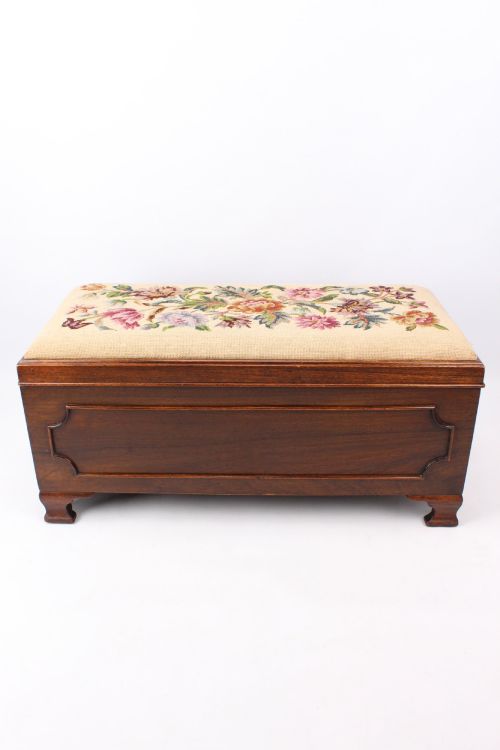
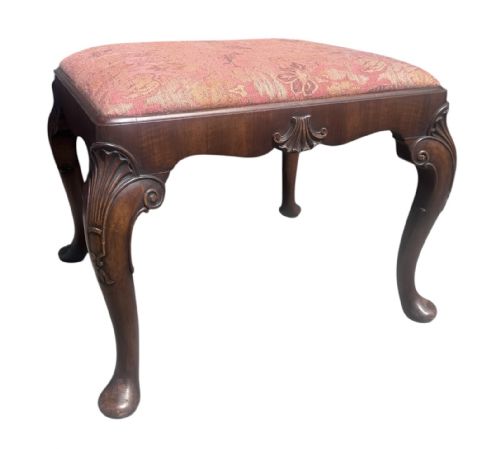
A tapestry top stool combines a low wooden frame with a textile upholstered seat, frequently encountered from nineteenth-century and early twentieth-century periods. These pieces appear in forms such as footstools, ottomans, dressing stools, and piano stools across styles like Victorian, Georgian Style, and Scottish Baronial.
Makers utilised dense timbers including mahogany, walnut, rosewood, and oak for the structural frames, often pairing them with gros-point or needlepoint upholstery. The resulting seating ranges from compact footstools to large ottomans suited for drawing rooms and dressing areas.
Materials and construction
Frames are constructed from hardwoods like mahogany, walnut, and rosewood, sometimes featuring carved detailing, gilded surfaces, ebonised finishes, or painted decoration. Joinery techniques from the nineteenth century support these sturdy timber bases.
Seat sections feature woven textile covers, specifically tapestry, needlepoint, wool, fabric, and velvet. These textile panels are secured over padded foundations set into the timber frame.
Tapestry Top Stool Retail Price Guide 2026
Typical asking prices for tapestry top stool among the pieces listed under this phrase on Sellingantiques today, from the lower quarter to the upper quarter. They describe what is for sale here now, not the wider market.
Listings feature timbers like mahogany, walnut, rosewood, and oak paired with textile upholstery across nineteenth-century and early twentieth-century periods.
Assessing craftsmanship and condition
Quality rests in the crispness of the timber carving and the tightness of the frame joinery. Dense hardwoods like rosewood and mahogany generally indicate higher grade production than softer timbers.
The integrity and intricacy of the textile upholstery determine distinction. Original gros-point needlework tops surviving in good condition elevate the piece above later re-covered examples.
The Tapestry Top Stool Glossary
- Gros-point
- A type of needlework stitched on canvas using a coarse yarn, frequently seen on nineteenth-century seat covers. This technique creates a durable, textured surface suitable for heavy domestic use.
- Needlepoint
- Embroidery stitched on canvas to form pictorial or geometric patterns. It provides the colourful decorative panels seen on many period stools.
- Ottoman
- A low upholstered seat or bench without arms or a back. These larger formats often incorporate internal storage or substantial frames.
- Scottish Baronial
- An architectural and decorative style inspired by medieval Scottish castles. Pieces in this idiom feature robust timber framing and substantial proportions.
- Rosewood
- A dense, dark timber valued for its rich grain and polished finish. It appears on finer nineteenth-century seating.
Tapestry Top Stool: Frequently Asked Questions
What rooms suit a tapestry top stool?
These stools fit well beside low seating in a living room, serving as functional footstools or occasional seats.
Smaller dressing stools also integrate easily into bedrooms or dressing areas alongside vanity tables.
How do I care for the textile top?
Protect the woven surface from direct sunlight to prevent fading of the wool yarns over time.
Gentle surface cleaning with a soft brush helps remove dust without disturbing the needlework stitches.
Are these stools sturdy enough for sitting?
Hardwood frames made from mahogany, walnut, or oak provide solid structural support for daily use.
Heavier examples like ottomans and large Victorian stools function reliably as extra seats when entertaining.
How can I tell the period?
Stylistic clues like Victorian ebonising, Regency rosewood turning, or Scottish Baronial proportions point to specific decades.
Timber choice and construction methods underneath the upholstery further clarify the manufacturing era.