


Rosewood Window Seat
A rosewood window seat brings enduring elegance to a hallway or bay, offering low, purposeful seating shaped by Regency and Victorian craft.
Rosewood Window Seat
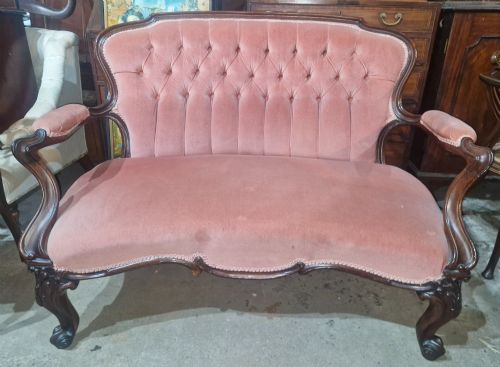
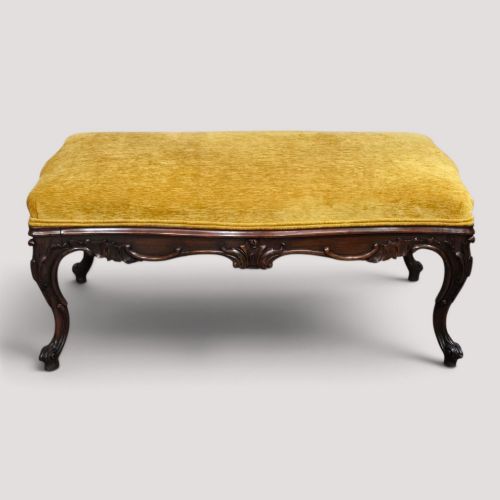
A rosewood window seat is a low form of seating designed for placement beneath windows, in hallways, or at the foot of a bed. When you search for a rosewood window seat, you encounter pieces spanning the Georgian, Regency, William IV, and Victorian periods, alongside later Qing Dynasty and Edwardian examples.
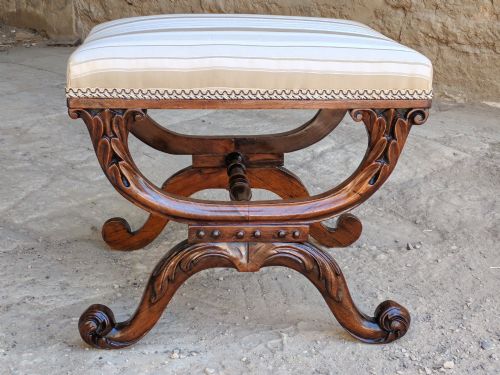
The selection on this page frequently includes related forms such as stools, ottomans, benches, and daybeds sharing the same dense timber. Makers across the nineteenth century adapted these frames with scroll backs, x-shaped supports, or simple oblong profiles tailored to domestic interiors.
Originating predominantly from British workshops, these items also encompass Anglo-Indian interpretations and simulated rosewood finishes. They function practically as auxiliary seating while serving as substantial decorative anchors in a room.
Materials and Construction
The primary structural element is rosewood, celebrated for its heavy density and rich grain, sometimes substituted with simulated rosewood or paired with hardwood frames. Workshops integrated brass inlay, giltwood highlights, and delicate marquetry to embellish the dense timber surfaces.
Upholstery forms a vital component of the construction, utilising period textiles, leather, velvet, and braid supported by traditional padding techniques. Frames frequently exhibit carved details, cabriole legs, or structural turning executed by skilled cabinet makers.
The listings here feature pieces spanning from the Georgian and Regency eras through to the late Victorian and Edwardian periods.
Quality and Proportion
Distinctions in quality often rest upon the crispness of the timber carving and the subtlety of brass or marquetry inlay. Superior examples demonstrate harmonious proportions, where the curve of a scroll back or the turn of a leg complements the natural figure of the rosewood grain.
The integrity of the original frame construction and the fidelity of the upholstery materials further separate standard production from exceptional pieces. Pieces retaining their structural rigidity and authentic period textiles command greater appreciation among collectors.
Charles Nosotti·Rudolph Ackermann
The Rosewood Window Seat Glossary
- Regency
- A British design period spanning the early nineteenth century characterised by classical restraint and Neoclassical revival influences. Pieces from this era often feature clean lines and architectural motifs.
- Marquetry
- The art of applying decorative veneer pieces to a structure to form intricate geometric or floral designs. This technique frequently appears on later Victorian tops and friezes.
- Simulated rosewood
- A painted or stained finish applied to a lighter timber to mimic the distinctive dark grain of true rosewood. It was a popular method during the Regency period.
- X-framed
- A structural support design formed by two intersecting diagonal members resembling the letter X. This ancient form was revived during the nineteenth century for dressing stools and window seats.
Rosewood Window Seat: Frequently Asked Questions
Where should I place a window seat?
These pieces suit positions beneath low windows, along narrow hallways, or positioned at the end of a bed. Their modest height ensures they do not obstruct natural light.
They also function effectively as standalone accent pieces in living spaces or dressing rooms, providing accessible surface space or temporary seating.
How do I care for rosewood furniture?
Protect the timber from direct sunlight and sudden temperature shifts to prevent the dense wood from drying out or splitting. Dust regularly with a soft, dry cloth.
Avoid commercial silicone sprays and consult a specialist restorer for advice on conditioning the wood and maintaining historic upholstery.
Can I use modern fabric for reupholstery?
Many buyers choose to reupholster these pieces to match contemporary interiors while respecting the historic framework. Selecting traditional textiles such as velvet, leather, or woven braid helps maintain period aesthetic integrity.
Ensure that any modern restoration work preserves the underlying webbing and padding structure where original materials survive.