








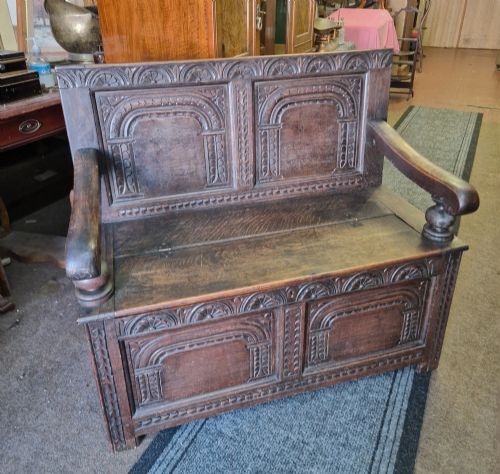
Traditional Oak Settle Bench
A traditional oak settle bench brings centuries of domestic history into a hallway, offering solid timber construction and integrated storage.
Traditional Oak Settle Bench
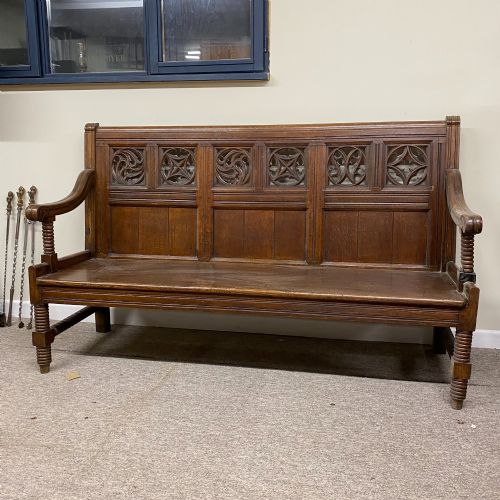
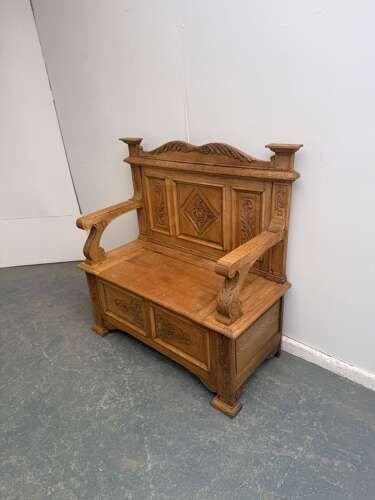
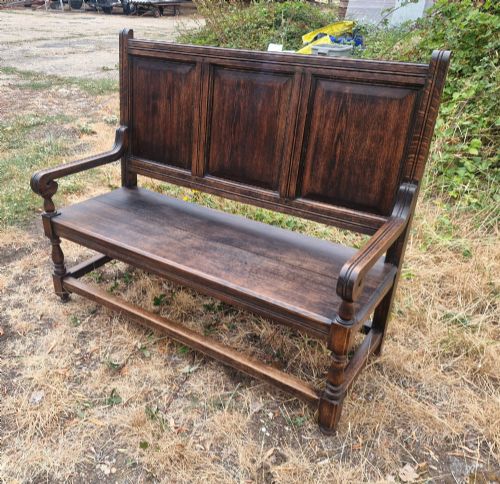
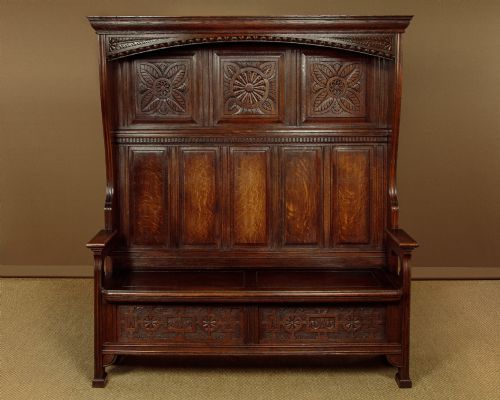
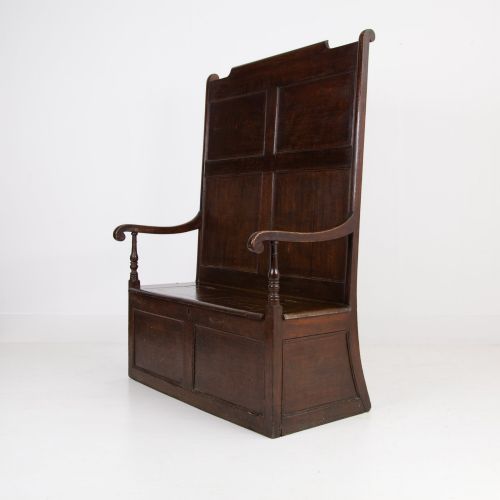
A traditional oak settle bench is a high-backed wooden seat designed to block draughts in older homes, frequently incorporating a box compartment beneath the seat for storage. The selection spans the eighteenth century through to the early twentieth century, taking in Georgian proportions, Victorian carving, and vernacular country craftsmanship.
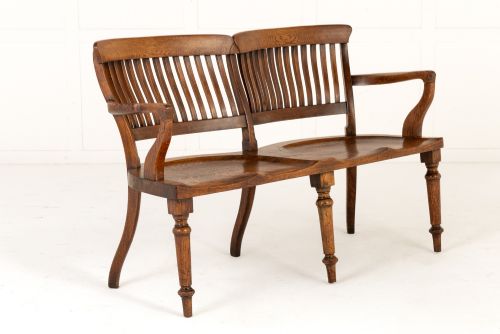
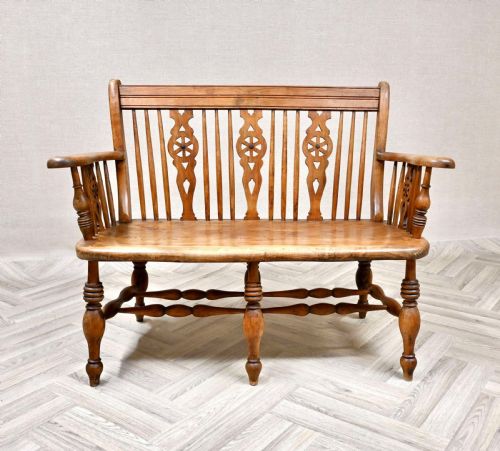
Most examples you encounter rely on sturdy timber panels, high wings, and straight backs intended to keep cold air away from people seated near an open hearth. Variants range from panelled box settles to monk's benches with fold-over tops and smaller hall seats built for narrow spaces.
Materials and construction
Makers built these pieces primarily from solid oak, sometimes combining secondary timbers such as pine, elm, and cherrywood for panels or internal box structures. Joinery relied on traditional mortise and tenon joints secured with wooden pegs, supplemented by iron hinges and brass fittings on lidded storage compartments.
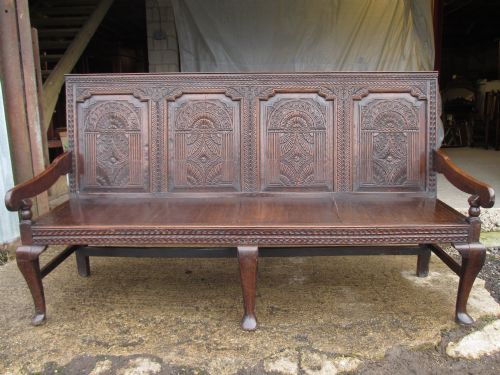
Surfaces show various historical treatments, from waxed finishes and bleached oak to carved panels and decorative heart motifs cut into the woodwork. Structural framing prioritized durability, utilising heavy planks to withstand daily domestic use in farmhouse kitchens and entrance halls.
Traditional Oak Settle Bench Retail Price Guide 2026
Typical asking prices for traditional oak settle bench among the pieces listed under this phrase on Sellingantiques today, from the lower quarter to the upper quarter. They describe what is for sale here now, not the wider market.
Materials extend beyond standard oak to include elm, cherrywood, rush, pine, and brass hardware.
Judging quality and proportion
Quality rests on the integrity of the timber, the crispness of any hand-carved panels, and whether the box base retains its original board bottom and hinges. Pieces with smaller proportions and clean, uncompromised structural lines tend to command greater interest than heavily altered or later heavily carved adaptations.
The degree of wear on the seat boards and the survival of the original finish indicate how extensively a piece was used in past centuries. Refinished surfaces or replaced panels alter the character of the timber, distinguishing workshop-original examples from heavily restored ones.
The Traditional Oak Settle Bench Glossary
- Settle
- A wooden bench with a high back, solid arms, and enclosed base designed to shield sitters from draughts. These pieces often doubled as chests for blankets or provisions.
- Box settle
- A variant featuring a hinged seat opening onto a storage compartment beneath. This built-in cavity kept household items close to the hearth.
- Monk's bench
- A convertible piece of furniture with a hinged back that folds down over the arms to form a table top. They appeared in various forms throughout the nineteenth and early twentieth centuries.
- Vernacular furniture
- Domestic items made by local tradespeople for everyday use rather than following formal metropolitan design rules. These objects display regional characteristics and practical construction methods.
- Mortise and tenon
- A traditional woodworking joint where a projecting tongue fits snugly into a matching cavity to lock two pieces of timber together at a right angle.
Traditional Oak Settle Bench: Frequently Asked Questions
How did people use a traditional oak settle bench?
Families placed these heavy wooden seats near the hearth in farmhouse kitchens and entrance halls, where the high back and solid wings protected occupants from cold draughts. The enclosed space beneath the hinged seat also served as a practical chest for storing boots, blankets, or household dry goods.
Over time, they became central pieces of everyday domestic furniture, combining seating with concealed storage in rooms that lacked built-in cupboards.
How do I tell an 18th-century settle from a Victorian one?
Eighteenth-century examples generally display simpler, pegged panel construction and hand-planed surfaces that show the marks of early tools. Their proportions reflect the functional needs of period country homes, often featuring plain boards and subdued mouldings.
Victorian and later pieces frequently incorporate heavier, more ornate machine-assisted carving, revival styles like Jacobean or Gothic motifs, and factory-made hinges or screws.
Can I use a settle bench in a modern hallway?
These pieces fit narrow entrance spaces well because their flat backs sit flush against walls while providing a convenient spot to sit when putting on shoes. The interior storage compartment works well for hiding away bags, scarves, and clutter out of sight.
Measuring the depth of the seat and the swing of any lift-up lid ensures the furniture functions comfortably within a contemporary floor plan.
What is a bacon settle?
A bacon settle is a specialised 18th-century country form featuring a tall slatted back or upper hooks traditionally used for hanging cured meats to dry in the warmth of the kitchen fire. They combined domestic seating with high-level food storage in rural households.
These vernacular pieces highlight the multi-purpose nature of early domestic furniture where kitchen space had to serve several industrial functions at once.