

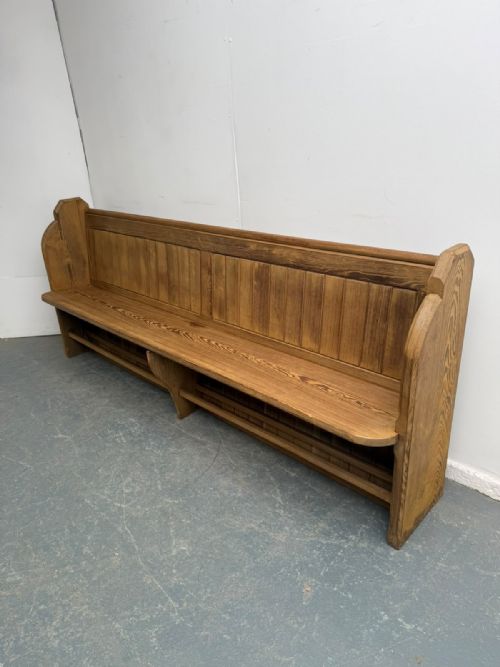
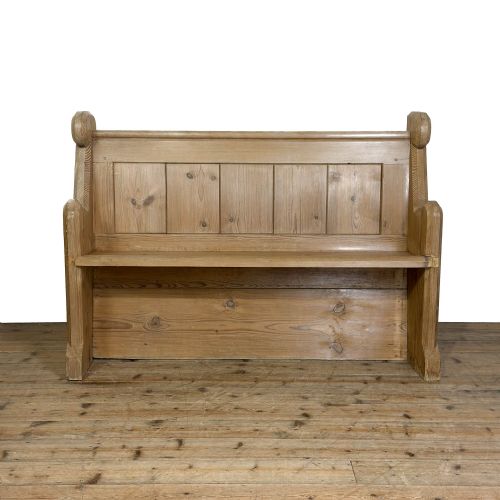
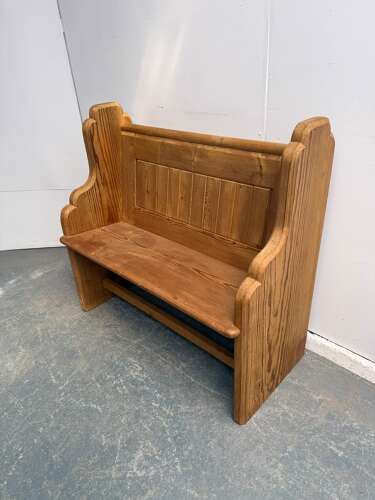
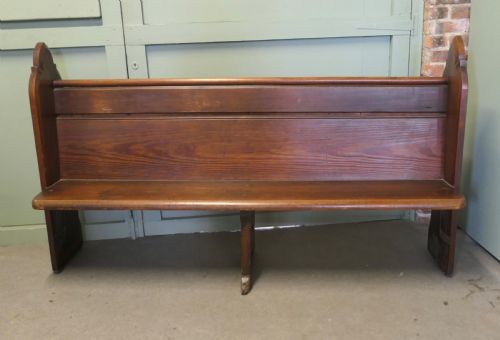
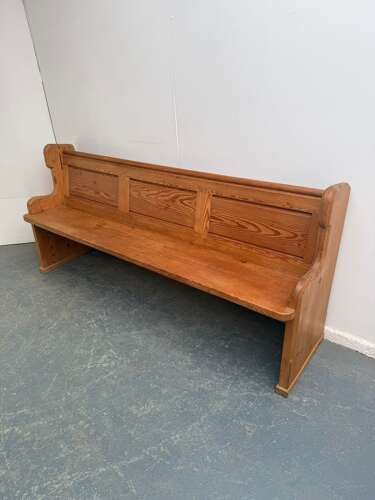
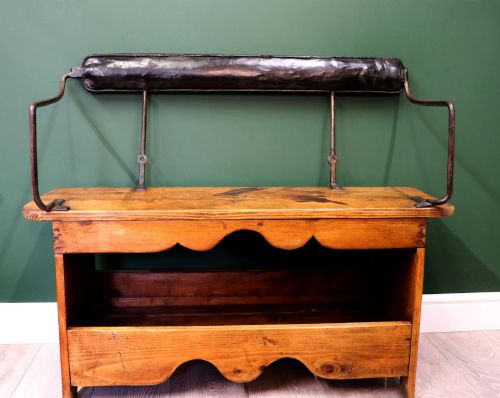


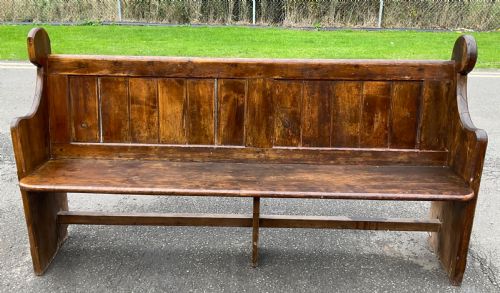

Reclaimed Pine Pew
These reclaimed pine pew examples are sturdy timber benches salvaged from historic churches and chapels, offering robust seating with centuries of rustic character.
Reclaimed Pine Pew
When you search for a reclaimed pine pew, you are looking at utilitarian timber benches originally built for ecclesiastical spaces during the nineteenth and early twentieth centuries. These church and chapel pews survive in various configurations, from single-seater chairs to long multi-seater benches suitable for hallways and dining spaces.
The pieces you are most likely to meet on this page hail from the Victorian and Edwardian periods, encompassing styles from plain country utility to Gothic revivalism. Most examples are straightforward wooden benches, though occasional variants include novel hall seats and Arts and Crafts designs.
Originating primarily from English churches, these benches carry the authentic patina of decades of communal use. Their straightforward construction makes them enduringly popular for contemporary domestic interiors seeking functional historic seating.
What varies in quality
The distinction between standard utility seating and finer examples lies in the selection of timber and the sophistication of the joinery. Dense pitch pine and careful attention to the moulding distinguish better workshop production from basic vernacular carpentry.
Stylistic ambition also separates the pieces, with simple nineteenth-century village chapel benches sitting at one end and ornate Victorian Gothic or Arts and Crafts designs at the other. The integrity of the original waxed surface and the preservation of authentic structural timber dictate the overall character.
Reclaimed Pine Pew Retail Price Guide 2026
Typical asking prices for reclaimed pine pew among the pieces listed under this phrase on Sellingantiques today, from the lower quarter to the upper quarter. They describe what is for sale here now, not the wider market.
Listings in this category span the Victorian and Edwardian periods, utilising pine, pitch pine, wax, iron, leather, and fabric.
The Reclaimed Pine Pew Glossary
- Pitch pine
- A durable resinous softwood frequently used for nineteenth-century ecclesiastical furniture. It provides a distinctive grain pattern and robust strength.
- Church pew
- A long wooden bench with a back, designed for congregational seating in places of worship. They form the primary object type found in this category.
- Wax finish
- A traditional protective coating applied to timber to nourish the wood and produce a soft sheen. This treatment enhances the natural colour of the pine.
- Victorian Gothic
- A nineteenth-century design movement drawing inspiration from medieval architecture. Pieces in this style often feature pointed arches and architectural tracery.
- Arts and Crafts
- A design movement valuing handcraftsmanship and simple vernacular forms over mass production. Items from this tradition emphasise honest construction and material quality.
Reclaimed Pine Pew: Frequently Asked Questions
How were church pews used?
Historically, these benches provided fixed communal seating for congregations attending services in churches and chapels.
Today, buyers repurpose them as hallway seating, kitchen dining benches, or focal points in large living spaces.
How do I date a pine pew?
Dating relies on stylistic clues such as Victorian Gothic detailing, Arts and Crafts influences, or simpler nineteenth-century vernacular construction.
Examining the specific pine or pitch pine timber and the nature of the waxed finish also helps indicate the period of manufacture.
Where do these pews originate?
The pieces listed originate primarily from English churches and chapels dating across the Victorian and Edwardian eras.
They reflect the regional workshop practices and timber selections common to British ecclesiastical architecture of the nineteenth century.