
Wooden Church Bench
A wooden church bench brings architectural gravitas and enduring utility to domestic spaces, drawing character from centuries of ecclesiastical and domestic life.
Wooden Church Bench
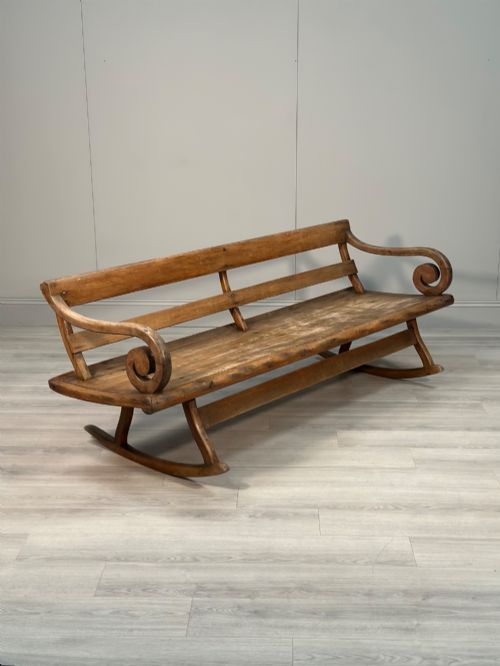
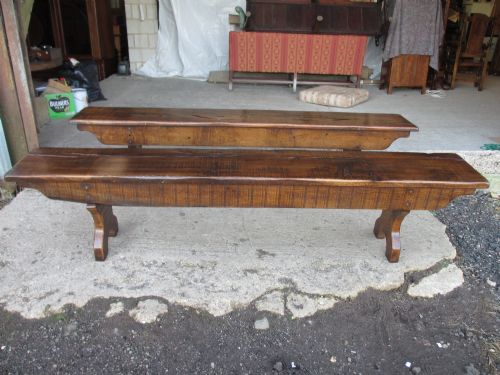
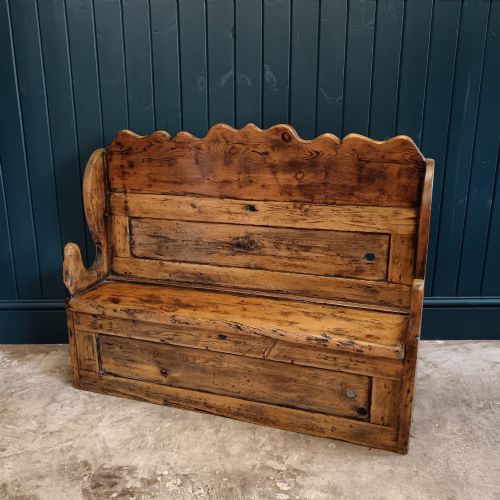
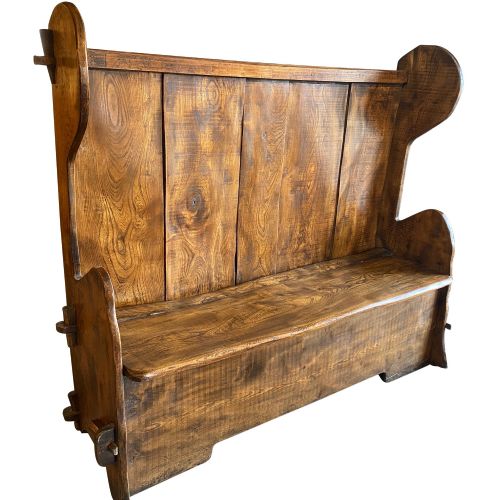
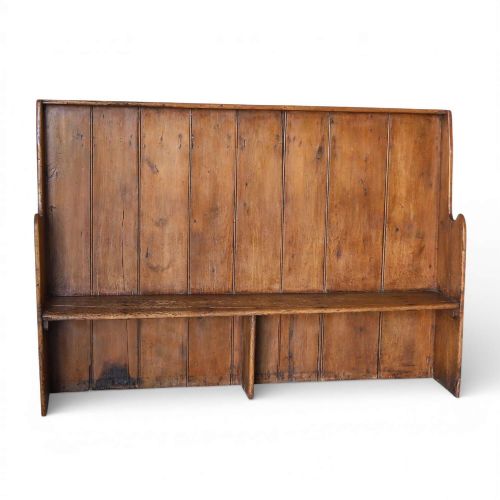
When searching for a wooden church bench, buyers encounter a robust category that includes institutional pews, domestic settles, and architectural hall seating. These pieces emerge predominantly from the nineteenth century and the Victorian era, alongside examples from the eighteenth and early twentieth centuries. The selection ranges from long chapel pews to high-backed tavern settles and curved Gothic designs.
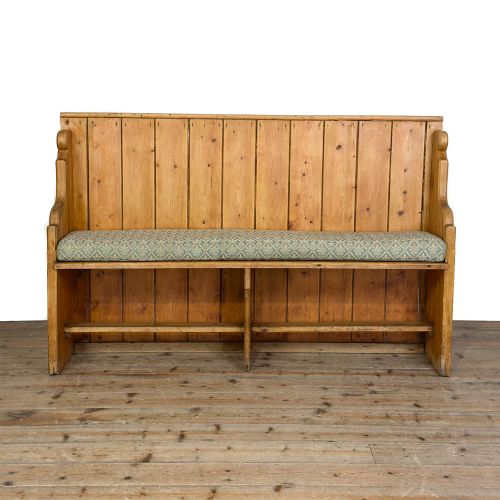
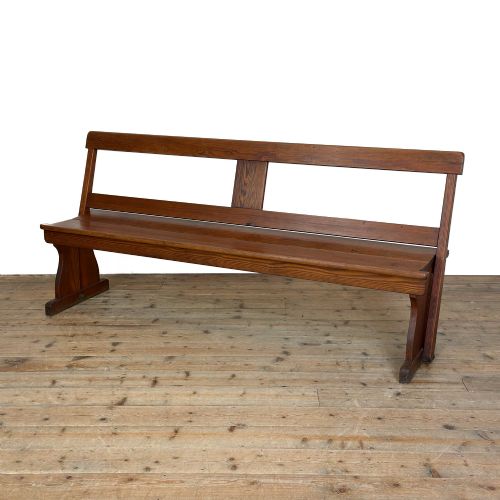
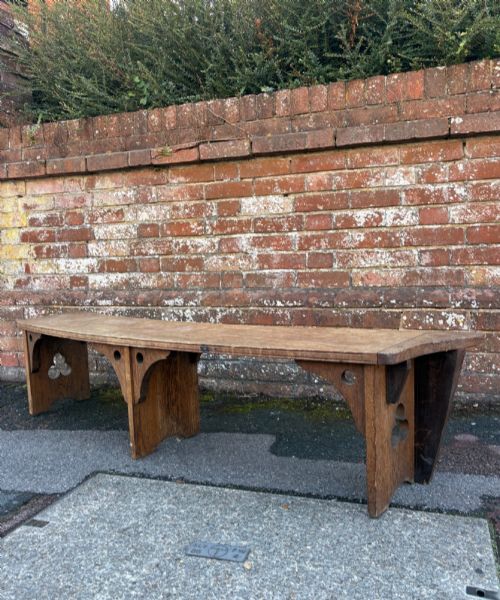
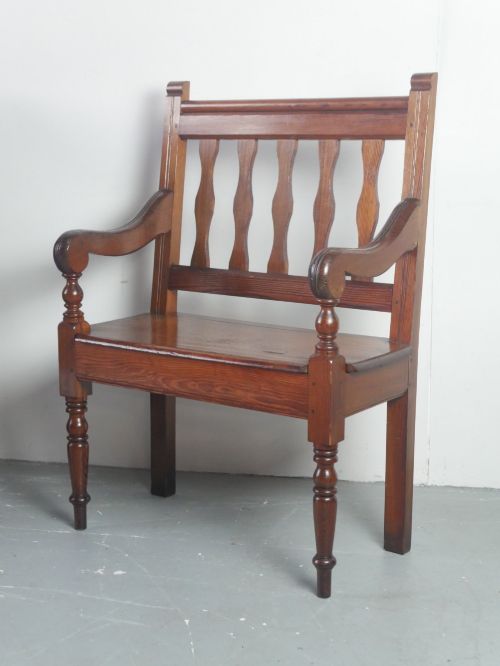
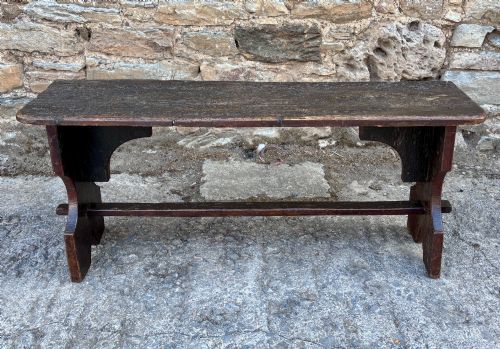
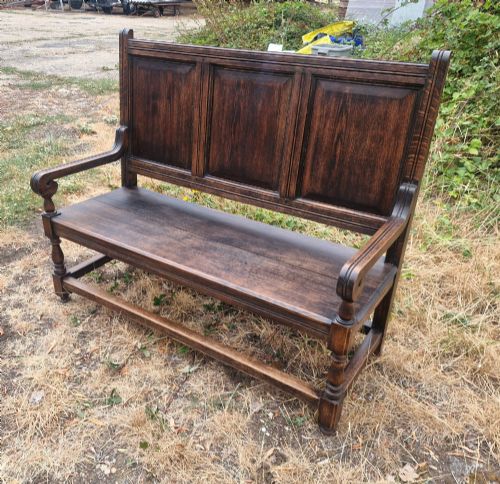
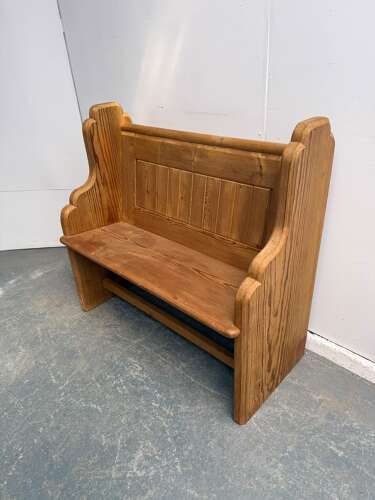
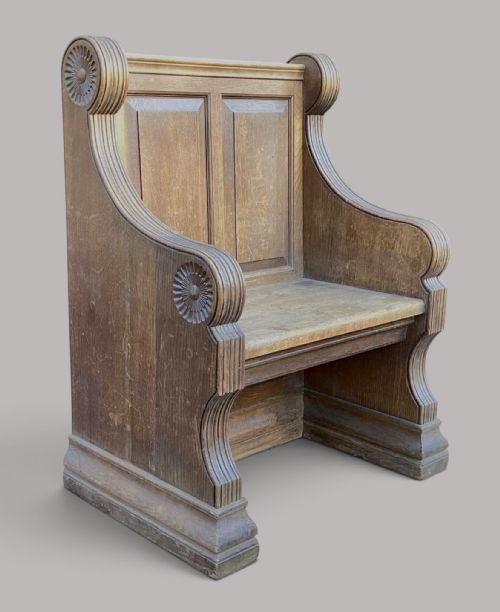
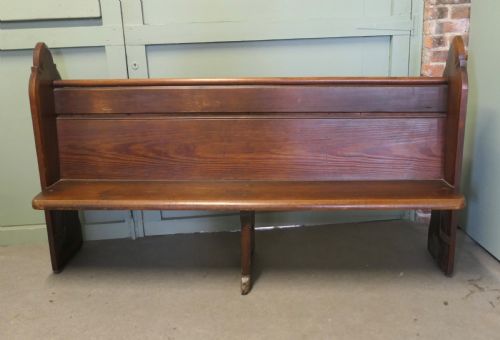
The version most commonly met on this page is the nineteenth-century pine church pew or chapel bench, often finished with a waxed surface or retaining its original paint. Oak variants also appear frequently, spanning rustic farmhouse styles and formal Victorian Gothic Revival forms with trefoil carved supports or architectural lines. Alongside these, buyers find functional variations such as flip-over mechanisms, box storage compartments, and shaped trestle ends.
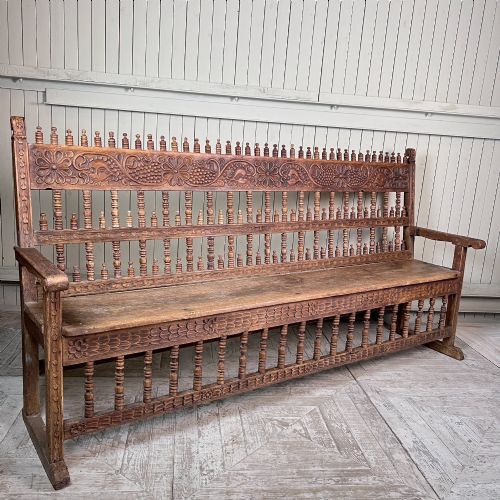
Origins stretch across English country workshops, Welsh monastic or tavern traditions, and continental examples including Hungarian and Spanish Colonial pieces. Forms adapt easily from ecclesiastical settings to domestic hallways, kitchens, and gardens, serving as versatile seating solutions. Every piece carries the imprint of utility, whether designed for quiet contemplation in a chapel or daily gathering in a pub.
Materials and Construction
Makers relied primarily on native timbers such as pine, pitch pine, and solid oak, supplemented by elm, chestnut, and imported hardwoods. Pine and pitch pine provided straight-grained durability for long pews, while oak and elm offered structural rigidity for high-backed settles and heavy hall benches. Surfaces were left natural, waxed to develop a warm patina, or coated in original paint.
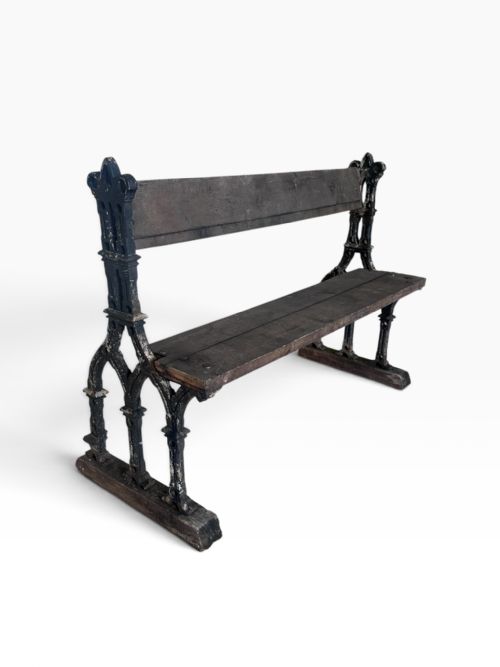
Joinery techniques prioritised longevity, utilising pegged mortise and tenon joints to withstand heavy daily use. Panel construction was common in high-backed settles and hall seats, creating barriers against drafts in domestic or ecclesiastical interiors. Cast iron components occasionally appeared in garden variants, while specialised designs featured carved supports and hinged box seats.
Listings feature eighteenth and nineteenth-century pieces alongside early twentieth-century examples, constructed primarily from pine, oak, and pitch pine.
Assessing Quality and Character
Quality rests in the integrity of the timber and the depth of the surface patina, which reveals decades or centuries of handling. Pieces retaining original finishes, such as historic blue paint or honey-brown waxed pine, command greater interest than stripped or overly restored surfaces. Structural proportions matter deeply, distinguishing well-balanced architectural forms from clumsily altered seating.
Carving and detailing elevate certain examples, particularly those exhibiting Gothic Revival motifs, trefoil supports, or architectural panelling. The honesty of the construction, from exposed peg joints to solid elm seats, determines how gracefully a bench ages within a room. Ultimately, the best pieces combine robust utility with distinct regional or ecclesiastical character.
The Wooden Church Bench Glossary
- Settle
- A wooden bench with a high back, solid arms, and often a box base or enclosed lower section to block drafts. This form became a staple of farmhouse kitchens and tavern firesides.
- Pew
- A long wooden bench traditionally fixed within a church or chapel for congregational seating. They are constructed primarily from pine or oak.
- Trestle
- A structural support consisting of a horizontal beam fixed to two splayed legs, commonly found beneath long tavern and refectory benches. This design maximises legroom and stability.
- Gothic Revival
- An architectural and decorative style popular during the Victorian era, characterised by pointed arches, trefoils, and ecclesiastical motifs. Pieces in this style borrow heavily from medieval stone and woodwork.
- Patina
- The lustrous surface sheen developed on wood over years of handling, polishing, and exposure to light. A rich patina indicates age and careful maintenance.
- Box Settle
- A specific form of bench featuring a hinged seat that lifts to reveal integrated storage beneath. These provided valuable space-saving utility in historical interiors.
Wooden Church Bench: Frequently Asked Questions
Where do wooden church benches fit best?
These benches integrate naturally into large hallways, farmhouse kitchens, and dining spaces where their linear form provides ample seating. Their architectural presence also suits living rooms and boot rooms as functional statement pieces.
Placement depends largely on the back height and length of the specific piece. High-backed settles work well against blank walls to create cosy seating areas, while lower hall benches fit easily beneath coat racks or beside doorways.
How do I care for a waxed pine bench?
Maintenance requires little more than occasional dusting with a dry cloth and the application of a quality beeswax to nourish the timber. Avoid placing these pieces in direct sunlight or beside active heat sources to prevent the wood from drying out.
Moisture should be wiped away promptly to protect the surface finish and historic patina. Regular waxing preserves the soft sheen characteristic of nineteenth-century pine and oak.
Were all church pews made for religious use?
While the majority originated in churches, chapels, and monastic foundations, many forms served civic or domestic purposes. Chapel pews and institutional seating were frequently adapted or built alongside tavern benches and hall seats.
Makers often employed identical construction methods for ecclesiastical and secular spaces. Consequently, domestic settles and church benches share a unified tradition of utilitarian craftsmanship.
How can I tell pine from pitch pine?
Pitch pine contains a higher resin content, resulting in a denser grain pattern with prominent growth rings and a heavier weight. Standard nineteenth-century pine tends to be softer, lighter in colour, and more uniform in texture.
Over time, pitch pine develops a deeper, reddish-amber hue under wax compared to ordinary pine. Examining the underside or interior surfaces often reveals these distinct grain characteristics.